
 E-Paper



Covid-19 update: Coronavirus worries sow an unsure crop
Coronavirus update: According to the India Meteorological Department, March witnessed six western disturbances, especially in northwest India, as against an average of two to three for the season, pounding standing crops with heavy rainfall and hail, damaging up to 50% of them in some areas.


Raj Singh of Punjab’s Taran Taran district’s Khem Karan village and Sudhir Verma of Uttar Pradesh’s Barabanki district are among millions of farmers across India looking anxiously to the skies and the day’s news. First, unseasonal heavy rainfall and hail damaged their standing winter crop. Now, the 21-day national lockdown poses hurdles for the harvest that has already started in some places, despite a Friday order from the home ministry that includes farm hands in its definition of workers providing essential services.
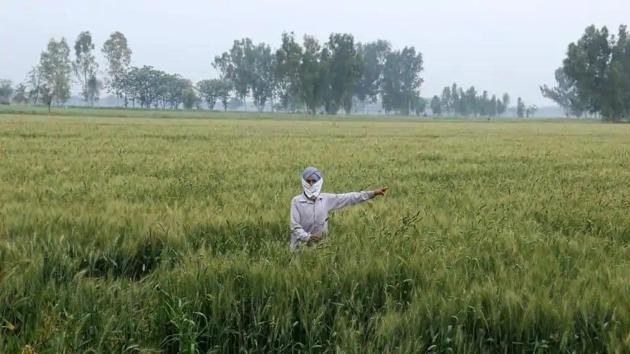
The winter harvest is primarily of wheat, maize, mustard and pulses, which boosts India food security and is the mainstay of the government -run subdised ration scheme for 800 million people across India.
The food ministry in February 2020 estimated that the rabi or winter crop harvest, which contributes about 50% to India’s foodgrain production, would be 6.27% to 8.25% more than last year’s on account of a generous monsoon and good winter rain. The highest annual farm growth in the past decade has been 4%, so this was good news.
Then the weather decided to take a hand.
According to the India Meteorological Department, March witnessed six western disturbances, especially in northwest India, as against an average of two to three for the season, pounding standing crops with heavy rainfall and hail, damaging up to 50% of them in some areas.
Unseasonal rain and hail have already destroyed the potato, mustard and wheat crop in Uttar Pradesh; and wheat and mustard in Haryana, parts of Punjab and Rajasthan, according to Bharatiya Kisan Union spokesperson Dharmendra Kumar.
“Our crops were first damaged by rains and whatever remains is under the shadow of the Covid-19 lockdown,” said Raj Singh, who expect the harvest to be just 50% of what it was in 2019 this year. “February-end and March is the maturing season for wheat and mustard and moisture deteriorates quality of the produce.”
Sukhdeep Singh, 54, said he was gearing for “uncertainty” for whatever crop remains in his 40-acre wheat farm in Uttar Pradesh’s Shahjahanpur district.
“The harvester from Punjab was supposed to come on March 22, the day of Janata curfew. Now, he is not taking my call. I am anxiously waiting for his call,” he said, showing his smart phone. “My crop is ready for harvest. If the contractor doesn’t arrive till Sunday, I will have to bear the losses,” he said.
Punjab, the most mechanized agricultural state, provides harvester machines to farmers in Uttar Pradesh, Rajasthan and Madhya Pradesh on rent every year. “Because of the lockdown, there are no machines available,” said Dinesh Gautam, 60, who has grown wheat in his 10 acre farm in of Chandresal village in Kota, Rajasthan.
To cope with lockdown restrictions, Haryana’s additional chief secretary (ACS), agriculture, Sanjeev Kaushal, announced mustard procurement from April 15 and the wheat from April 20, if the situation normalises by then. The lockdown is to end on April 15.
The Punjab government has also written to the Centre seeking a delay in procurement of rabi crops, supposed to start from April 1, for another 15 days. “We are looking at alternative ways to procure wheat if the lockdown continues for a longer period,” said Punjab’s principal secretary, food and civil supplies, KAP Sinha.
“Till the time procurement starts, the farmers should store the harvested food grains in their homes. The Haryana State Agriculture Marketing Board (HSAMB) will also find solutions for the storage of food grains during the pre-procurement period,” chief minister Manohar Lal Khattar said on Wednesday.
Considering that India has about 750 Covid-19 cases and close to 20 deaths, and looks to be early in the cycle of infections, farmers are expecting an extension of the lockdown period beyond April 15. If that happens, the farmers believe that the entire chain of harvest to procurement to storing the grains in Food Corporation of India (FCI) silos would be affected.
The average rabi production in Punjab and Haryana this year is expected to be 25.5 million tonnes in at least 6.5 million hectares of farmland in the two states. This year, more rabi crops were sown compared to previous years because of the above-normal monsoon rains in 2019.
The farmers bring crops to 3,000 markets in the two states for procurement by government agencies, which are then transported by thousands of trucks and tractor trolleys to FCI silos. Around 60% of the produce is bought by the government and the rest by the private entities.
To be sure, the delay in rabi crop harvest and procurement will have no immediate food security implications as governments have enough food stocks for the next three months.
Worker shortage
“Earlier, labourers were charging Rs 1,900 to Rs 2,000 to harvest mustard one acre. Now, they are demanding Rs 3,000 for the same area,” said Vijay Bhalothia, a farmer in Bhiwani’s Khurd village, who has sown mustard across 15 acres and wheat on five acres. Similar reports have emerged from Jind, Dadri and Mahendergarh districts in Haryana.
More than 800 km away in Uttar Pradesh’s Barabanki district, Sudhir Verma is desperately looking for workers to harvest mustard and tur dal from his 20-acre farm. “At least half of the farmers in the village are unable to find labourers,” he said.
In western Uttar Pradesh’s sugarcane belt, there are not enough workers to sow the new sugarcane crop. Lalit Yadav, a farmer of Meerut’s Kareempur village, said: “Labourers are not ready to work as they are afraid that the police will beat (them up for venturing out).” Farmers in the region complain that there is no worker to harvest the ripening mustard crop. “Even if we harvest it ourselves, there are no (curfew) passes to take them to market,” said a Bulandshahr farmer, Mohammed Iqbal.
With the national Covid-19 lockdown, labourers from farm-rich areas in Punjab, Haryana and western Uttar Pradesh have started going back to their villages.
On Friday, the Union home ministry included farm hands in its definition of essential services, which should make it easier for farmers to find workers to help them with the harvest.
To overcome a labour shortage, the Punjab and Haryana governments are advising farmers to use harvester machines. Farmers said that there are very few machines on offer. “In Haryana the practice is that about 50% of the crop is harvested by combine harvesters and for remaining the farmers hire local labourers for manual harvesting,” said Aditya Dabas, deputy director, Haryana agriculture department.
Harinder Singh Lakhowal, general secretary, Bharti Kisan Union, said workers are needed to run harvester machines as well. “Workers are also needed to take harvested crops from fields to homes and then to mandis,” he said. Commission agents at local grain markets said shortage of labour could delay procurement.
Covid-19 Cost
The delay in harvest and procurement will have implications for the rest of the crop year. The preparations for monsoon (kharif) crops start in Punjab, Haryana, western Uttar Pradesh and Rajasthan from mid-May onwards. “Because of the delay in harvest and procurement, the sowing will be delayed,” said Balbir Singh of Ludhiana’s Khamano village.
Jagtar Singh Brar of Bathinda’s Mehma Sarja village said the Covid-19 pandemic will have a long-lasting impact on agricultural economics. “Delay in wheat procurement may have serious economical repercussions. Farmers will not be in a position to pay in advance to take land on lease for the next season,” said Brar, who cultivates wheat on 45 acres he has leased.
Governments of Telangana and Andhra Pradesh have exempted farming from restrictions of the lockdown. In Andhra Pradesh, farmers said the lockdown has not impacted harvesting work, which started 10 days ago. “Because of the summer season, the harvesting begins as early as 6 am and is completed before noon,” said J V Ramana, a farmer from Ponnuru village in Guntur district.
Even as the farmers continue to be anxious, the IMD on March 27 said three weather systems, mainly from Pakistan and Afghanistan, are expected to bring a fresh bout of widespread snowfall and hail in the hills and thunderstorms and hailstorms in the northern plains over the next few days.
(With inputs from bureaus in Chandigarh, Jaipur, Hyderabad, Bhopal and Patna)


