
 E-Paper



‘Vote chori began with Nehru, Sonia Gandhi became a voter before citizen’: Amit Shah tears into Congress in Lok Sabha
Amit Shah said the Opposition “gets angry when we talk of history, but how can any country or society move forward without history”.

 Prefer HTon Google


Union home minister Amit Shah on Wednesday used the Lok Sabha debate on electoral reforms to launch a sharp attack on the Congress, accusing its leaders of making “baseless allegations” about voter fraud while ignoring what he described as a long history of irregularities under previous Congress governments.
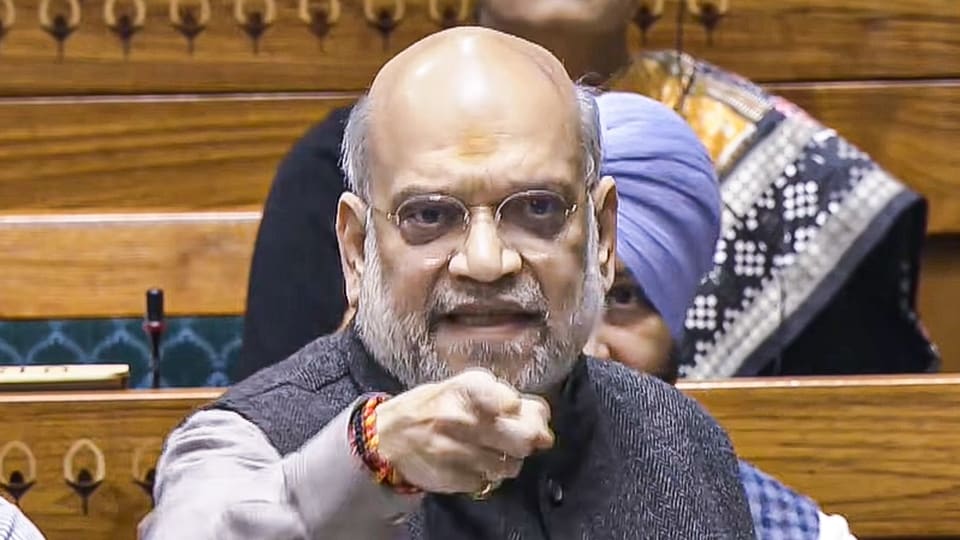
Speaking during the debate, Shah said the Opposition “gets angry when we talk of history, but how can any country or society move forward without history”. He then cited a series of claims to argue that “vote chori” was not new and had its roots in earlier Congress administrations.
‘Vote chori began in Nehru’s time’
Shah alleged that the first instance of “vote chori” took place immediately after Independence. “Post Independence, Sardar Patel was backed by 28 persons, Jawahar Lal Nehru by two persons; yet Nehru became PM, this was vote chori,” he said.
Replying to Opposition's longstanding claims on Special Intensive Revisions (SIR), He said successive SIR of electoral rolls had been carried out for decades, beginning in 1952 “when Jawaharlal Nehru was the prime minister and Congress was in power”.
“The first SIR was conducted in 1952… Then it happened in 1957… the third happened in 1961 and Nehru was there,” Shah said.
The exercise continued “during Lal Bahadur Shastri's time, then during Indira Gandhi's time, Rajiv Gandhi's time, Narasimha Rao's time, and then in 2002 during Atal Bihari Vajpayee's time which continued till Manmohan Singh's time,” he added.
“No party had opposed this process because it is a process of keeping elections clean and keeping democracy healthy,” he said.
‘Indira’s immunity was second vote chori’
Calling it the “second vote chori”, Shah referred to the emergency-era controversy surrounding Indira Gandhi. “Second ‘vote chori’ was by Indira Gandhi, when she granted herself immunity after court set aside her election,” he said.
Shah said the “third ‘vote chori’” was now before civil courts, raising questions over the timeline of Sonia Gandhi’s registration as a voter.
“Dispute of third ‘vote chori’ has just reached civil courts on how Sonia Gandhi became a voter before becoming citizen of India,” he said.
He added that the purpose of SIR was straightforward — “to remove those who have died, add the names of those who have turned 18 and delete foreign nationals one by one”.
Amit Shah's remarks came on the second day of the Lok Sabha debate on electoral reforms. The date was decide following days of pressure from the Opposition to allow a discussion on SIR— a demand the government had initially declined.
The impasse was resolved after the government and the Opposition reached an understanding to take up electoral reforms once the debate on Vande Mataram was completed.


