
 E-Paper



‘Waah...’: PM Modi impressed as Japanese kid speaks in Hindi in Tokyo
Prime Minister Modi is in Tokyo where he will attend the Quad summit and hold bilateral meets with US President Joe Biden, Japanese premier Fumio Kishida and the newly sworn in Australian prime minister Anthony Albanese.

 Prefer HTon Google


Prime Minister Narendra Modi received a grand welcome on his arrival at a hotel in Japanese capital Tokyo.
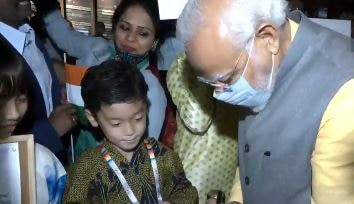
Among those waiting to greet the prime minister were Japanese kids, some of whom were standing with posters depicting the tricolour. In a video shared by news agency ANI, PM Modi interacted with children while signing autographs for them. "Waah! Where did you learn Hindi from?... You know it pretty well?," PM Modi asked the kids.
"...Can't speak Hindi much, but I understand...PM read my message, and I also got his signature, so I am very happy...," Wizuki, a fifth grade student recalled his brief interaction with the prime minister.
Prime Minister Modi landed early in the morning in Tokyo where he will attend the Quad summit along with bilateral meetings with the members of the alliance and interact with business leaders.
“Landed in Tokyo. Will be taking part in various programmes during this visit including the Quad Summit, meeting fellow Quad leaders, interacting with Japanese business leaders and the vibrant Indian diaspora,” the prime minister tweeted.
ALSO READ: In Japan, PM Modi, US President Biden to focus on Ukraine, bilateral ties
On Day 1 of his visit, the prime minister will attend the event to launch the Indo-Pacific Economic Framework. He will also hold a bilateral meeting with US President Joe Biden. In a statement on Sunday, PM Modi had said he would discuss with Biden the consolidation of India's bilateral relations with the United States. Adding further, he said that India and US would continue dialogue on regional development and global issues.
But all eyes will be on the Quad summit in the Japanese capital on Tuesday. The leaders of the Quad alliance will review the progress of the initiatives and working groups, identify new areas of cooperation as well as provide strategic guidance and vision for future collaboration, the ministry of external affairs said in a statement.


