
 E-Paper



We avenged Apr 22 in 22 minutes: Nadda
He also compared the UPA decade to a “dark night” and referred to the current regime as a “moonlight night”.


NEW DELHI: Slamming the Congress led United Progressive Alliance government for failing to give a befitting response to Pakistan for perpetuating multiple terror attacks in India, leader of the house in the Rajya Sabha and BJP president JP Nadda on Wednesday said what sets the current National Democratic Alliance government apart from its predecessor is the “political will” that has created the space for the armed forces to take decisive action.
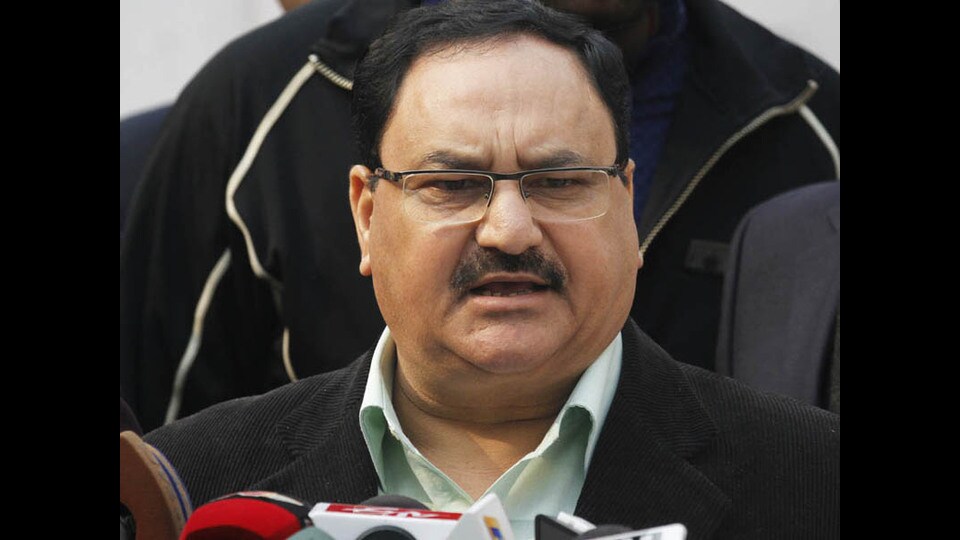
He also compared the UPA decade to a “dark night” and referred to the current regime as a “moonlight night”.
“ Woh hume goliyoon se bhunte rahe aur hum unko biryani khilane chale (They riddled us with bullets and we offered them biryani),” Nadda said speaking in the Rajya Sabha during the special discussion on Operation Sindoor, India’s military response to the April 22 terror attack in Kashmir’s Pahalgam.
Accusing the UPA of giving a “lukewarm response” to the dozens of terror attacks between 2004 and 2014,Nadda credited Prime Minister Narendra Modi’s “decisive leadership” for transforming India’s response to terrorism. The government’s decision to put the Indus water Treaty in abeyance, post Operation Sindoor was cited as an example of decisive action by Nadda.
“The role of the brave armed forces and the police force is undeniable and deserves deep respect and tribute from the nation,” Nadda said, but went on to add that it was also the political leadership that was crucial, because it is the political leadership that commands the armed forces. “...That is why there is a clear difference between a responsible, responsive, sensitive, and proactive government, one that acts as per the demands of the situation, and another type of government altogether an inactive government, one with a lukewarm attitude, and one that is non-reactive and non-responsive.”
To understand this difference, he said the Pahalgam incident cannot be seen in isolation as doing so would be an injustice, both to the nation and to the larger narrative.
Tracing the history of terror attacks on Indian soil during the UPA decade, Nadda said starting with the blasts in 2005 in the Shramjeevi Express which led to 14 casualties to the 26/11 attack in Mumbai that left 200 dead and shook the nation, the UPA chose engagement over action against Pakistan.
“An India-Pakistan joint commission was set up (in 2005)…the then EAM Natwar Singh met his counterpart Khurshid Kasuri to establish working groups on education, agriculture, IT, environment and tourism…” Nadda said, slamming the UPA for the response to Pakistan-sponsored attacks by terror groups such as Lashkar-e-Toiba, Harkat-ul-Jihad-al-Islami, and Indian Mujahideen.
“After the 26/11 Mumbai attacks, a dossier was sent and senior most officials are on record to have taken the decision to not hitback…It is the same Army since then but the only difference is the political will to strike back,” he said.
Nadda said multiple terror attacks were followed by the Indian government pursuing engagements such as opening trade routes, increasing flights, and continuing dialogue with Pakistan. The Modi government on the other hand, he said, has been steadfast that “terror and talks cannot go together”.
“They only appeased…there was no pressure on Pakistan,” Nadda said while praising PM Modi for his zero tolerance to terrorim doctrine. He said no PM since 1947 had responded like PM Modi to attacks on Indian soil.
“In 22 minutes we avenged April 22…I can say this on record, never in history has Pakistan been given a response like the one delivered by PM Narendra Modi through Operation Sindoor,” Nadda said.
He referred to the 2016 surgical strike on terror camps in Pakistan, carried out in response to the Uri attack and the 2019 Balakot strike in response to the Pulwama attack as examples of PM Modi walking the talk on tackling terror.
While the opposition has cornered the government for failing to stem terrorism, particularly in Jammu and Kashmir after the abrogation of Article 370 in the erstwhile state, Nadda said acts of terror in the country have declined and stone pelting incidents have been reduced to zero from over 2000 between 2010-2014.
“Except J&K, no incidents of terrorism have taken place in the country till date…there has been a reduction of 80% in terror incidents in the past decade,” he said.
Quoting data, he said, from 7,217 terror incidents in 2004-2014, the number has declined to 2,150 (2015-2025). “Civilian deaths under UPA were 1,060 as compared to 542 (under the Modi government) - a reduction of 49%...there has been an increase of 123% in killing of terrorists,” he said.
Responding to the Opposition’s charge that the government failed to elicit support from other countries for Operation Sindoor and lost the narrative war with Pakistan, Nadda referred to the international community not condemning Pakistan for the attacks in India. He said in 2009 at the SCO in Russia and the BRICS summit there was no mention of big attacks and the 2009 Sharm El-Sheikh statement where “terror in India was equated with Balochistan”.


