E-Paper



What’s in a name? A lot when it comes to Naveen Patnaik’s Odisha
While creation of a new department will likely translate into a separate budget for the SHGs in Odisha from the next fiscal, political observers are unsure if it will transform their functioning on the ground or end up as another “renaming” exercise by chief minister Naveen Patnaik, aimed purely at delivering political dividends.


On Tuesday, the Naveen Patnaik government started a new department called Mission Shakti to govern 6 lakh-odd women self help groups (SHGs) in the state that have emerged as the single-largest vote bank of Patnaik’s Biju Janata Dal (BJD) two decades after it began as a scheme in 2001. Mission Shakti was turned into a directorate in 2017 till it was carved out on June 1 as a separate department with IAS officer Sujata Karthikeyan at its helm.
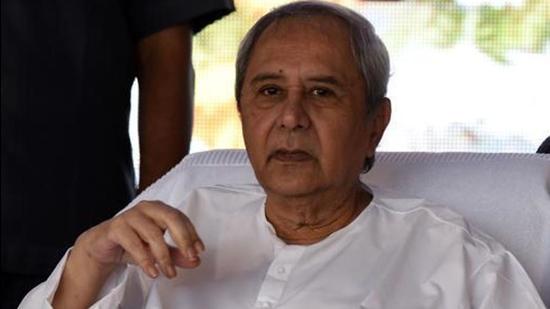
“It is a historic step by the Naveen Patnaik government in empowering women... The Mission Shakti department would lead to larger inclusion of women in development of Odisha,” tweeted senior BJD leader Pranab Prakash Das, referring to the 70-lakh women members of the SHGs, who take loans from banks and provide small loans to their members.
While a new department will likely translate into a separate budget for the SHGs from the next fiscal, political observers are unsure if it will transform their functioning on the ground or end up as another “renaming” exercise aimed purely at delivering political dividends.
“Under Mission Shakti, Women members of SHGs may have been empowered financially, but has anyone reviewed whether the SHGs are creating any tangible assets? Most loans given to SHG members are being utilized to meet household expenses such as children’s education, marriage, and husband’s business. I don’t understand how having a separate department would lead to better governance,” asked retired bureaucrat Prasanna Mishra.
Over the last few years the Odisha CM has created or renamed at least half a dozen departments and buildings, including the state secretariat which is now called Lok Seva Bhavan, suggesting people’s service was its reason for existence. At the height of farmer suicides in Odisha in 2015-16, he renamed the agriculture department as agriculture and farmer empowerment department. In December 2017, he split the tourism and culture department and made a separate Odia language and culture department to promote Odia language. A few years ago the planning and coordination department was renamed as planning and convergence department while the revenue department became revenue and disaster management department. Three days ago, his government renamed the forest and environment department as forest, environment and climate change department.
“It’s nothing more than [a] delusional activity. The name game is just to hoodwink people. From Garibi Hatao of the 80s to Mo Sarkar now, most of these names don’t convey anything to anyone. What is worse is poor and middle class people are not protesting against the government taking them for a ride,” said sociologist Rita Ray.
Political science professor Gyana Ranjan Swain said the naming and renaming exercise is essentially Patnaik’s way of leaving a legacy behind. “After ruling the state for 21 years, he surely wants to leave his mark. Creation of new departments is a good move to decentralise power, but does he really intend to do it,” asked Swain.
Many others like former bureaucrat Prasanna Mishra see it as Naveen Patnaik’s tactic to create a grand spectacle without delivering anything on the ground. Mishra points out that Odisha is actually ranked at the bottom of governance rankings, along with Uttar Pradesh and Bihar. In the Public Affairs Index (PAI)-2020 released by the Public Affairs Centre, a not-for-profit organisation based in Bangalore last year, Kerala topped a composite index reflecting sustainable development, while Odisha and Bihar scored negative points of -1.201 and -1.158 points respectively.
Former finance minister Panchanan Kanungo agrees that the creation of a new department is nothing more than a gimmick. “After creating a separate department for Odia language in December 2017, an Odia university was supposed to [be] set up in Satyabadi in Puri district with facilities for post graduate studies in Odia. It remains a non-starter. All shops and business establishments in the state were supposed to display signboards in Odia language, but it has not happened. This is repackaging of old wine in a new bottle,” he said.
BJD general secretary Bijay Nayak however disagreed. “Unlike BJP’s slogan of Sabka Saath Sabka Vikas, creation of new departments and initiatives like Mo Sarkar and 5T is transforming governance. Had it not been so, how is Naveen Patnaik winning elections after elections,” asked Nayak.
Patnaik started the 5T programme - technology, transparency, teamwork, time leading to transformation – after winning 2019 assembly polls and it has now become a buzzword in Odisha. His trusted aide and private secretary VK Pandian is now known more as the ‘5T secretary’ as he looks after the implementation of the formula in different departments.
BJP leader Sajjan Sharma said the state government has little to show in administration, but was ready to reap political benefits through name-games. “In the name of [building a] Smart City, the government has dug up the capital city of Bhubaneswar over [the] last 4 years, but roads get waterlogged after showers. If this government was so active, why did Odisha slip to the 29th position in the ‘Ease of Doing Business’ rankings for 2019,” asked Sharma.