E-Paper



Why a band of Himachal’s residents are opposing an airport project
The local community in Kangra fears displacement by an airport extension project in Gaggal, but the top court has given the government the go ahead it needed

 Prefer HTon Google


On Monday, the Supreme Court put in abeyance a Himachal high court order that stayed the Gaggal airport expansion project in Kangra district, which has been opposed by the local community in Gaggal.
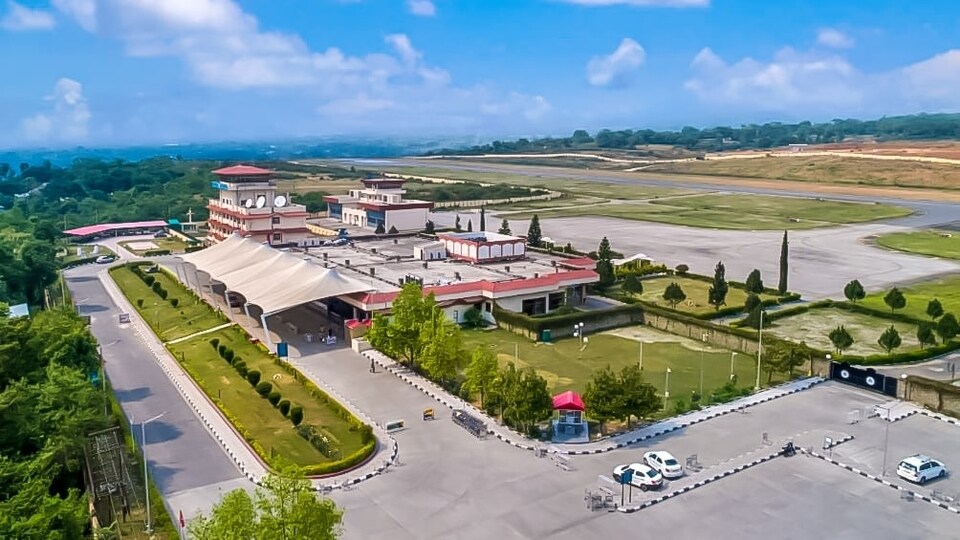
On January 9, the Himachal Pradesh high court stayed the Gaggal airport expansion project following a civil writ petition (CWP) by members of the Gaggal Airport Expansion Affected Society Welfare Committee. The bench, comprising Chief Justice MS Ramachandra Rao and justice Jyotsna Rewal Dua, had ordered a status quo on all aspects related to relief and rehabilitation, prohibiting land acquisition or demolition of structures until the upcoming hearing.
The residents of Gaggal are worried: a proposed airport project is going to displace hundreds of families. At least 1,500 households in a clutch of 14 villages who will be affected by the proposed expansion, are yet to see a rehabilitation and resettlement plan that they are in agreement with. When they approached the Himachal high court under the banner of Gaggal Airport Expansion Affected Society Welfare Committee, the high court granted them a stay on January 9. The court ordered a status quo on all aspects related to relief and rehabilitation, prohibiting land acquisition or demolition of structures until the upcoming hearing.
However, earlier this week, the Supreme Court put the high court’s order in abeyance.
The bench led by Chief Justice of India (CJI) Dhananjaya Y Chandrachud acknowledged the state advocate general’s assurance that no residents will be dispossessed, nor will there be any demolition during the execution of the expansion project.
Will this development project be able to make everyone happy after all?
The project aims to increase the runway length of Kangra airport from existing 1,372 metres to 3,010 metres. The proposed expansion would require a total of 140 hectares and would mean the displacement of almost all Gaggal township which is located approximately 2 km from the airport, according to the HP government's social impact assessment (SIA) report released in May 2023.
Though the opposition to the project started during the government led by the Bharatiya Janata Party (BJP), the protests gained momentum after the Congress government conducted the SIA in February 2023 — the state assembly elections brought in a new government in November 2022. The residents began protesting in January 2020 to oppose the proposal for acquisition of their land.
No proper rehabilitation and resettlement, locals say
The chairman of the welfare committee, Rajnish Saini said that the land surrounding the airport is fertile, and the local population predominantly relies on agriculture for their livelihood. “The expansion project is expected to impact approximately 14 villages. The locals are not opposed to airport development but insist that residents should not be displaced without a proper rehabilitation and resettlement plan,” he said.
“Situated on the National Highway, the airport is flanked by a market on both sides stretching around 3 kilometres. Local businesses and the livelihoods of many residents depend on this market and the government should carefully consider these factors before proceeding with the airport expansion," Saini said.
He added that the expansion might necessitate changes to the National Highway, incurring more land losses for the local population if it is diverted. “The committee has proposed alternative locations to the government, emphasising that these alternatives would not impact the local population and should be seriously considered.”
“In the semi-urban areas surrounding the airport, where more than 90% of the population relies on various businesses, the proposed expansion threatens to uproot the local market,” said Renu Pathania, the president of the Gaggal panchayat.
The government has proposed compensation of six marlas of land (equal to 1633.5 square feet) will be given to each family who cooperates and gives their land for the airport expansion, but the current plan to rehabilitate lacks adequate compensation for the loss of these businesses, Pathania claimed. “The livelihoods of over 5,000 people in nearby areas depend on the economic activities conducted here, and given the scarcity of habitable land in Himachal Pradesh, the situation becomes even more challenging,” she said.
Kangra is a seismically vulnerable region, which has seen numerous earthquakes in over a century. In 1905, an earthquake measuring 7.8 on the surface wave magnitude scale killed more than 20,000 people here.
Pathania also pointed out the prolonged displacement of people affected by the Pong dam, who have been waiting for relocation for over five decades. “It is difficult for the local community to trust the government's assurances, especially when there is no clear rehabilitation plan in place,” she said.
What is the project?
The expansion project aims to increase the runway length of the Kangra airport. In its current form, only smaller 72-seater aircraft can land on the airstrip and only six flights operate every day from the Kangra airport.
The extension will help accommodate larger aircraft, such as the Airbus A320, which would not only bring down airfare but also enhance connectivity between the valley and other parts of the country.
The extended runway could enable direct flights to multiple cities. Currently, Kangra airport operates direct flights only to Shimla, Delhi, and Chandigarh. The expansion is anticipated to connect Kangra airport with more cities directly and the tourism sector is expected to benefit significantly from improved air connectivity.
The airport extension is planned in two phases, with the runway length increasing to 1,900m in the first phase and reaching 3,010m in the second phase. A total of 147 hectares of land would be acquired in the Kangra and Shahpur subdivisions for the airport extension, with 122 hectares being private land and 25 hectares being government-owned.
Prem Sagar, an environmentalist based in Dharamshala, said tourism and enhanced connectivity is no small thing and expansion in what is a seismic zone should not pose a hindrance. “There are advancements in engineering and construction techniques, we can take cues from other countries regarding construction methods to effectively address seismic zone challenges,” he said.