
 E-Paper



Why Nitish Kumar, in his first stint as Bihar CM, could only serve for a week?
Thursday’s ceremony marks a full circle for Nitish Kumar - from a leader who couldn’t sustain a government for a week to one returning to power for 10th time.

 Prefer HTon Google


Twenty-five years after his brief seven-to-eight-day tenure as chief minister in 2000, Janata Dal (United) president Nitish Kumar is set to take oath as Bihar CM for a record 10th time on Thursday. The 75-year-old was unanimously elected leader of the National Democratic Alliance (NDA) legislature party on Wednesday and will be sworn-in at a mega ceremony in Patna's Gandhi Maidan at 11.30 am. (Track live updates)
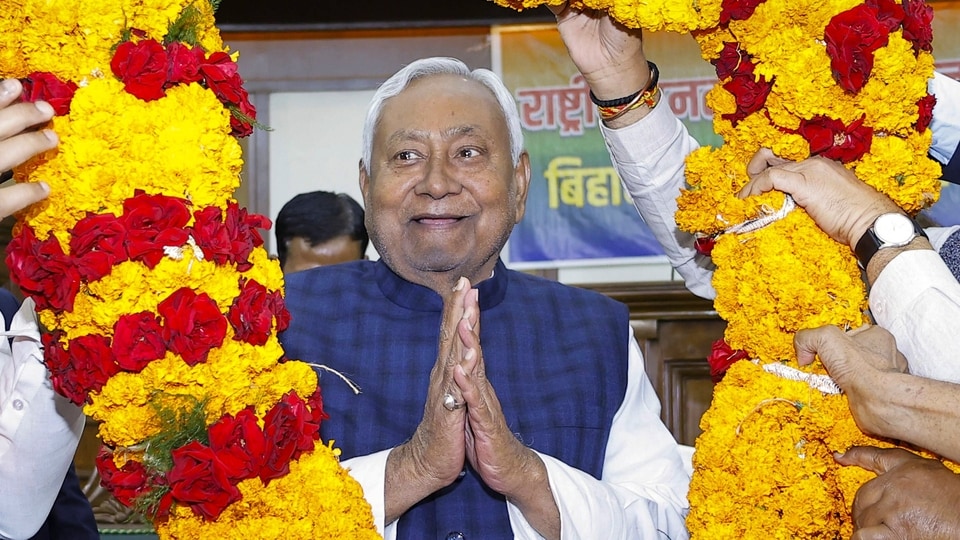
The NDA secured an emphatic win, securing 202 seats in the 243-member Bihar legislative assembly.
A lookback at Nitish Kumar's 1st stint as Bihar CM
Nitish Kumar's 10th oath-taking stands in sharp contrast to his very first stint in 2000, when he served as chief minister for just about a week after a fractured mandate.
Months after the BJP under Atal Bihari Vajpayee and LK Advani returned to power at the Centre in 1999, the party shifted focus to Bihar, choosing Nitish Kumar, then a Union minister, as its state face.
The February 2000 Bihar assembly election, however, delivered a hung verdict. Lalu Prasad Yadav’s RJD won 124 seats in the 324-member House, while the BJP-Samata Party-led NDA secured 122. Both were short of the majority mark of 163.
Despite falling short, Governor Vinod Chandra Pande invited Nitish Kumar to form the government.
Backed by 151 NDA and allied MLAs, Kumar was sworn in on March 3, 2000. The Vajpayee government at the Centre supported his appointment, with LK Advani and George Fernandes playing key roles.
But RJD, which had 159 MLAs, also short of majority but numerically ahead, protested sharply. What ensued was a week of intense political manouvering with both camps trying to poach MLAs.
With neither side managing to muster the required numbers, the Nitish Kumar government collapsed on March 11, ending one of the shortest chief-ministerial terms in Bihar’s history.
Also read: 9 lives and counting - Nitish Kumar's chief ministerial run in Bihar
Short tenure to record 10th term
Thursday’s ceremony marks a symbolic full circle for Nitish Kumar - from a leader who once couldn’t sustain a government for a week to one returning to power for the 10th time with a commanding alliance behind him.
As he prepares to begin another term, Kumar has framed the upcoming tenure as a continuation of the development-centric governance model he says began in 2006 and will now be accelerated with “central support”.
With the NDA’s overwhelming majority and familiar governing partners beside him, Nitish Kumar steps into a new term carrying both the weight of his political past and the expectations of a state he has led, left, and returned to multiple times over a quarter century.


