
 E-Paper



View: Why should Canada take note of PM Modi's strong statement?
The unsubstantiated allegations against India also suit Canadian politics across the board as the Khalistani extremists are a significant vote bank.

 Prefer HTon Google


New Delhi: A day after Prime Minister Narendra Modi hauled the Trudeau government over coals for failure to rein in the pro-Khalistan extremists during the attack on Brampton temple, External Affairs Minister S Jaishankar has called out the ruling Canadian government for giving political space to extremist forces.
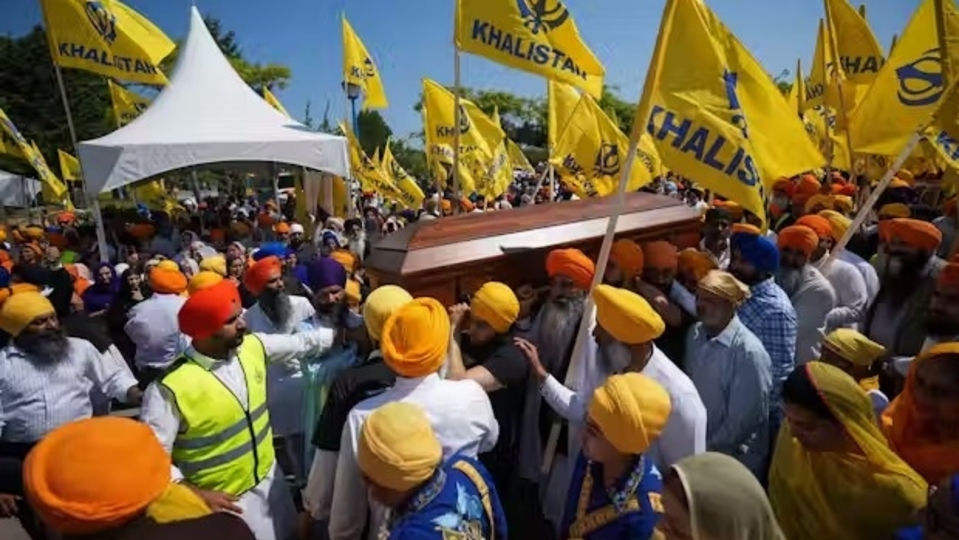
While PM Modi has asked the Canadian government to ensure justice and uphold the rule of law, the Canadian government to the contrary has been instigating the extremists by making unsubstantiated allegations against India and that too from no less than the Prime Minister of Canada. Indian diplomats, like in Pakistan, have been put under surveillance and third-party muscle men are being used to make Indians cower down to brute force.
It is not that Khalistan extremist activity in Canada has been dormant in the past since the downing of Air India Flight 182 in 1985, the issue was only taken up forcefully by the Narendra Modi government since 2014. The Canadian government's response of defaming India reflects the angst of the Trudeau regime against India for taking up the issue of Khalistan extremists with facts and figures.
Also read: PM Modi hits out at Justin Trudeau regime for Brampton temple attack
The unsubstantiated allegations against India also suit Canadian politics across the board as the Khalistani extremists are a significant vote bank in a country where people are not that enthusiastic about voting. The Khalistan extremists vote en masse and have acquired the potential to swing votes for political power. It is for this very reason that the response of the Canadian opposition to the Brampton temple attack was at best muted and for the record.
The radicalization of the Sikh youth and weaponization of the Khalistani extremists by the Trudeau regime in Canada may have electoral yield for the Liberal party but this will surely harm the country's interest in the near future as violent speech and action will be a legitimate tool for the activists. The instigation of extremists may also yield electoral dividends to the ruling Democrats across the Canadian border in the ongoing electoral cycle but extremism, as has been evident in the past, cannot be controlled once the genie is out.
Also read: Exclusive: Six service chiefs back military theatre commands
However, it will be in Canadian interest to take note of PM Modi’s strong statement as the Indian leader has spoken after repeated provocations by his Canadian counterpart after the G-20 summit in New Delhi. The Indian leader normally does not make a direct statement and only does after detailed analysis and critical evaluation. If anyone has any doubts, they should ask Pakistan and China.
Also read: US, India discuss key security initiatives, roadmap for clean energy partnership
PM Modi’s statement also makes it evident that India expects matters with Canada to get worse till the Canadian general elections next October. Except from now on, India will hold Trudeau accountable for any Khalistan extremism directed against India.


