E-Paper



Why state govts are reluctant to cut taxes on petroleum products
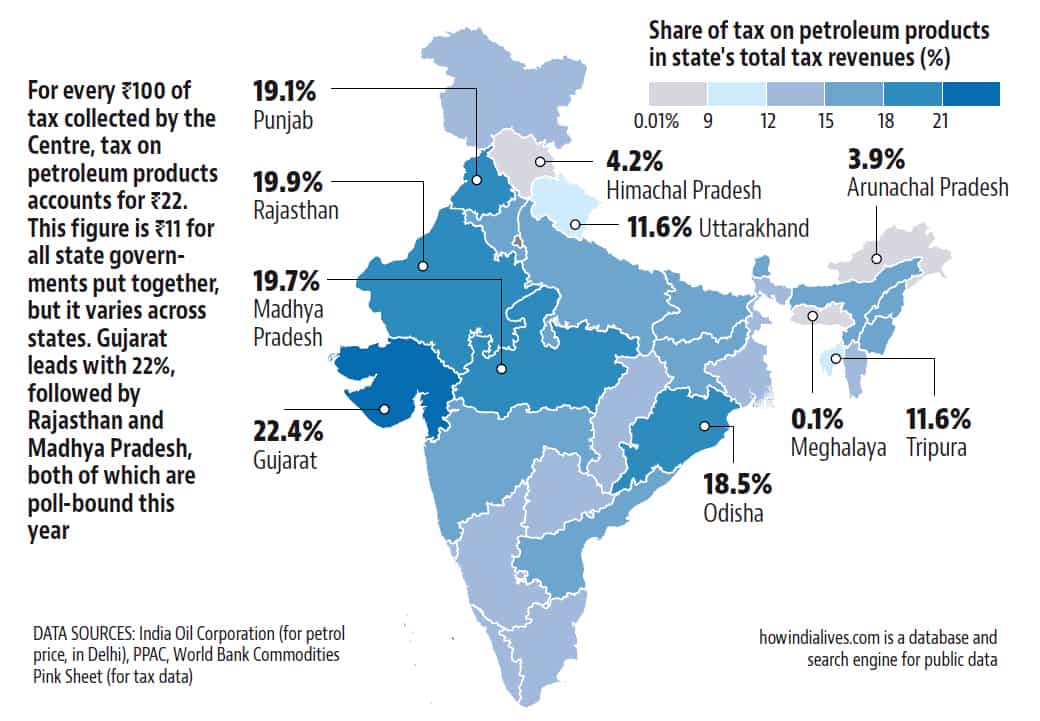
State government rely heavily on tax revenues from petroleum products.
Updated on: May 23, 2018, 10:07:02 IST

 Prefer HTon Google
Share via


Copy link

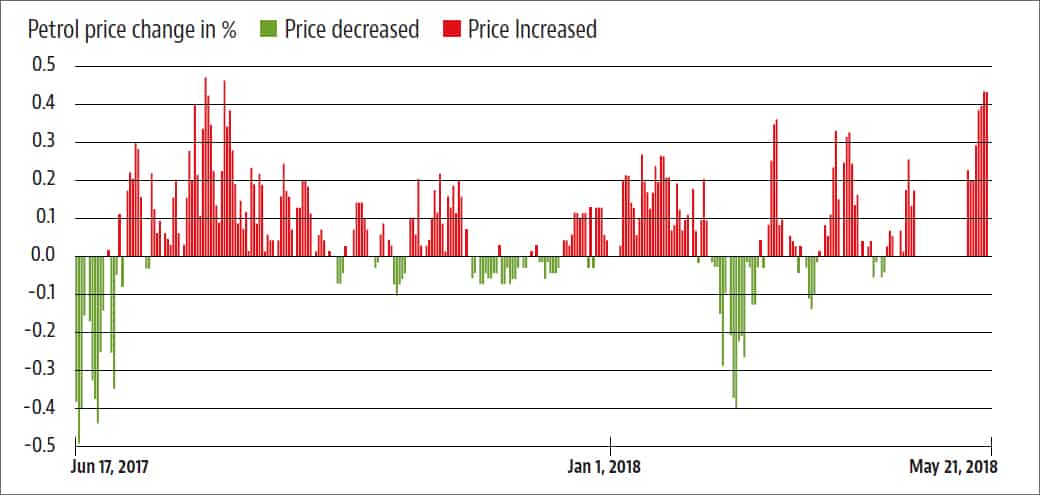
On June 16, 2017, the central government allowed oil companies to revise prices fuel daily. In the 339 days since, petrol prices have increased on 193 days — or three out of every five days. If both Central and state governments removed all taxes, petrol would cost only Rs 40.55 per litre in Delhi. The Centre charges an excise duty of Rs 20.66 per litre. Additionally, states charge as sales tax or value added tax anywhere between 16.6% (Goa) and 40% (Greater Mumbai Region). Both could cut taxes to lower fuel prices. However, both rely heavily on tax revenues from petroleum products.
Daily change in petrol price
Taxes on petroleum products dominate tax revenues of states