E-Paper



Why the Supreme Court effectively scrapped the April 8 governor’s judgment
The Supreme Court said the queries went to the “very core” of democratic governance, necessitating a clear judicial response under Article 143 of the Constitution

 Prefer HTon Google


The Supreme Court on Thursday held that April’s two-judge bench ruling in the Tamil Nadu governor case, which prescribed timelines for gubernatorial and presidential action on bills, generated “a state of doubt and confusion” on several core constitutional questions. Stressing that such uncertainty could not be allowed to persist, the five-judge Constitution bench said that an authoritative opinion was necessary to restore clarity on the functioning of key constitutional offices under Articles 200 and 201.
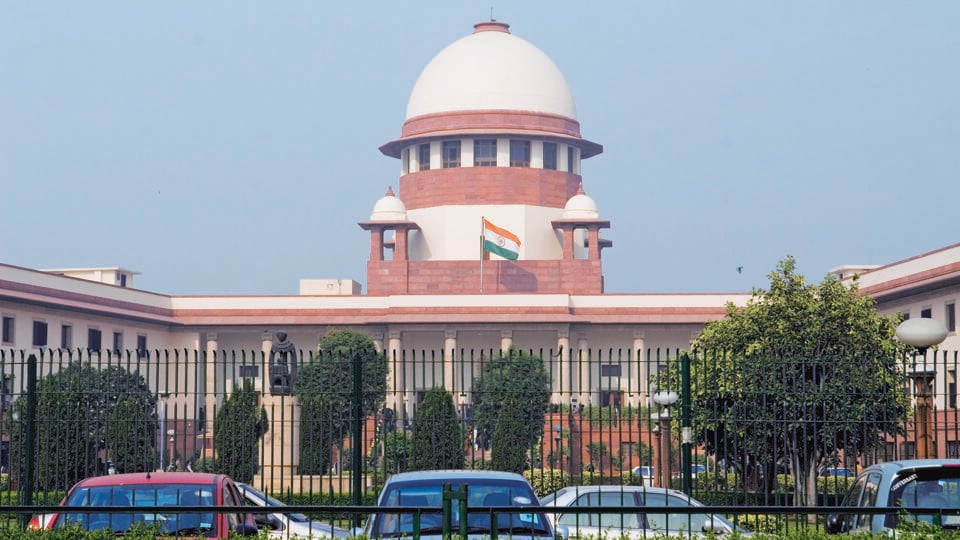
At the outset, the bench comprising Chief Justice of India Bhushan R Gavai and justices Surya Kant, Vikram Nath, PS Narasimha and Atul S Chandurkar underscored that the issues raised in the presidential reference had arisen directly in the aftermath of the Tamil Nadu judgment, especially on matters such as the extent of executive discretion, the options available to governors under Article 200, the permissibility of prescribing time limits, whether governors are bound by ministerial advice and the justiciability of decisions under Articles 200 and 201 (state bills). The bench noted that several conclusions in the Tamil Nadu ruling appeared to vary from established precedent, despite the earlier bench’s attempt to reconcile them.
Also Read: Searching for federal balance in India
Holding that the prevailing uncertainty threatened the smooth functioning of the constitutional scheme, the bench said that the law relating to the exercise of powers by governors and the President “cannot be left in a state of confusion”, especially when it affects the day-to-day working of the federal system.
While rejecting objections raised by states such as Tamil Nadu, Kerala, West Bengal and Punjab on maintainability, the bench clarified that the present reference was not an “appeal in disguise”. Rather, it was a distinct kind of reference, a “functional reference” dealing with foundational modalities of governance that “strike at the root of the continuation of our republican and democratic way, and the Constitution’s federal character.”
The bench emphasised that the questions posed by the President did not require the court to overrule or sit in appeal over the Tamil Nadu judgment. Instead, they required a fuller exposition and clarification of the legal propositions that have wide ramifications across all states, far beyond the specific parties in the Tamil Nadu litigation.
Also Read: Not only Tamil Nadu, 2023 judgment in Punjab governor case was also wrong, says SC
The bench stressed its “institutional responsibility” to answer questions raised by the highest constitutional authority and stated that judicial propriety demanded that the court respond.
Recording the submissions of Attorney General R Venkataramani and Solicitor General Tushar Mehta, the court noted that the Union too sought only clarifications for future governance , not assailing the orders issued in the Tamil Nadu case.
The judgment also relied on earlier references to explain the court’s jurisdiction. Citing Justice YV Chandrachud’s view in In Re: Special Courts Bill and the holding in the 2G spectrum reference (In Re: Natural Resources Allocation), the bench recalled that a Presidential reference may even lead to an earlier view being clarified, read down, or, if necessary, overruled. Hence, objections based on similarity of issues were dismissed at the threshold.
The bench also rejected the argument that the reference was “mala fide” merely because it did not expressly mention the Tamil Nadu judgment, calling the objection a “leap in logic” inappropriate to be levelled against the President. In any case, it stated, a challenge to the maintainability of a reference on allegations of mala fides is no longer permissible after Natural Resources Allocation.
Emphasising the gravity of the constitutional questions involved, the bench stated that the queries went to the “very core” of democratic governance, necessitating a clear judicial response under Article 143.
On merits, the bench concluded that governors and the President cannot be bound by judicially imposed timelines when dealing with Bills under Articles 200 and 201. It further held that the Constitution does not recognise the concept of “deemed assent”.