
 E-Paper



Will defer to AAIB to provide information: Boeing after AI crash probe report
The AAIB report said both engines of the Air India Dreamliner failed mid-air just seconds after takeoff, according to findings released early Saturday.


Following the release of the preliminary report by the Aircraft Accident Investigation Bureau (AAIB) regarding the Air India Flight 171 crash in Ahmedabad, Boeing on Saturday stated that it would defer to the agency for providing information related to the incident.
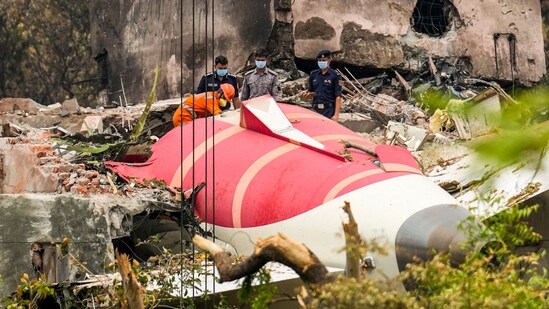
The crash occurred on June 12, just minutes after the plane took off.
The aircraft manufacturer added that it will continue to assist with the investigation and support its airline clients throughout the process.
In a statement issued after the AAIB’s initial findings were made public, Boeing said, “Our thoughts remain with the loved ones of the passengers and crew on board Air India Flight 171, as well as everyone affected on the ground in Ahmedabad. We continue to support the investigation and our customer.”
“We will defer to the AAIB to provide information about AI171, in adherence with the United Nations International Civil Aviation Organisation protocol known as Annexe 13,” the company added.
According to the report, released shortly after midnight on Saturday, both engines of the Air India Dreamliner stopped working mid-air just seconds after departure.
The AAIB’s findings on the Boeing 787-8 crash—which resulted in 260 fatalities, including 241 out of the 242 people on board—revealed that the aircraft’s fuel cutoff switches, which control fuel flow to the engines, shifted from the ‘RUN’ to ‘CUTOFF’ position almost at the same time, within the span of one second.
What did Air India pilots say before Ahmedabad crash?
In its preliminary findings on the June 12 Air India crash in Ahmedabad, the AAIB said that cockpit voice recordings revealed a brief but crucial conversation between the two pilots during the engine failure.
According to the 15-page report, one of the pilots was heard asking, “Why did you cut off fuel?” with the other responding, “I did not do so.” This exchange occurred moments after both fuel cutoff switches for the engines moved from the 'Run' to 'Cutoff' position at 13:38:42 IST (08:08:42 UTC), just as the Boeing 787-8 Dreamliner reached its peak speed of 180 knots indicated airspeed.
The aircraft was being operated by Captain Sumeet Sabharwal and First Officer Clive Kunder at the time of the crash. Captain Sabharwal, 56, was a seasoned pilot with over 15,600 flying hours, more than 8,500 of which were on the Boeing 787. First Officer Kunder, 32, had logged more than 3,400 flying hours and had been serving with Air India since 2017.
Both were certified to fly the Boeing 787.
The report details the sequence of technical failures that led to the final moments before flight AI171, which was headed to London Gatwick, crashed into the hostel premises of B J Medical College shortly after takeoff from Ahmedabad airport.


