
 E-Paper



‘Women largest minority’: SC seeks Centre’s reply on enforcing 33% reservation
Responding to a public interest plea, the top court stressed that women makes up the “largest minority” in India and that political equality for them is a constitutional pledge

 Prefer HTon Google


The Supreme Court on Monday stressed that women constitute the “largest minority” in India and that political equality for them is a constitutional pledge, as it sought the Centre’s response on a public interest plea pressing for the immediate implementation of the women’s reservation law to reserve a third of the seats in Lok Sabha and state assemblies.
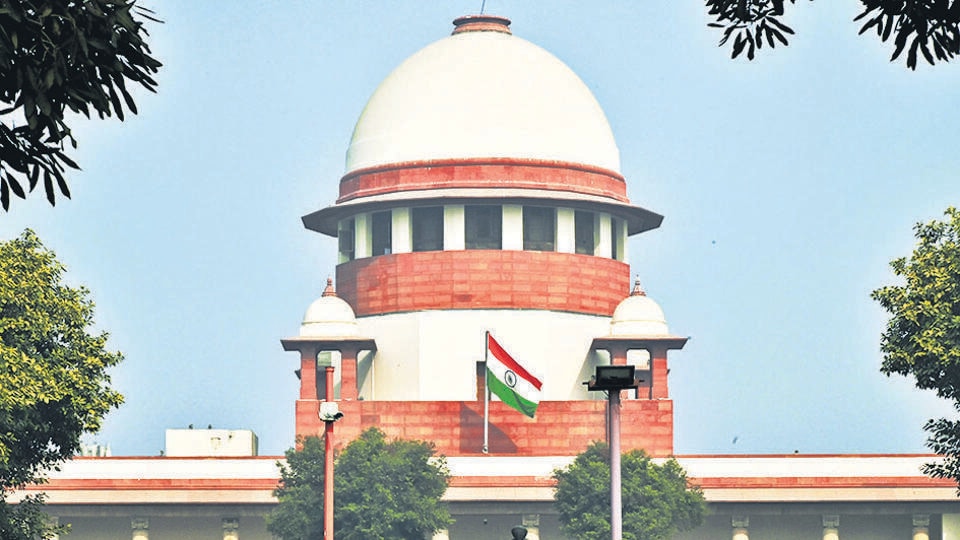
A bench of justices BV Nagarathna and R Mahadevan, while hearing the plea, remarked that the promise of equality in the Preamble must translate into real representation.
“The Preamble says political and social equality. Who is the largest minority in this country? It is the woman… almost 48 %. This is about the political equality of women,” Justice Nagarathna observed during the hearing.
The court was dealing with a petition moved by Congress leader Jaya Thakur, who has sought the enforcement of the Nari Shakti Vandan Adhiniyam (Women’s Reservation Act) without waiting for a fresh census and delimitation exercise. The 2023 legislation mandates reserving one-third of seats in the Lok Sabha, state legislative assemblies, and the Delhi Assembly for women, but ties its implementation to the next delimitation to be carried out after the first census post-enactment.
Appearing for Thakur, senior advocate Shobha Gupta contended that even after 75 years of Independence, women were compelled to approach courts to seek their rightful political space. “They have to reserve only one-third of the total seats. They have decided to grant the reservation based on some data,” she argued, urging the court to declare the proviso linking reservation to delimitation as void.
However, the bench pointed to constitutional limits of judicial intervention in matters of legislative implementation. “Enforcement of law is up to the executive and we cannot issue a mandamus,” observed the court, while nonetheless issuing notice to the Centre and directing that the Union’s top law officers be served.
Passed by the Lok Sabha on September 20, 2023, and by the Rajya Sabha a day later, and assented to by the President on September 28, the Women’s Reservation Act inserted Article 334A into the Constitution. The provision stipulates that the quota will come into effect only after a census is conducted and constituencies are re-drawn. The reservation will remain in force for 15 years, with Parliament retaining the power to extend it.
The next census is due to be wrapped up by March 1, 2027, with the enumeration exercise slated to begin in April, 2026.
Thakur initially approached the Supreme Court in 2023 seeking implementation of the quota before the 2024 general election. The petition was not entertained then but was refiled in 2025 and has now been taken up in open court for the first time. Her plea now challenges the constitutional condition tying the reservation to delimitation, contending that the delay frustrates the very aim of enhancing women’s participation in lawmaking.



