
 E-Paper



Women officers can get permanent commission in army, says SC. What it means
The Supreme Court has given the government three months to comply with the verdict.


In its landmark verdict that ordered the government to give permanent commission to women in the army, the Supreme Court on Monday also ended the prohibition on women being considered for command appointments.
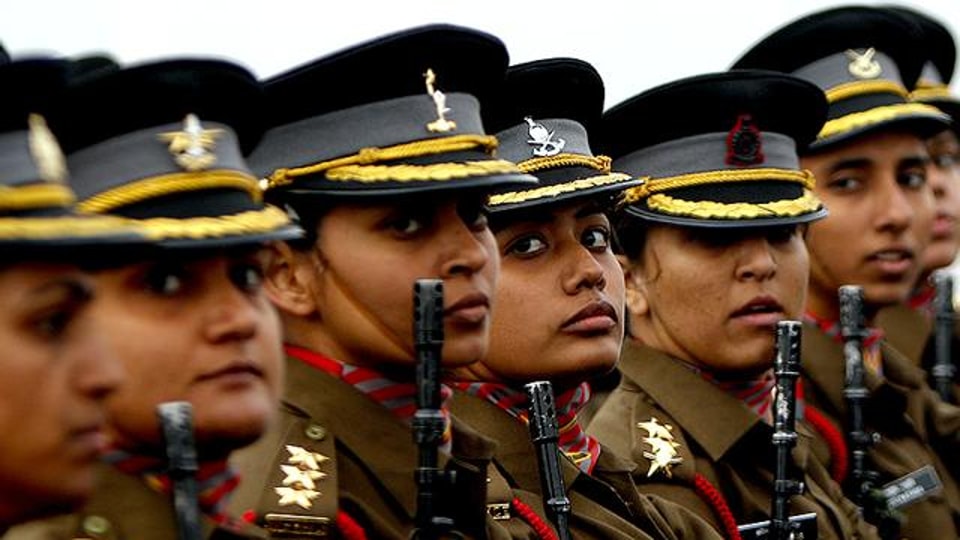
The army had been reluctant to let women hold these posts, arguing that the male soldiers mostly drawn from rural areas were not “mentally schooled” to accept women officers in command of units. It had also claimed that women officers have a “lower physical capacity” which would pose a challenge for them since officers are expected to lead the soldiers from the front and should be in prime physical condition.
A two-judge bench of the top court comprising justices DY Chandrachud and Ajay Rastogi rejected these arguments, holding that such arguments cast aspersions on the ability of women and their achievements. It is not only an insult to women but also to the Indian army, the Supreme Court ruled.
The top court has given the government three months to comply with the verdict.
Women in Army
The Army opened its doors to women in 1992 when about 1,800 candidates applied for 50 vacancies, an average of 36 applicants for each vacancy. In 2005, the figure shot up to 150 applicants per vacancy. The number of women in the army saw a steady increase and by 2018, crossed 1,500. That figure excludes women officers in the medical, dental and nursing streams.
Permanent Commission
The Supreme Court directed the Centre to grant permanent commission to women officers who opt for it irrespective of the number of years they have spent in the armed force.
This new policy will benefit all Short Service Commission (SSC) women officers, noted the top court. “SSC women officers with less than 14 years, as well as beyond 14 years of service will be granted permanent commission,” the court observed.
The Centre had earlier said short service commissioned women with up to 14 years of service would be considered for permanent commission. Women with more than 14 years of service would be permitted to serve up to 20 years.
Command Appointments
The Supreme Court has also held that the army stand to let women officers hold only staff appointments, and not command appointments, violated the constitutional guarantee of equality.
Retired army officer Lt Gen Satish Dua welcomed the top court verdict. Gen Dua told news channel NDTV that women had acquitted themselves in every role that had been assigned to them.
Women officers who had challenged the government’s policy of restricting the number of years in service and limited the nature of posts that they could hold, had rebutted the army. They argued that they had led platoons and companies of soldiers and men, both in peace locations as also hostile locations and operations.
The officers argued that the government’s stand was “not only highly regressive but also completely contrary to the demonstrated record and statistics”.


