
 E-Paper



Xi replaces PLA commander who started Ladakh standoff; fingers crossed in Delhi
The change of guard in the leadership of the Western Theatre Command has sparked hope in New Delhi that General Zhao’s replacement may not be as vitriolically anti-India. Gen Zhao, who had also engineered the 2017 Doklam conflict with India, has been seen as a hardliner against India and Bhutan.

 Prefer HTon Google


Chinese President Xi Jinping has moved out General Zhao Zongqi, the People’s Liberation Army’s powerful Western Theatre Commander, seen as the man responsible for the seven-month long military standoff with India in eastern Ladakh, and replaced him with General Zhang Xudong, who has never served along the Indian border.
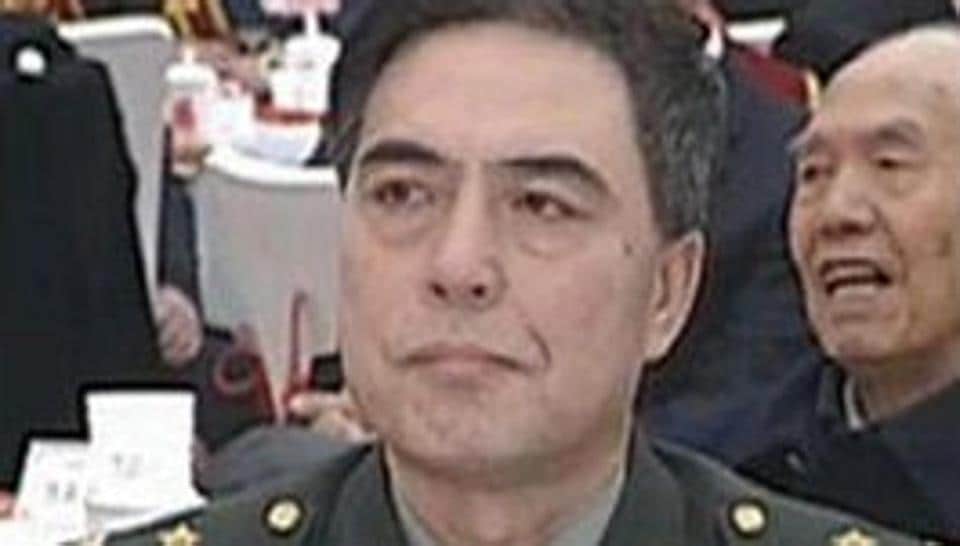
The change of guard in the leadership of the Western Theatre Command has sparked hope in New Delhi that General Zhao’s replacement may not be as vitriolically anti-India. Gen Zhao, who had also engineered the 2017 Doklam conflict with India, has been seen as a hardliner against India and Bhutan.
This is the first time that an officer appointed to lead the Western Theatre Command does not have experience of serving on the Indian border. General Zhang is 58, much younger to Zhao, who reached the retirement age of 65 in the summer this year
“The tone and demeanour of the PLA commander during the next military commanders’ meeting would throw some light on the complex undercurrents in the PLA,” an Indian military commander said, requesting anonymity.
Also Read: Pushed over the edge, PM Oli drops a bombshell on rivals that also hurts China
“We are keeping our fingers crossed,” said the officer cited above, adding that the Indian side expected some clarity when army commanders from the two countries hold the next round of talks over the standoff in the eastern Ladakh sector.
China watchers said there was no information to indicate that General Zhang, unlike his predecessor, had any political ambitions and was expected to take decisions on professional merits.
In Indian military circles, Gen Zhao, who was a member of the communist party’s central committee, was perceived to be angling for a seat on the Central Military Commission that would have allowed him to serve till he turns 72.
Gen Zhao, who took over the Western Theatre Command in 2016, was already on an extended term. He had reached the retirement age of 65 this summer but had been allowed to continue in the post by President Xi.
New Delhi’s assessment is that Gen Zhao had the approval of the Xi-led Central Military Commission when PLA troops carried out the initial incursion in the Finger area near Pangong Tso in late April and early May. But there was some discomfort over the misadventure after the bloody Galwan Valley clash in June, the deadliest clash between soldiers of the two countries since 1975, in which 20 Indian troops and an unspecified number of Chinese soldiers were killed.
Over the next few weeks and months, the initial tactical success met with a stiff Indian response, including consolidation of the heights on the south bank of the salt-water lake resulting in a strategic loss to China.
Also Read: China’s new road cuts travel time to Karakoram Pass, raises red flags in Delhi
Indian officials said there has been no confirmation if General Zhao was still resisting possible directions from the communist party leadership to soften his position, disengage and de-escalate. But there have been gaps, an official said, in the line adopted by China during the diplomatic talks and the military negotiations.
Born in the coastal province of Liaoning, Gen Zhang is a Han and has served in the erstwhile Shenyang Military Region in northeast China. He was the Chief of Staff of the 39th Army of the PLA. From March 2017 to January 2018, Zhang was the deputy commander of the Central Theatre Command (CTC) which is responsible for the security of the Chinese capital Beijing.
At the military parade to celebrate the 70th anniversary of the founding of China in 2019, Zhang acted as deputy commander of the Joint Military Parade, which was widely appreciated within the central military commission.
Zhang, who has been transferred to Chengdu as Western Theatre Commander, is not a member of the central committee or the National People’s Congress. He does not have any ‘political’ exposure’ unlike his predecessor and no known political ambitions.


