
 E-Paper



Sitaram Yechury, D Raja forced to return from Srinagar
Yechury left a hand-written note for Tarigami, the CPI(M) MLA, saying he had come to Kashmir to show solidarity and commitment to defend democracy and secularism.


Communist Party of India (Marxist) general secretary Sitaram Yechury and his Communist Party of India counterpart D Raja were forced to return from Srinagar airport on Friday without meeting CPI(M) legislator Mohamed Tarigami, triggering protests by Left parties against the government.
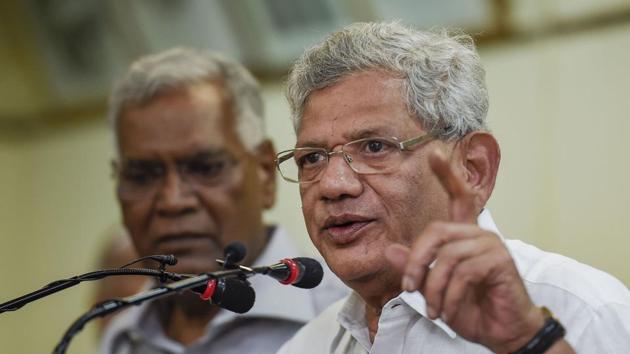
Yechury left a hand-written note for Tarigami, the CPI(M) MLA, saying he had come to Kashmir to show solidarity and commitment to defend democracy and secularism. Earlier this week, the Centre had nullified Article 370 that granted special status to Jammu and Kashmir and carved the state into two Union territories.
The denial of permission to the Left leaders comes a day after Ghulam Nabi Azad, leader of Opposition in the Rajya Sabha, was similarly forced to return from Srinagar airport after authorities refused to let him enter the city. Yechury had written to J&K governor Satyapal Malik about his proposed journey to meet Tarigami, who is reportedly not keeping good health.
The CPI(M) politburo has “condemned” the treatment meted out to Yechury and Raja. “This shows the authoritarian face of the BJP government,” it said. There was a gradual clampdown in the Valley since last week and security was further tightened after Parliament nullified Article 370 and cleared the bifurcation of J&K.
The incident involving Yechury and Raja comes at a time when several Opposition parties have slammed the “detention” of senior political leaders in J&K. National Conference (NC) leader Omar Abdullah and Peoples Democratic Party’s Mehbooba Mufti have been incommunicado since the twin announcements were made by Union home minister Amit Shah in the Rajya Sabha on Monday. However, NC patron Farooq Abdullah on Tuesday contested the government’s claim that he was not under detention.
Congress leader Rahul Gandhi has alleged that political leaders in Kashmir had been jailed at secret locations, which was “unconstitutional and undemocratic”, and demanded their immediate release.


