
 E-Paper



Delhi polls: Kejriwal a lesson to India’s political class
The 2013 Delhi assembly elections ought to be an eye-opener for India's political class - what with the year-old Aam Aadmi Party (AAP) emerging as the agenda-setter for the politics in the city-state.


The 2013 Delhi assembly elections ought to be an eye-opener for India's political class - what with the year-old Aam Aadmi Party (AAP) emerging as the agenda-setter for the politics in the city-state.
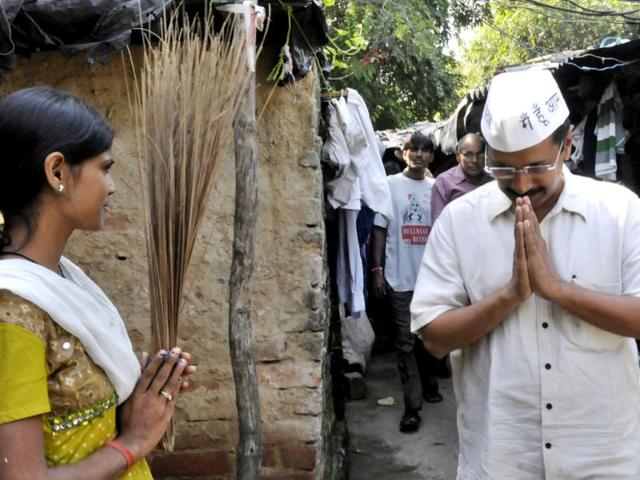
The Arvind Kejriwal-led party has decimated the 128-year-old Congress, which ruled Delhi for an uninterrupted 15 years, to a poor third place.
The BJP is headed for a 4-0 win - a clean sweep in Madhya Pradesh and Rajasthan, with an edge in Chhattisgarh and Delhi.
But it's the AAP that has shown what the public wants - change.
The people's mandate has made it clear that they want established political parties to change their ways of functioning, and to become more transparent and open.
Kejriwal rode his party on a strong anti-Sheila Dikshit sentiment - indeed, Dikshit resigned as Delhi chief minister on Sunday - as well as the unholy nexus between the Congress and the BJP.
Many believed that the two rival parties were happy with the Congress heading the city-state government and the BJP ruling the municipal corporation - thereby, both enjoying their respective shares of the capital's pie.
Kejriwal brought out this nexus, also seen in many other states, into the public domain for the first time and exploited it for AAP's ends. His efforts showed dividends on Sunday.
While the Congress in Delhi had anti-incumbency working against it, the BJP also had a silent incumbency of heading the municipal corporation for almost eight years without bringing any change.
In fact, the two parties offered a striking similarity in their model of governance - giving Kejriwal a platform to hit both parties and create an instant rapport with disillusioned voters.
Another advantage for Kejriwal was that his 'campaign' began much earlier than that of the Congress and BJP.
The AAP volunteers had covered all constituencies while India's two biggest parties were still deciding their candidates.
A high-decibel campaign and optimal use of the media to create buzz helped Kejriwal and others from the AAP to deliver an impressive debut.
However, Kejriwal's goal is not Delhi.
He is looking at the 2014 general elections and his party will be fielding candidates for the Lok Sabha polls in Haryana, Uttar Pradesh, Rajasthan and Madhya Pradesh.
The AAP may not get many MPs, but it has definitely impacted India's reactionary political system.
Meanwhile, the current mood of the Indian public is clearly not favourable to the Congress.
In Rajasthan, where an anti-incumbency vote has anyway been the trend, public sentiment against chief minister Ashok Gehlot has given the BJP a sweeping win.
In Madhya Pradesh, people reposed faith for the third time in chief minister Shivraj Singh Chouhan - bringing him on par with BJP prime ministerial candidate Narendra Modi, a three-time Gujarat chief minister.
These assembly elections set the tone for the 2014 general elections - Modi's aggressive campaigning across the country seems to be working.
And it must leave the Congress-led UPA government fretting over its future in 2014.


