Sign in

Heat now second-largest natural killer of Indians, toll crosses 2,000

In India’s natural death trap, the sun is the second biggest killer after water and its victims have increased by over 60% in the last decade as thousands die because of ineffective heat management plans by the government.

Updated on: May 31, 2015, 16:34:43 IST
Hindustan Times | By , Hyderabad
Share
Share via
  • facebook
  • twitter
  • linkedin
  • whatsapp
Copy link
  • copy link

In India’s natural death trap, the sun is the second biggest killer after water and its victims have increased by over 60% in the last decade as thousands die because of ineffective heat management plans by the government.

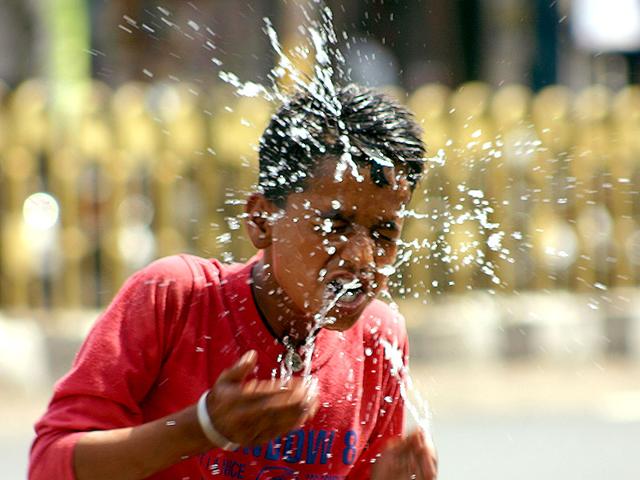
Article image

National Crime Records Bureau data shows a searing heat wave has clocked the highest toll in 15 years, killing over 2,000 people.

In fact, the number of victims was more than double than that in 2003 and a long-term analysis revealed the lives claimed by India’s sizzling summers have been steadily rising. Between 2005 and 2015, the highest number of deaths was reported in 2012 when the toll was the maximum among all natural disasters.

The blazing heat was way behind floods in its killing ability till about ten years back but has since caught up, a fact experts blame on climate change.

Global temperatures have risen by an average of 0.8 degree C in the last century but warmer tropical regions, including south India, have witnessed a spike of between two and four degrees, said the fifth assessment report of the Intergovernmental Panel on Climate Change.

Human activity may have made the situation worse. Phenomena such as the urban heat island effect – where a city or metropolitan area becomes significantly warmer than its surrounding rural areas – can make ambient temperature feel three to four degrees higher than what it is, said Arjuna Srinidhi, a programme manager at the Centre for Science and Environment.

This has also contributed to heat wave conditions in 2015 lasting fewer days than in 2010 but raking up a higher death toll, she added.

Climate experts point out India hasn’t done enough to adapt itself to rising temperatures, especially in saving human lives.

“The historical summer data shows heat-prone regions in coastal, southern and central India,” said a scientist with the Indian Institute of Tropical Meteorology.

But this knowledge hasn’t helped as these regions continue to report a heavy toll, raising questions about the government’s drought-proofing and disaster management plan.

The National Disaster Management Authority, which is mandated under law to prepare disaster management plans, had requested the states to map heatwave-prone areas and create adequate infrastructure, including health facilities, to cope with the blistering sun. But a government official accepted the plan more or less remained on paper.

Read | May has been a month of extreme weather around the world

  • Chetan Chauhan
    ABOUT THE AUTHOR
    Chetan Chauhan

    Chetan Chauhan is the National Affairs Editor looking into all aspects of news and features from across India. A Chevening scholar with over three decades of experience in reporting and news management, Chetan has extensively covered all important aspects of the social sector, political economy, environment and climate change nationally and internationally. He did a journalism course at the Reuters Institute of Journalism in Oxford and Digital Media training at Nanyang Technological University in Singapore. He started as a reporter with The Statesman in 1996 and joined the Hindustan Times in 2000 in the metro bureau covering environment, crime and Delhi politics. He covered hot local news, from the Jessica Lal murder case to the rebellion of Delhi Congress MLAs against then Chief Minister Sheila Dikshit, to the replacement of toxic vehicle fuel with cleaner compressed natural gas (CNG) in the national capital. Some of his stories on air pollution became part of the Supreme Court’s landmark MC Mehta versus Government of India case in the National Capital Region (NCR), forcing the government to take corrective measures. As part of the national political bureau since 2004, he covered important central sectors such as environment, education, social justice, labour, rural development, water resources, renewable energy, agriculture, broadcasting and the Planning Commission for more than a decade producing several exclusive and investigative breaking stories. His specialisation is the environment, having covered at least a dozen United Nations global conferences on climate change, biodiversity and wildlife including climate summits in Paris, Copenhagen and Bali. He also covered India’s two five-year plans ---11th and 12th and reported on drafting and execution of right based laws such as Right to Education, Right to Information and rural job guarantee law, MG-NREGA, now being introduced in new format as VG-RAM-G Act. He has in-depth knowledge of social sector issues. He was one of the first to report on tigers vanishing from Sariska and Panna wildlife reserves in 2004 and 2008, respectively, leading to the setting up of the National Tiger Conservation Authority (NTCA) and the introduction of stringent penal provisions for poaching. He has written extensively on the rising human-animal conflict in India and the degradation of India’s biodiversity hotspots because of mining and other activities. Since 2004, Chetan has covered Parliament comprehensively and participated in training on the nuanced coverage of Parliament proceedings. He has travelled extensively across India to cover national and provincial elections since 1998, especially in the Hindi heartland states, considered India’s road to power. He writes a regular column for Hindustan Times, Ecostani, on important national politics, economy, Himalayan ecology and environmental issues. His other responsibilities include providing inputs for edits and edit page articles for the publication, apart from managing news flow from across India.Read More

Follow India news real-time updates and the latest news covered on Hindustan Times, featuring today's critical updates on Sonam Wangchuk Hunger Strike LIVE and more across India.