
 E-Paper



Kanhaiya released: Legal process that will follow in JNU sedition case
Arrested on sedition charge, JNUSU President Kanhaiya Kumar was released on a six-month interim bail on Thursday.


Arrested on sedition charge, JNUSU President Kanhaiya Kumar was released on a six-month interim bail on Thursday.
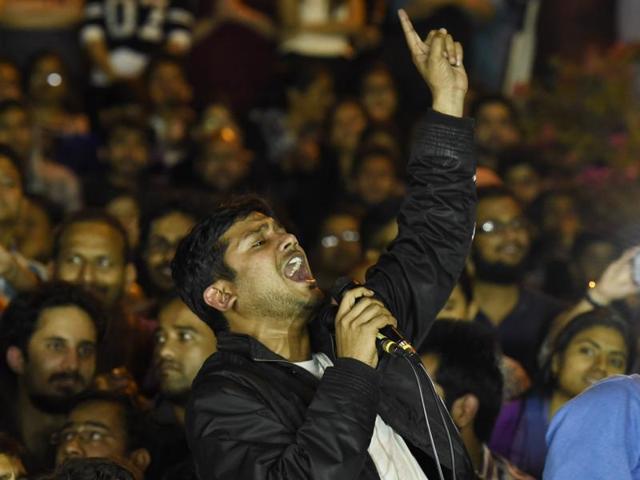
The court, which granted the interim bail on a personal bail bond of Rs.10, 000, has also asked Kanhaiya to cooperate with the police in the probe.
Kumar, a PhD student at the prestigious university, was released from the prison at 6:30 PM and accorded a spirited welcome by a group of students and teachers on being handed over to them.
Read more: In Pics: JNU erupts in joy as Kanhaiya Kumar returns to campus
HT explains the legal process that will follow in the JNU sedition case.
*Police continue to probe the case and are expected to file a charge sheet in 90 days from the date of registration of FIR.
*After Kanhaiya Kumar’s release on bail, the other two arrested accused - Umar Khalid and Anirban Bhattacharya are likely to seek bail.
*Police can arrest some other accused, particularly some outsiders who are said to have raised anti-India slogans during a function to commemorate the hanging of Parliament attack case convict Afzal Guru.
*Kanhaiya has been given interim bail for six months with stringent conditions. He might seek regular bail till completion of the trial process.
*The JNUSU president might move the Delhi High Court with a prayer to relax the bail conditions.
*He might choose to approach a higher judicial forum to get some of the comments made by the Delhi High Court in the interim bail order expunged.
*Delhi Police have the option of seeking cancellation of the bail granted to Kanhaiya Kumar for violation of bail conditions imposed by the Delhi High Court.
*On completion of the investigation, police can file either a change sheet or a closure report - depending upon the evidence gathered by them.


