
 E-Paper



Supreme Court says gay sex illegal, govt hints at legislative route
Given the volatile political atmosphere ahead of Lok Sabha elections, the government is unlikely to touch the contentious issue immediately. It would refrain from entering into a confrontation with religious groups. Why Delhi high court decriminalised gay sex

 Prefer HTon Google


The Supreme Court on Wednesday reinstated a colonial-era ban on gay sex that enables the jailing of homosexuals in a major setback for rights campaigners in the country.

A two-judge bench struck down a landmark Delhi high court ruling in 2009 which found that Section 377 of the Indian penal code prohibiting "carnal intercourse against the order of nature" infringed the fundamental rights of Indians.
The decision four years ago to decriminalise gay sex emboldened the still largely closeted homosexual community which has since campaigned publicly against widespread discrimination and ignorance.
But the Supreme Court bench, headed by GS Singhvi on his last day before retirement, found the high court had overstepped its authority and that a law passed by the British in 1860 was still constitutionally valid.
"It is up to Parliament to legislate on this issue," Singhvi said in the judgment which crushed the hopes of activists who had fought the case and led to tears outside the court in central New Delhi.
Read:Gay activists disappointed with SC verdict on homosexuality
The 2009 ruling was strongly opposed by religious groups, particularly leaders of Muslim and Christian communities, who appealed to the Supreme Court and were delighted with Wednesday's outcome.
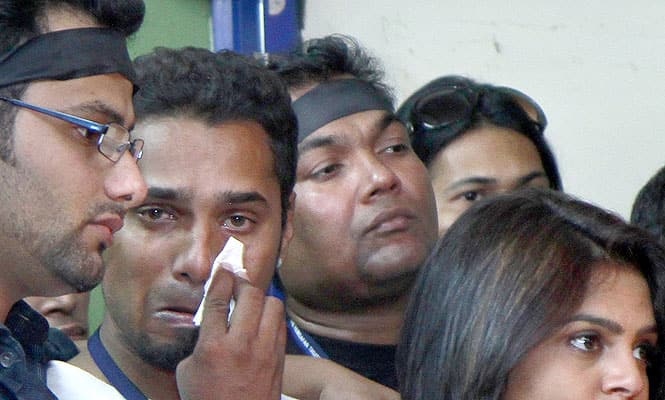
"Such a decision was totally unexpected from the top court. It is a black day for the community," Arvind Narayan, a lawyer of the Alternative Law Forum gay rights group, told reporters outside court.
"We are very angry about this regressive decision of the court."
Meanwhile, the government was non-committal on Wednesday on whether it proposes to overturn the apex court judgment by legalising sexual activity between consenting adults of the same sex in private through an amendment in the criminal law.
Read:Why Delhi high court decriminalised gay sex
Given the volatile political atmosphere ahead of elections, the government is unlikely to touch the contentious issue immediately. It would refrain from entering into a confrontation with religious groups, a majority of whom are strongly opposed to legalising homosexuality.
Government sources hinted that any move to amend Section 377 of the Indian Penal Code is bound to face tough resistance in Parliament from some parties, and building a political consensus at this juncture will be a tough task.
“The legislation will take time since there is no consensus,” said Union home minister Sushilkumar Shinde.
Law minister Kapil Sibal linked it to restoration of normalcy in Parliament.
"It is the prerogative of the Supreme Court under the Constitution to test the constitutionality of a law. They are exercising their prerogative. We have the prerogative to make laws. We shall exercise our prerogative," Sibal told reporters in New Delhi.
He was replying to questions on the apex court order setting aside a Delhi high court verdict decriminalising gay sex between consenting adult partners.
Asked 'how soon' will the government bring the matter in Parliament, Sibal said: "Well, if Parliament runs, we shall take it up."
Information and broadcasting minister Manish Tewari said the government will definitely take into cognisance the verdict of the Supreme Court.
"As far as the government is concerned, if I recall correctly, in 2009 or 2010 when M Veerappa Moily was the law minister, he had said that Section 377 of IPC should be decriminalised. But since a decision has come, the government will take cognisance of it and let you know," he said.
Read:Same-sex love extolled in Indian literature, history
The government had not challenged the 2009 landmark judgment by the Delhi high court, which had decriminalised consensual sex between adult homosexuals, and had left it to the Supreme Court to decide, which reversed the high court ruling, and upheld the criminal law provision which declares it a crime.
Reacting to the ruling, Harish Iyer, an equal rights activist, said gays have a constitutional right to be who they are. “The judgment criminalises gay sex but it can’t take away my right to be gay. The lawmakers or the country shouldn’t be bothered with what happens in the confines of my bedroom, if the act is with my consent,” Iyer said.
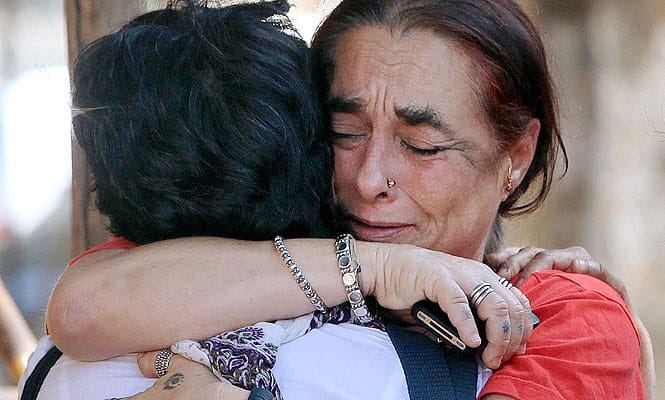
He further added that if it is possible a review petition must be filed.
Terming this day as a black day, Anjali Gopalan from the Naz Foundation said, “How could they do this? We will read the judgment carefully and look at all our legal recourses,” she said.
The activists felt that a big battle for the community lies ahead and there is an urgent need to rebuild the movement for gay rights.
“The next step is to rebuild the earlier movement against section 377 and every other form of violence, legal and non-legal, against LGBT communities. The Delhi high court order did not call for the repeal of 377 nor did it address any of the issues that actually affect poor and marginalised LGBT communities across the country,” said activist Ashley Tellis.
Human rights 'body blow'
Amnesty International called the decision a "body blow to people's rights to equality, privacy and dignity", while a legal challenge from gay rights groups is also possible.
Religious groups who opposed the 2009 repeal hailed the reinstatement of the law, which is rarely invoked in practice.
Activists say police use it to harass and intimidate gays who can be threatened with sentences of up to life imprisonment.
"We know that homosexuality is against nature," general secretary of the All India Muslim Personal Law Board, Abdul Raheem Quraishi, said. "It goes against all its laws and it is what led to the spread of HIV/AIDS."
The United Nations Development Programme on HIV/AIDS had argued in 2008 that decriminalising homosexuality would help India to combat the spread of HIV/AIDS which affects an estimated 2.5 million people here.
Gay sex has long been a taboo subject in India, where homophobic tendencies abound and many still regard being gay as a mental illness.
The 2009 ruling was widely described as India's "Stonewall" moment in reference to protests in New York 40 years earlier after a police raid on a gay bar which helped launch the gay and lesbian rights movement.
In recent years, the community in India has raised its profile through gay pride marches, magazines and events which have encouraged many to come out of the closet.
But the country still has no major gay public figures in politics, entertainment or sport.
A surprise ruling
The Indian-born author Vikram Seth, who is gay, said the judges had taken away "the rights, the prerogatives, and the dignity" of millions of Indians.
"Today is great day for prejudice and inhumanity and a bad day for law and love," he told the NDTV network. "Law develops and love is resilient and prejudice and inhumanity will be beaten back."
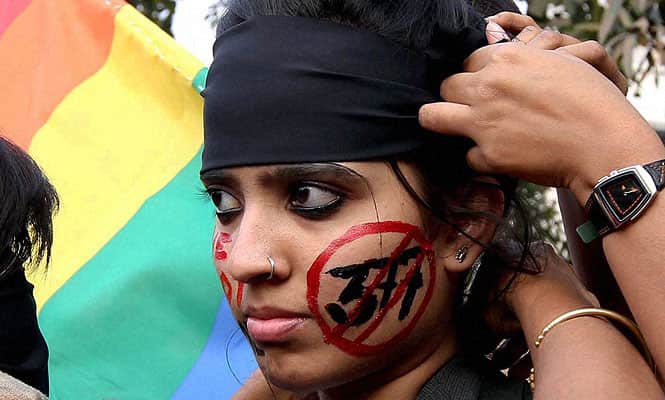
Several hundred gay activists gathered in downtown Delhi to protest the verdict, waving rainbow flags and chanting slogans for freedom.
"It will be back to the days when the police harass me for walking out on the street, thinking I am prostitute. At least that had changed a little after the 2009 verdict," said one of the protestors, Vikramaditya, a transgender research scholar.
At a smaller gathering in Mumbai, about 50 activists posed with a banner showing "377" with a red line through it.
"I came here expecting to celebrate. But the fight continues," said one 32-year-old woman who gave her name as Raj.
The Supreme Court ruling puts India back in the company of most nations in the Islamic world and many African countries which criminalise homosexuality. The only country in South Asia where gay sex is now legal is Nepal.
In most Western countries, the debate about same-sex couples has shifted on to their rights to marry.
In a Hindustantimes.com poll conducted on Wednesday, over 80% of the respondents answered in the negative, when asked whether they agree with the Supreme Court's order of criminalising homosexuality again. See poll results here.
Read:
Legality of homosexuality in India: A timeline of events
Read:
A timeline of LGBT rights throughout the world
Highlights of SC verdict
* No constitutional infirmity in Section 377: SC
* Parliament must take up legislation and it's not for courts to decide: SC
* Attorney general tells apex court that government has been enlightened since Delhi HC order and believes Section 377 should be overturned
Read:
Read:


