
 E-Paper



Clever toad mimics venomous snake for this reason. Scientists say it’s the ‘first frog to do so’
The Giant Toad shares its habitat with one of the most fearsome and venomous snakes Gaboon viper.


For human world, it’s often said that “imitation is the sincerest form of flattery.” However, when it comes to the animal kingdom mimicry can turn out to be the key for staying alive – like in the case of the Congolese Giant Toad found in Africa.
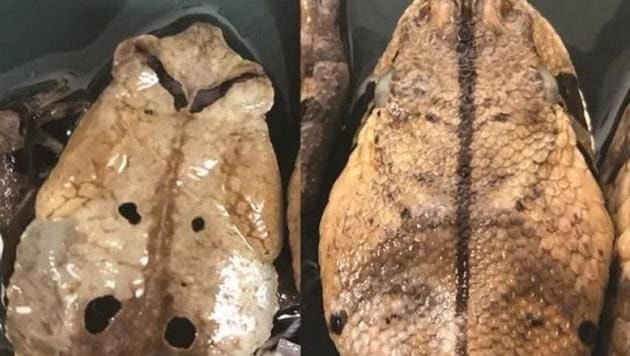
The Giant Toad shares its habitat with one of the most fearsome and venomous snakes Gaboon viper, reports CNN. The bite of the reptile can prove fatal for many – including different predators. Hence, in a feat of ingenious costuming, the amphibian learned to impersonate the venomous reptile to fool the predators.
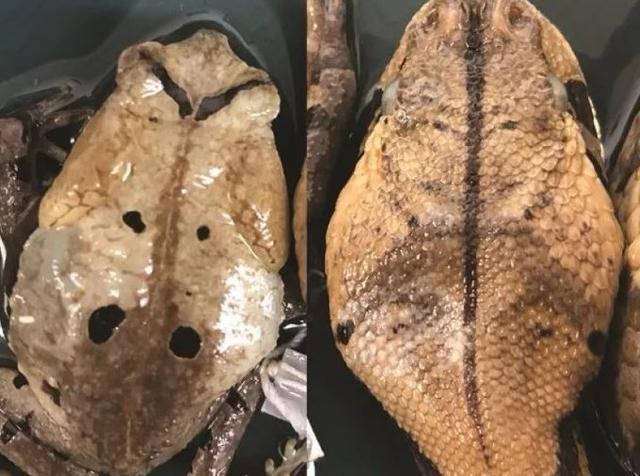
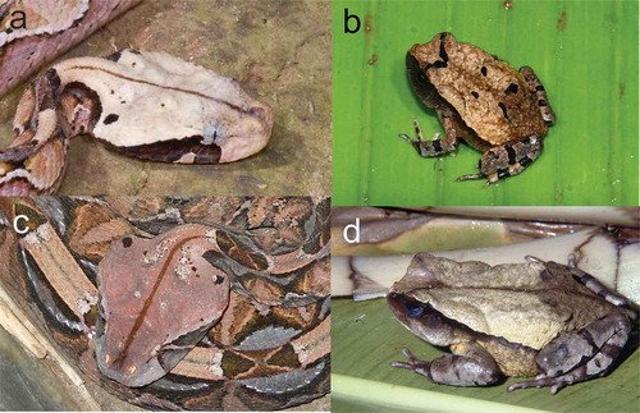
What, however, surprised the scientists is the extent of mimicry that this frog displays, reports CNN. The toad effectively impersonates the deadly viper’s beige-and-brown speckled head. It also makes a hissing sound, just like the snake. Further, the amphibian lays flat by dropping its eyes and cocking its head to appear more like the reptile in question.
The toad looks like the snake from the top, reports Newsweek. However, the effectiveness of its impersonation keeps the predators away. It’s because most cannot differentiate between the deadly viper and the toad that impersonated it.
This unique occurrence came into light from a recent study published by Eli Greenbaum. He’s a an associate professor of biological sciences at The University of Texas at El Paso and author of the study recently published in the Journal of Natural History. His study “explores a newly discovered natural defense against predation displayed by the Congolese giant toad.”
“It’s not a perfect match,” Eli Greenbaum told CNN. “But when something like a Gaboon viper is that dangerous, the most visually based predators are probably going to make the calculation – ‘Gosh, if it even looks close to a Gaboon viper, I’m not going to touch it,’” he added.
“This is the first example in the world – that we are aware of – of a frog attempting to mimic a venomous snake,” Greenbaum told News Scientist. “It’s rare for frogs to be involved in a mimicry complex in general,” he added. Also adding, this occurrence is a mixture of astonishment and wonder.
What do you think of this unusual mimicry?


