
 E-Paper



All a-bristle: Inside Jodhpur’s broom museum

 Prefer HTon Google


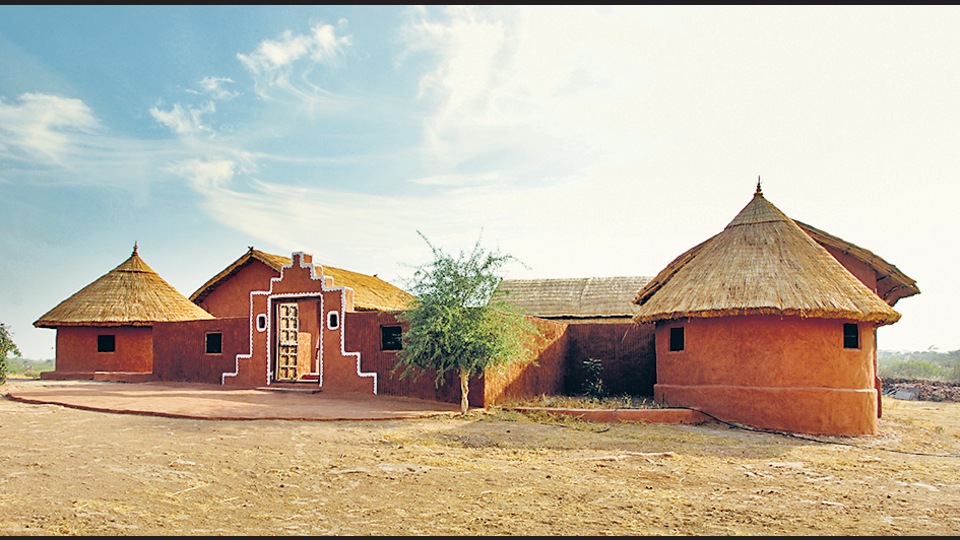
On display are ‘male’ brooms and ‘female’ ones, and some that must never be laid on the ground at all.
For most city-dwellers, the broom is an essential but ignored household item. In rural India, however, it has rich cultural, mythological and sociological significance. Brooms are prized as symbols of wealth, hidden from guests, are even used in birth and death rituals.
At Arna Jharna: The Thar Desert Museum, 15 km from Jodhpur city, a gallery forms what is possibly the world’s most extensive collection of brooms. Some 180 varieties have been sourced from across Rajasthan. They may look similar at first glance – but give them a closer look and they’ll tell stories of their place in the world, and the world of their makers. The museum’s founder, the late folklorist, ethnomusicologist and Padma Bhushan recipient Komal Kothari, divided the collection according to geography when he set up Arna Jharna in 2010. “Brooms are typically made from locally available grasses, shrubs and bushes,” says Kuldeep Kothari, Komal Kothari’s son, and secretary of Rupayan Sansthan that runs the museum.
So specimens from the drier bajra zone are typically short-bristled and brushy, those from the jowar zone are a little less so, while brooms from corn-growing areas, which gets more rain, show softness and flexibility. There are brooms made from sturdy shrubs and twigs to clean compounds and yards, and artistically woven ones made of daab grass that are only used in the kitchen and area of worship. Some are short-handled, designed for use only when the person (invariably a woman) is sitting on her haunches.
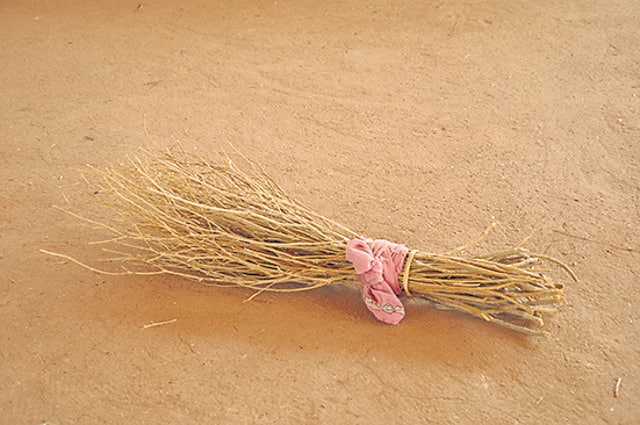
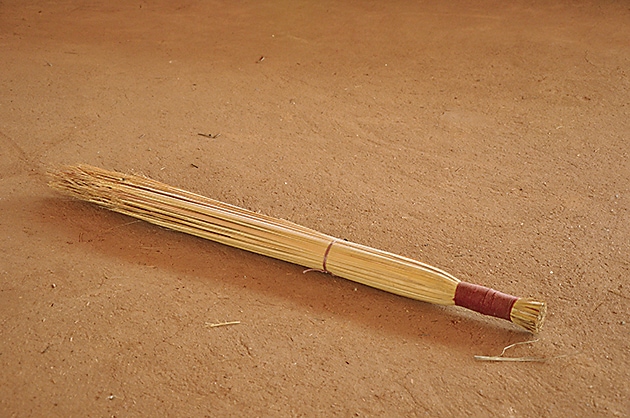
Brooms are gendered too. The bungra, said to be masculine, does the heavy outdoor work. Its mate, the bungri, is made from delicate grass, and is used to clean areas inside the house. Both need protection in a village household. The bungra is typically stored atop a tree, away from animals that might feast on the leaves. Bungris are also stored indoors at a height, so the kids can’t damage its delicate bristles. And neither must be seen by visitors. “Locals believe that a broom is Lakshmi. Just as you wouldn’t display your wealth to others, you wouldn’t show your broom to others as well,” says Kothari.
Many social and cultural beliefs around brooms stem from the scarcity of the material they’re made from, Kothari says. Rajasthan is prone to droughts and famine. When it doesn’t rain, it’s hard to find the right grass or bushes from which to make brooms. Most women stockpile these materials at their home, to prepare for the coming season.
Brooms have place of pride in rural domestic life. During Govardhan puja, usually held during Diwali, a specially woven broom is worshipped. “Women from the Meghwal community burn a small portion of the tip of a new grass broom as a symbol of the beginning of its relationship with the household and its homecoming from wilderness,” says Kothari. “In the local language this practice is called marrying the broom.”
And when the daughter of the house gets married, she is given all kinds of gifts, ornaments, utensils, clothes. But never a broom. “Families will give away their daughter but not their broom,” says Kothari, laughing. The belief is that if you part with the broom you part with your wealth. It’s also a talisman against bad omens. When men return to the village after immersing a dead resident’s ashes in a river, women sweep the entire area from the outskirts of the village to their homes.
The Arna-Jharna museum also houses Rajasthani musical instruments and traditional crafts items. Sections on local pottery and puppetry will be set up soon. The brooms, however, make a clean sweep of the most unusual stories.


