
 E-Paper



All aboard the gravy train: Swetha Sivakumar on sauces

 Prefer HTon Google


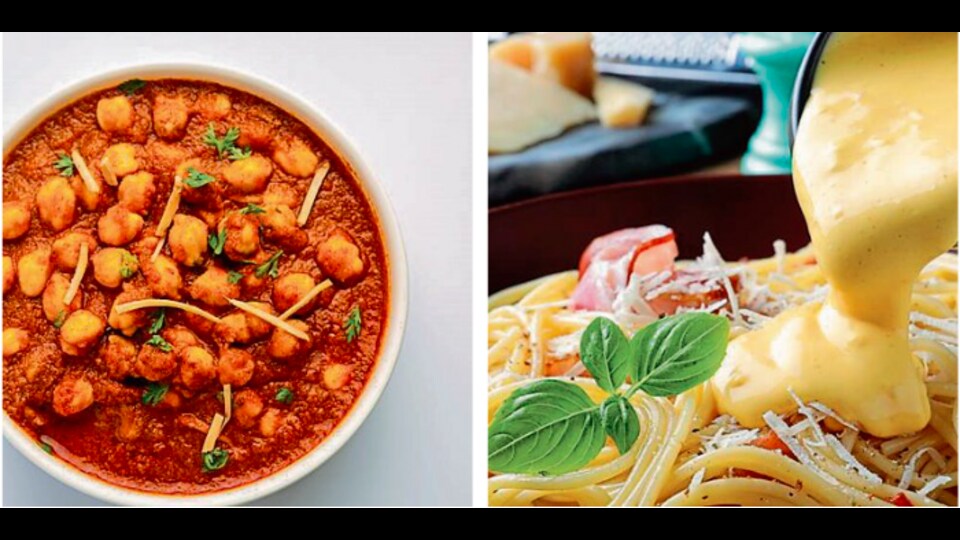
Sauces are delicately balanced recipes designed to keep a dish from being too runny, too thick, or curdling. What are the three pillars they lean on? Find out.
The term “stew” has its roots in the Old French “estuve”, a cooking technique in which ingredients simmer for a long time in a liquid.
The word “sauce” draws from the Latin “salsa”, which in turn draws from “sal”, for “salt”. Salt, the fundamental flavouring, has been livening up bland starches, meats and vegetables for at least 5,000 years. Over time, souring agents, aromatic herbs and spices were added to the boiling, salty mixes. Stews, and later, sauces, were born.
As cuisines evolved, flavour gained growing importance. Mouthfeel and consistency became vital, as part of this. And sauces turned into delicately balanced recipes designed to keep a dish from being too runny, too thick, or curdling. All sauce recipes, to this day, lean on one of three pillars: starches, plant purees, or fats.
Let’s begin with starches. Whether it is the chana madra of Pahadi cuisine or the vatha kuzhambu of Tamil cuisine, a slurry of rice flour and water comes in handy when one is looking to thicken a stew. At room temperature, the rice flour does not absorb much liquid. But once the temperature crosses 60 degrees Celsius, the starch molecules begin to unravel and absorb a lot of water in a process called gelatinisation.
In French cuisine, a similar effect is achieved by combining wheat flour, butter and milk, in a mix now known as the bechamel sauce.
In both cases, the initial cloudy slurry becomes a translucent gel, entrapping water molecules. The sauce thickens as it cools, as the starch molecules, no longer being moved about by heat energy, coalesce. Such starch-based thickening is perhaps the simplest and most inexpensive way to thicken a stew.
Vegetable purees are a bit trickier. The use of raw produce is not advisable here, since plant fragments rarely blend smoothly, making for a grainy mouthfeel. Cooking softens the fibres, but even so the mix would need to be strained. For a simple vegetable puree, it is best to use vegetables high in the carbohydrate pectin. These include tomato, potato, carrot and cauliflower. Such vegetables, when heated or blended, release the soluble pectin into the stew, lending it a wonderful smoothness.
Some purees, in addition to consistency, add aromatic magic. Think of the adrak-lasan (ginger-garlic) paste in Indian cuisine; the rehydrated chilli paste that is the Mexican mole; or the lemongrass-galangal-chilli paste used in traditional Thai curries.
On to the third pillar, arguably the most delicious way to thicken a stew is to add fat. Of course, one cannot simply pour oil in. For one thing, it would separate from the liquid and pool on top. This is why one typically uses a blender, and a binding agent such as coconut.
How does this work? Each fat molecule contains three chains of fatty acid, each chain 14 to 20 atoms long. This bulky molecule is what makes oil more viscous than water, which, of course, has a simple, three-atom formula of H2O.
Put oil in a blender, and the whirring blades break down the droplets of fat to less than a thousandth of a millimetre each. Mix this into a sauce and it adds a richness to the consistency. But how well one can keep the oil dispersed over the next few hours, will depend on what else was in it.
Heavy cream and butter, for instance, contain a little bit of casein and whey protein, which keep the peace between fat and water, acting as emulsifiers to keep the fat from breaking up. Pure ghee contains neither casein nor whey; it is almost 100% fat, and so it just pools on top.
So, which of the three thickening groups is best? Pay close attention the next time you cook and you’ll see that, in most cases, it is actually rare to use just one.
In chana masala, for instance, one would typically start with an onion-tomato-ginger-garlic paste, add some mashed, starchy chickpeas, top the dish off with some cream. This gives it its well-rounded mouthfeel... complemented by the creamy chewiness of hot, buttery naan. But we digress. The power of the right combination of foods? That’s a column for another time.
(To reach Swetha Sivakumar with questions or feedback, email upgrademyfood@gmail.com)


