E-Paper



Asking for a friend: A look at the history of the advice column

 Prefer HTon Google


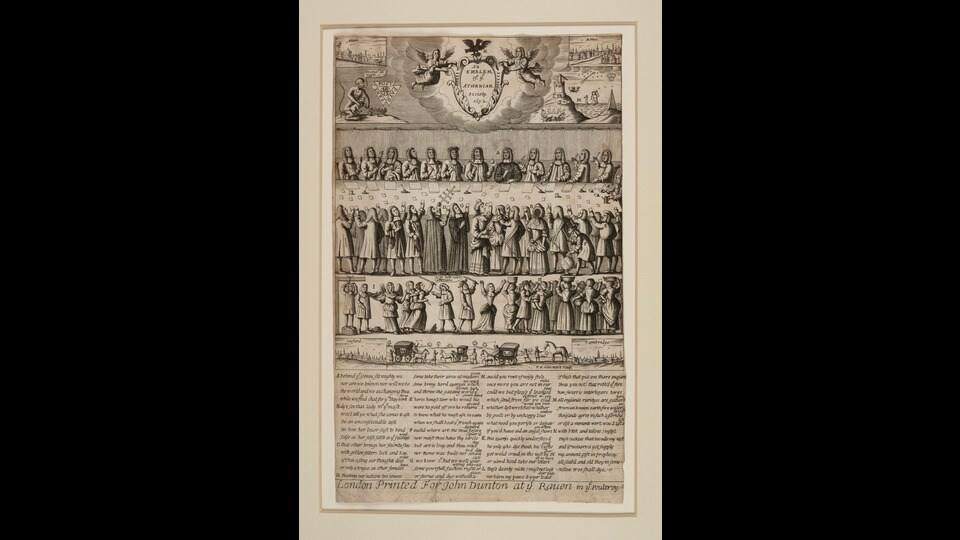
The world’s first such column dates to 1691. From those early days to Quora and Reddit, a new book takes readers through queries and answers from then to now.
“It is my misfortune to be red-haired...I love a lady that has the greatest aversion imaginable to that colored hair...What should I do?”
“Is it possible for one woman to love another as passionately and constantly as if the love were between different sexes?”
“I’m now courting a young lady who...drinks an insufferable amount of coffee, which I think is the reason for her coyness and aversion to my courtship....I beg your advice.”
We do this a lot, don’t we? Lay our messiest, bizarre, intimate secrets bare before absolute strangers, hoping they’ll know just what we need. We share our thoughts in newspaper and magazine columns, on Subreddits such as r/AITA, on Quora feeds, and now with AI chatbots.
Well, we’ve been doing it for far longer than we think. Since 1691, in fact.
That’s when the Athenian Mercury, a twice-weekly London broadsheet run by John Dunton, a bookseller, began filling its pages with questions, confessions and advice that, centuries later, still echo our own.
That was the world’s first-ever advice column. But here’s the twist: the Athenian never set out to be an advice column. It was meant to be a public experiment, called “the question project” that proprietor John Dunton, then 32, devised.
The idea was simple. Men, like Dunton, who frequented 17th-century London’s many coffeehouses, indulging in wide-ranging debates on religion, medicine, law, culture, could pose their undiscussed questions anonymously to what he called “the Athenian society”. The society, a supposed jury of experts, really just comprised Dunton and his two brothers-in-law, Richard Sault and Samuel Wesley (who worked for a combined salary of ten shillings!).
The trio would respond to the queries through the broadsheet that Dunton would then sell to individual purchasers for a penny each, and by subscription to coffeehouses.
The Athenians did get the questions they’d anticipated initially:
“Did Adam and Eve eat actual apples?”
“What is a star?”
“If a man dies, does his apprentice have to serve the widow?”
But within a few weeks, the queries and the querists began changing. Increasingly, they found themselves fielding personal inquiries: on courtship, marriage, sexual behaviour, affairs, divorce. And the querists, although anonymous, often indicated or declared themselves as women, rather than the Athenians’ intended audience: men.
The Athenians quickly evolved, changing their title page to reflect that queries on everything, from both men and women, were welcome. And so began the journey of the advice column that survived in two versions (Athenian Mercury and Athenian Oracle) and countless reprints well into the 19th century.
“They clearly filled a need: to reach out to someone who isn’t a close associate or family; someone distant but also perceived as wise,” says Mary Beth Norton, the Mary Donlon Alger Professor Emerita of American History at Cornell University, in Ithaca, US.
It was also a need to be heard, and so often to just know that there were others like oneself, who didn’t yet have all the answers.
Norton’s new book, “I Humbly Beg Your Speedy Answer”: Letters on Love and Marriage from the World’s First Personal Advice Column (April, 2025) is a bit of an ode to the Athenian, and is also a time-capsule — of questions and answers from the periodical that still resonate today.
***

Norton first encountered the Athenian Mercury around 2005, while teaching at the University of Cambridge. She was then researching for her book Separated by Their Sex (2011; on how gender came to define public-private spheres). That year, she also discovered that the Cornell Library owned copies of the Athenian Oracle and some bound volumes of the Mercury.
Something about the letters spoke to her. Here were men and women, about 300 years ago, juggling with so many predicaments still so familiar to us — “How do I get her to love me?” or “Is it possible to marry someone in the hope that love will come after?”.
And yet many of the queries felt “unexpectedly modern”, she says. (We’ll come to those in a bit.)
“I wanted to show readers today the personal dilemmas in the past so that readers could identify what had changed and what had not in the 21st century,” Norton says.
***
Norton’s book is organised into six chapters — each with a title drawn from the Athenians’ responses — that dwell on courtship (titled “Kissing is a Luscious Diet”), choosing a spouse (”Much Love and Moderate Conveniency”), parental consent, promises and vows, matrimony and dangerous liaisons. Each chapter has a note by her, capturing a sense of what these letters and responses reflect.
Against the backdrop of the then-ruling Protestant church, that sought to “combat perceived excesses of the day, especially prostitution and clandestine marriage, themes of religion, sexuality, and morality were entwined in the minds of both the Mercury’s readers and the Athenians themselves,” writes Norton.
Some letters about sexual behaviour felt “unexpectedly modern” for the time. They showed a lax attitude towards sex outside of marriage, which some correspondents described without a sense of shame or wrongdoing, she says.
While others felt outdated, even for that time, especially when correspondents were uncertain whether their “sexual misbehaviour made it wrong for them to take holy communion.”
The queries and responses also reveal sharp differences in the institution of marriage, particularly the role of parental authority. At the time, the law required children to defer to parents to choose a spouse.
A rather impersonal letter by a querist is about a young woman, who, pressured by her father and relatives, agreed to marry a wealthy but “morose and jealous” former libertine. She’s also rejected a younger suitor (possibly our querist) who is “well educated with a suitable fortune, sober conversation, and an agreeable temperament, but is at present unemployed”. “At the same time, it’s believed she would be happier with him than with the old spark…What is most proper for the young lady to do in this affair?”
The Athenians, in their response, offer a rather stoic stance. “We are certain we won’t please you, because our advice is for the lady to marry neither of them,” they say. She shouldn’t marry someone she is averse to, they add, and neither should she go against her parents’ wishes.
Marriage, itself, seemed to be in a state of confusion. There was no clear marriage law before 1753, so questions to the Athenian abounded about the validity of contracts, public versus private vows, and the enforceability of various matrimonial agreements.
***
Around 45% of the personal inquiries in the periodical, Norton writes, came from men and 23% from women; 33% were not identifiable by gender.
Although the Athenian was meant for London’s coffeehouses, the letters reflected that the authors were, for the most part, not wealthy. Most were middle class, young, and just starting out in marriage or trade at a time when reading and writing were no longer optional but required skills, she writes. And the Athenian was just the platform to confront one’s problems, seek advice, or at the very least, face one’s own messes, vulnerabilities and troubles in another’s query.
Women often asked about how to maintain a modest demeanor while men were courting them. Men asked more often about how to proceed: how far could they go in kissing their beloved? Or how much attention should they pay to a woman’s economic status?.
And sometimes, the interactions took a more grim turn with complaints by both genders about abusive spouses, since the provision of divorce was legally unavailable. In such cases, the Athenians often, rather somberly responded that, “there’s no remedy but silence and patience…”
***
Divorce is now a legal provision. Marriage, too, requires the consent of two emotionally stable adults.Sexual behaviour is a far more open conversation.
But finances, affairs, moral clashes still complicate our lives.
Through it all, the advice column has evolved. By the 20th century, it became a staple of newspapers and magazines, most recognisably embodied by the “agony aunts”. Writers Dorothy Dix (Dear Dorothy Dix or Dear Miss Dix), Ann Landers (Ask Ann Landers) and Pauline Phillips (Dear Abby) carried forward the Athenian template, but also modernised it, dispensing moral and practical guidance with a touch of humour, wit and empathy.
The questions, and their experts, branched out too, to health, careers, money, parenting, technology — mirroring the anxieties of the age.
The advice column thrives today in the endless stream of questions posted on platforms such as Quora or in the viral, screenshot-worthy dilemmas on Reddit’s AITA (Am I The As****e), where modern trolley problems are dissected in real time by strangers.
And now, of course, there’s AI.
In a world with such varied outlets, why would one still turn to advice columns?
“Historians know not to try to predict the future. But like I said, these columns clearly fill a very human need,” says Norton.
Can AI-based therapy bots or advisors fill that need? Can they really tell you, if you should dye your red hair brown, or shave and use a wig?
It’s hard to tell, she says. Didn’t the world’s first advice column also begin as a “question project”?