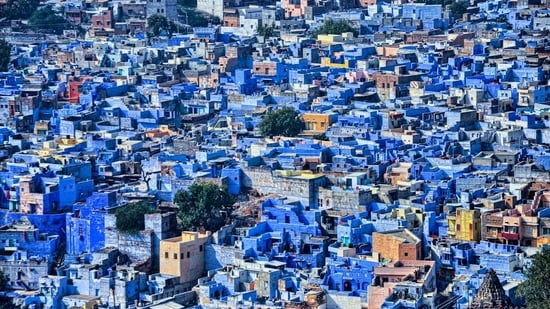
Imagine walking through narrow lanes lined with blue houses, with the imposing Mehrangarh Fort rising above the city. This is Jodhpur, Rajasthan's much-loved Blue City, where the colour blue has become an unmistakable part of the old city's identity. Nestled on the edge of the Thar Desert, Jodhpur in Rajasthan is famous for its striking blue-painted houses, winding lanes and grand forts. In this edition of HT Lifestyle’s ‘Everyday Explained,’ here’s a look at the history and theories behind the Blue City's distinctive appearance.
Also read | Everyday explained: Why are objects in the rear-view mirror closer than they appear?
Tradition
The blue colour of Jodhpur originated with the Brahmin community, who used to paint their houses in blue colour to signify their social status and utmost devotion to Lord Shiva. Over time, the blue hue spread throughout the city, becoming an integral part of its architecture.
Cooling effect
Nestled in Rajasthan, Jodhpur’s hot desert climate inspired people to find creative ways to keep their houses cool. The blue signifies a cooling effect as it reflects the sun’s rays and keeps the interiors comfortable. This practical idea of blue paint added to its popularity, and people started painting their houses in blue.
Cultural significance
{{/usCountry}}Nestled in Rajasthan, Jodhpur’s hot desert climate inspired people to find creative ways to keep their houses cool. The blue signifies a cooling effect as it reflects the sun’s rays and keeps the interiors comfortable. This practical idea of blue paint added to its popularity, and people started painting their houses in blue.
Cultural significance
{{/usCountry}}Blue colour is considered a sacred colour in Hinduism and is often associated with Lord Krishna and Lord Shiva. The usage of blue colour in the city’s architecture is a reflection of the city’s deep-rooted cultural traditions. The colour is not just aesthetically pleasing but also symbolises the city’s connection to rich heritage and traditions.
Architectural uniformity
The blue colour of Jodhpur houses and architectural structures creates a sense of uniformity and harmony. The widespread use of blue paint gives a unique look to the city, setting it apart from any other cities in India.
Historical legacy
Jodhpur’s blue colour is also a reflection of its rich history and heritage. The architectural uniformity is a testament to its strategic location and the city’s ability to adapt and evolve, incorporating influences from different cultures.
More about Jodhpur
Jodhpur is the second largest city in Rajasthan. It was founded in 1459 AD by Rao Jodha of the Rathore clan as the capital of the historic Kingdom of Marwar. Located at the edge of the Thar Desert, serving as a gateway to the desert region. Mehrangarh Fort, Umaid Bhawan Palace, Jaswant Thada, Toorji Ka Jhalra, and Ghata Ghar are some of the top attractions across the city that invite people around the world.