
 E-Paper



From pocket planetarium to giant dome, see how humans have reached for the stars

 Prefer HTon Google


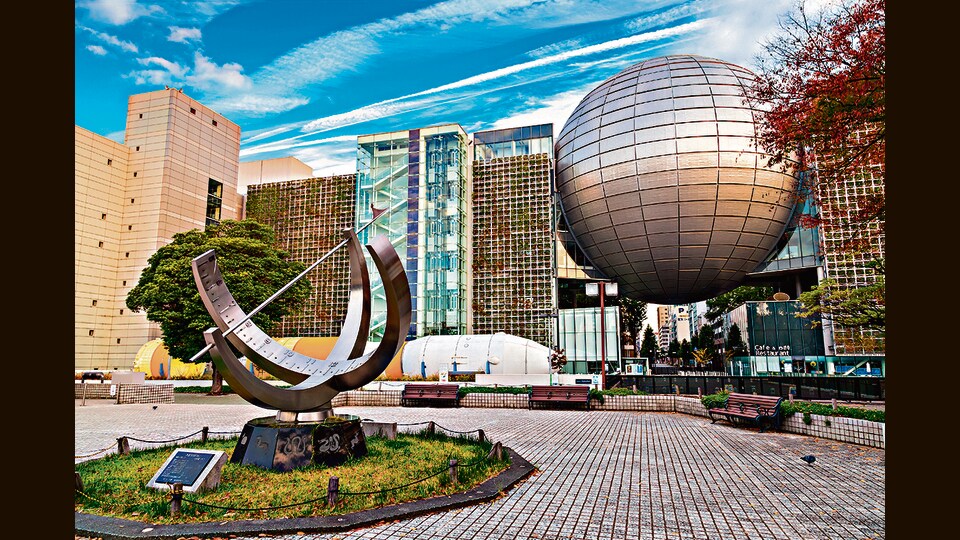
The planetarium turns 100 this year. What came before the giant domes with imagery of galaxies, asteroids and meteors zooming across them? Take a look.
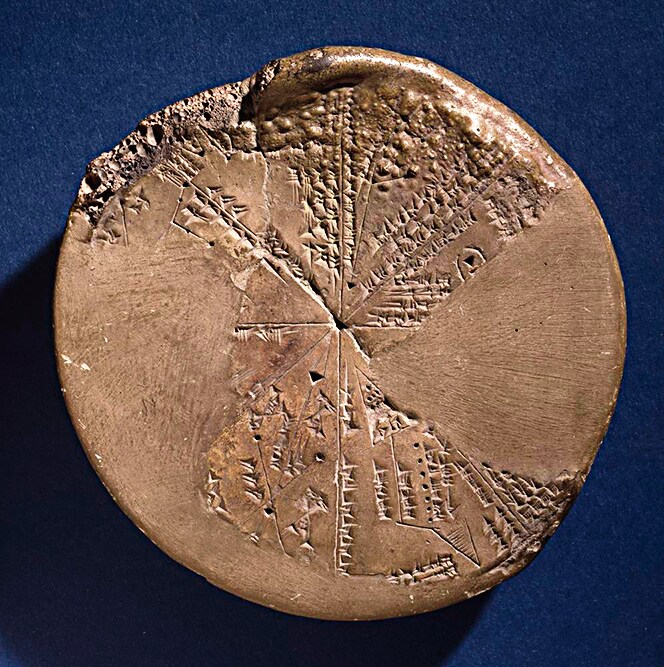
Ancient Babylonians built watchtowers to study the sky, and used clay tablets to record the positions of ritually significant stars.
Their observations, the earliest dating to at least 2000 BCE, laid the foundation for early calendars.
By the 1st century BCE, the Ancient Egyptians were portraying the night sky in intricate detail. One surviving depiction consists of an astral disc affixed to the ceiling of the Hathor temple, built circa 50 BCE. The wheel-like structure features constellations associated, in startlingly familiar ways, with animals such as the ram, lion and bull. The wheel was detached and carted off, when Egypt was colonised by France, and is currently at the Louvre in Paris.
By the 3rd century BCE, the Greek polymath Archimedes is said to have crafted a metal model depicting planetary movements, in an early example of a mechanical planetarium.
The device was taken from him, during a Roman invasion, but records of it survive in the writings of Roman statesmen such as Cicero, 200 hundred years later.
By the 17th century, the closest predecessor to the modern planetarium was created, in the form of a technical marvel. The Gottorf Globe, built by 1664, was a massive walk-in sphere commissioned by Duke Frederick III of Holstein-Gottorp (in present-day Germany), a prominent patron of the sciences and arts. Its exterior was painted to resemble a map of Earth, with its continents, oceans and certain geographical features. The dark interiors replicated a starry night, through the use of pinholes punched into the orb. Visitors sat on a circular bench, while the globe was rotated through the use of levers and gears.
CEILING PLAN
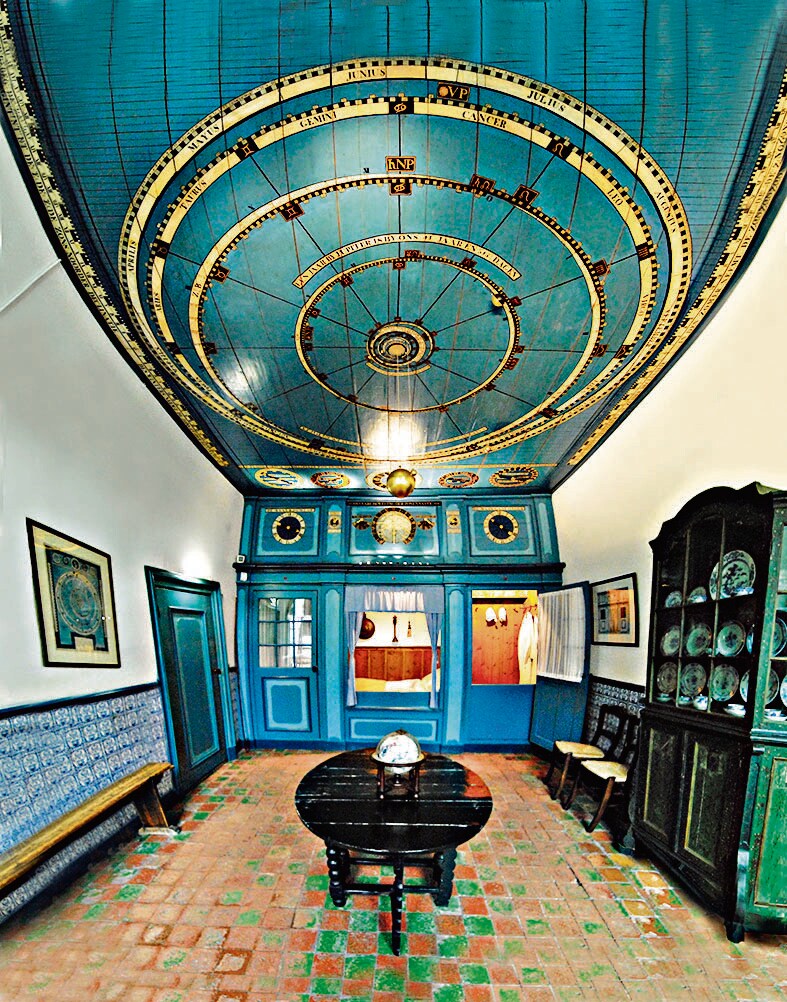
The world’s oldest still-operational “planetarium” dates to 1781, and it is a marvellous contraption built by an amateur astronomer, to counter a terrifying rumour: that a catastrophic planetary alignment between the Sun, Moon and five other known planets (Mercury, Venus, Mars, Jupiter and Saturn) was about to destroy Earth.
Hoping to put such fears to rest, the wool maker Eise Eisinga created a cosmic wonderland of wooden hoops and discs attached to the beams of his house in the Netherlands.
Powered by the rhythms of a simple pendulum, it was the first space in the world to represent, with reasonable accuracy, how the planets moved around the sun and each other.
The pendulum system still works, and visitors are still welcome.
WEE WORK
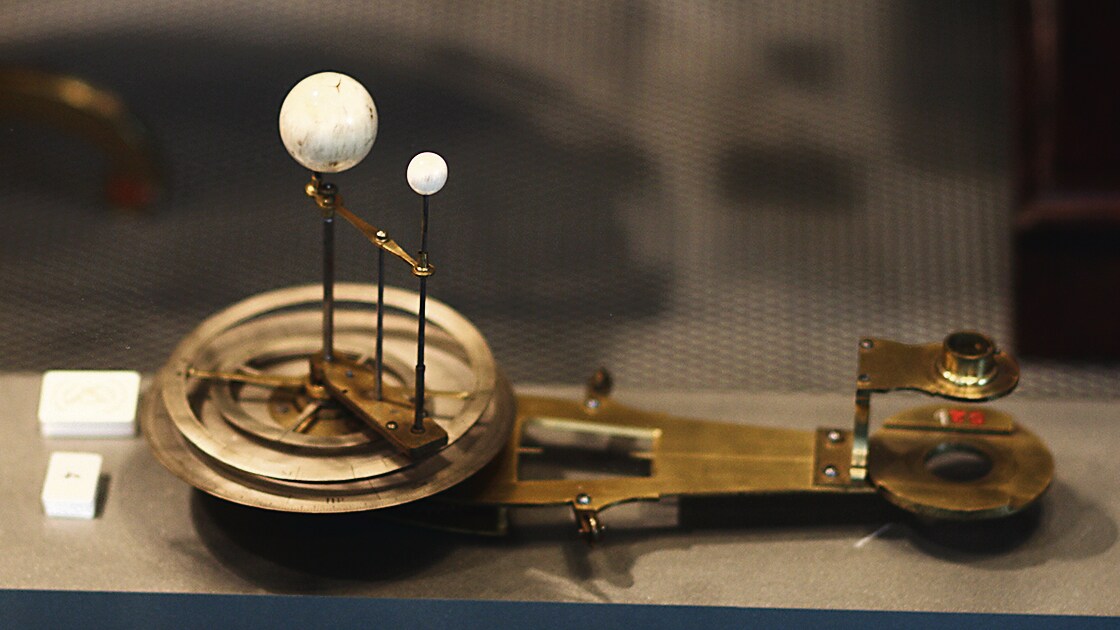
Amid the Industrial Revolution and one of its first offshoots, a growing fascination with machines and instruments, a strange fad came into being in the early 19th century: the trend of carrying a model of the cosmic neighbourhood in one’s pocket.
The pocket tellurian was a palm-sized geared model of the Earth-Sun-Moon system, which could be operated by means of a tiny crank. Sadly, few of these devices survive (one is in the collection of the Adler Planetarium in Chicago).
By the 1850s, the projection device known as the magic lantern, which could cast still images onto a flat surface, was catching on, and hand-coloured slides of the skies and planets began to feature in astronomy “performances”.
As new theories were framed and explored, such shows became an integral part of lecture hall presentations, eventually extending into public spaces such as fairgrounds. (The moving picture, incidentally, was still decades away, with the Lumiere Brothers releasing their first shorts in 1895.)
LIFT-OFF
Today, there are thousands of planetariums around the world, and scores in India alone.
Kolkata’s MP Birla Planetarium, built in 1963, is the largest here at home (and one of the oldest), with a dome 75 ft in diameter, and 570 reclining seats.
The Nehru Planetarium in Mumbai, established in 1977, offers interactive experiences such as inviting children to the projection console to learn about how it works. It also offers an escape from the city’s smog- and light-polluted night skies.
“Regardless of the show, we always have a 15-minute projection of the sky as it would be seen that night, a rare and precious glimpse of clarity in a city like ours,” says astronomer and Nehru Planetarium director Arvind Paranjpye.
What began in Munich in 1925 as a projection of 4,500 stars is now drawing on data from Voyagers, Explorers and space telescopes that are seeing not just into the distance, but into our universe’s dim past. Shows incorporate the latest data on features such as the Oort Cloud, galaxies far away, even meteors as they near.
Some institutes, such as New York City’s cutting-edge Hayden Planetarium, create their own immersive visualisations, using data from astrophysicists and from sources such as NASA and ESA (the US’s National Aeronautics and Space Administration and the European Space Agency). Others draw directly on footage released for educational and outreach purposes by these agencies.
Through scripted films, audiences also explore the Northern and Southern Lights or polar auroras, go on virtual tours of satellites and space stations, revisit key turning points in our exploration of space; even step into the shoes of William Anders, who took the Earthrise photo in 1968.
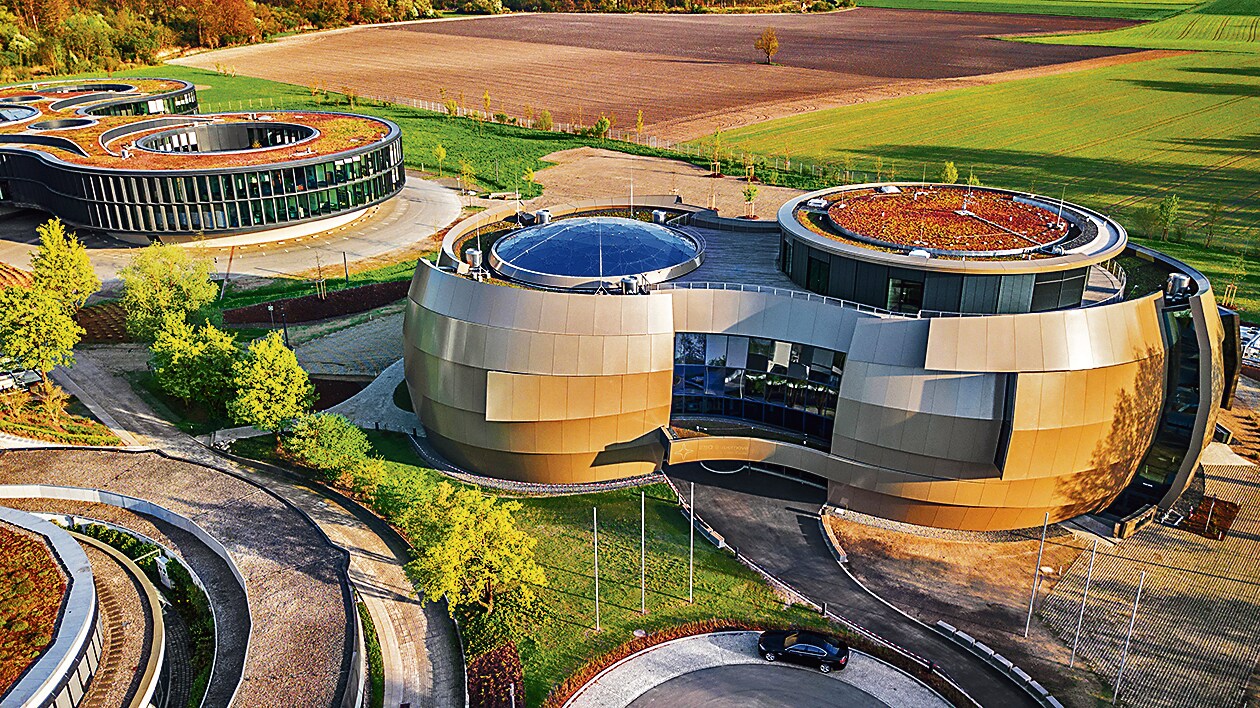
The Zeiss projector that started it all has been replaced, in some cases, by light-emitting diode or LED domes, allowing for new levels of clarity.
With a 115-ft-diameter dome, Japan’s Nagoya City Science Museum Planetarium, built in 2011, is currently the world’s largest. It uses the Zeiss Universarium IX projector to create its immersive experience.
The facility widely considered the benchmark for cutting-edge display, though, is the Prague Planetarium, which reopened in June with a 72-ft-diameter dome covered in LED panels that reportedly offer brightness levels 100 times that of a conventional projector.
Planetarium technology of the future may include 4D and 5D projections, as visualisation moves from screens to holographic displays. “With hydraulic seats, vibrating floors and maybe a sudden sense of weightlessness from simulated zero gravity, we may eventually be able to experience a little bit of what spaceflight is like,” says Paranjpye of the Nehru Planetarium. “Not just space, the same technology may help us step into machines, architecture and even the human body, to understand them better.”


