
 E-Paper



Ground zero: Why seeds, fruits and leaves are a magic spell

 Prefer HTon Google


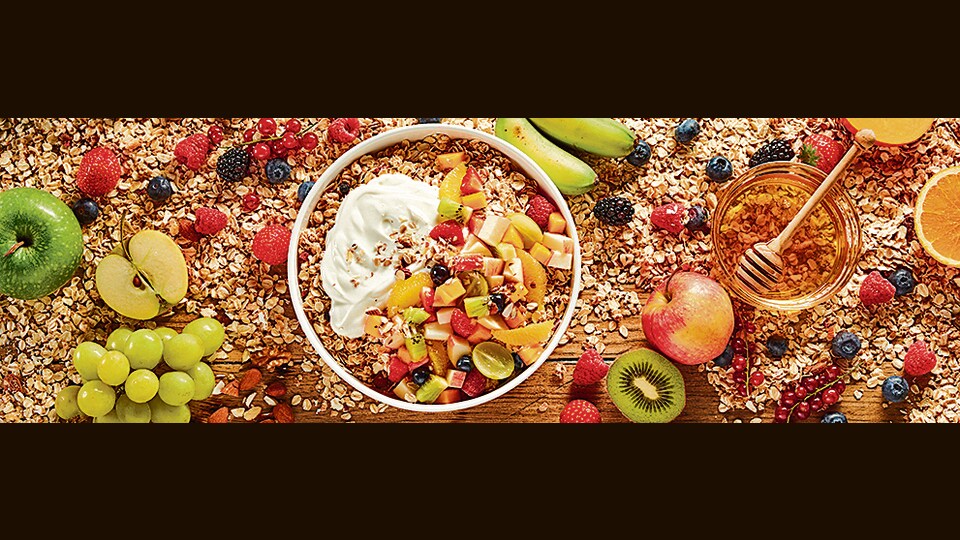
After last week’s insolubles, their light-hearted counterparts: solubles such as pectins, gums and mucilages. In this week’s Sound Bites with Swetha Sivakumar.
Last week, we talked about indigestible fibres and their stoic nature.
Well, for every severe Spock, there is a Captain Kirk. Where insoluble fibres are stern, immutable and unresponsive to digestive juices, soluble fibres are their light-hearted counterparts.
These are complex polysaccharides that dissolve in water, and include pectins, gums and mucilages.
Let’s start with pectins. These are the binders that hold cell walls together. And they have a little jig they like to do. They can transform from firm to gel-like, under certain conditions. In plants, this is what we see as fruits ripen and turn gradually softer.
At the early stages of ripening, the fruit is packed with pectins. As it ripens, enzymes such as pectinase are activated. These break the pectin molecules down, contributing to the softening of the fruit. This stage is also accompanied by an increase in sugar levels, as starches are converted into sugars. And this, incidentally, is what makes ripe fruit sweeter.
Pectin responds easily to heat, acids and calcium salts too. Most vegetables, for instance, begin to soften at about 88 degrees Celsius, because this is the temperature at which pectins start to disintegrate. Want some added texture? Add calcium salts. These form cross-links with pectin molecules, making them firmer. (This is why vegetables cooked in hard water take longer to soften. The calcium ions in the water work to strengthen the vegetables’ cell walls.)
Pectins are the reason jams have that thick, sticky consistency. Here, ingredients that contain acids, such as lemon juice, can be used to reduce the negative charge between the pectin molecules and encourage them to bond. Sugar is then added to draw water away from the pectin molecules, so that they can form the delicate sponge-like network that holds the jam together. Most ketchups and purees also get their thick consistency from a mix of pectins and acids.
Moving on to gums and mucilages, these are quite different from pectins. They are not part of the cell wall. They are formed and secreted for specific purposes, generally as a way for a plant to pack more into each seed.
The average seed needs to hold a relatively large amount of energy, if it is to guarantee a baby plant’s survival until it can begin to make food of its own. Simple sugars take up too much space. So some seeds store their energy as fats (sesame, flax, sunflower, coconut, palm). Some store the energy as starch (grains such as rice and wheat). And some convert simple sugars into more complex ones such as galactose and mannose, and pack them in polymers such as gums and mucilages. As the plant grows, this “packaging” offers the advantage of being able to trap a fair amount of water too.
The most prevalent plant gums are a group called the galactomannans. They’re found in guar gum, the popular thickening agent derived from guar (or gavar, in Hindi). In fenugreek or methi seeds, which, like the guar seed, can absorb a fair amount of water (although guar can absorb a great deal more).
In humans, soluble fibres — whether pectins, gums or mucilages — are vital because they help keep the large intestine healthy. Here, microbial flora ferment them into short-chain fatty acids, or SCFAs. These help by, for instance, binding with cholesterol molecules and driving the latter into the small intestine for excretion, rather than allowing them to be absorbed into the bloodstream. In diabetics, soluble fibre slows digestion, helping to keep blood-sugar levels stable.
Vegetables and fruits, oats, barley, flax seeds and chia seeds are all good sources. A simple thumb rule: If a food gets a bit gooey or slimy when soaked or cooked, it likely contains a fair amount of soluble fibre.
Pectins, gums and mucilages are popular additives in the food processing industry too, for the health benefits and structure they provide. They enhance smoothness and creaminess in yogurts, ice-creams, sauces and dressings. They can help baked goods retain moisture. Soluble fibres act as binding agents, in products such as granola bars and ladoos. And are often used as a fat replacer, in low-fat dairy products, salad dressings and baked goods. Thus, one sees ingredients such as guar gum, carob bean gum, gum arabic and carrageenan listed in these.
New frontiers are emerging. Biodegradable pectin-based coatings are being explored for use in food packaging, to replace single-use plastic. It would appear that science has yet to discover all its secrets!
(To reach Swetha Sivakumar with questions or feedback, email upgrademyfood@gmail.com)


