
 E-Paper



He left his wallet in El Segundo: Ryan Davis and the American archetype

 Prefer HTon Google


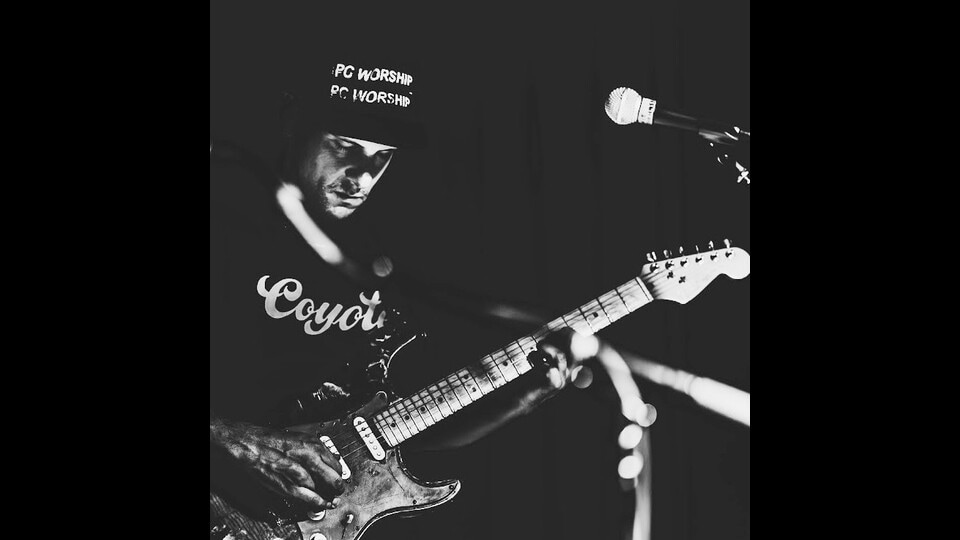
He is making some of the year’s best music, but still has a day job. Sanjoy Narayan unpacks what it takes to be an outlier hitting all the right notes.
I found Ryan Davis the way one finds a dark half-forgotten bar tucked between well-lit blocks: unexpectedly and with a distinct sense of having been living without something essential.
A Spotify auto-play recommendation, a click in the silence of midnight, and I was suddenly trawling through Louisville’s poetic underbelly, while still in my armchair.
After 15 years of making music, Davis is having what feels like both a discovery and a gentle reckoning. Not a breakout manufactured by algorithm and marketers, but recognition earned one scratchy, unguarded moment at a time.
His latest album, New Threats from the Soul, which he self-released in July, is earning universal critical acclaim. It has a score of 89 on Metacritic, and glowing reviews in The New Yorker and Pitchfork. Yet Davis still works day jobs between tour dates, candidly admitting that his label is “honestly in an unsustainable place at the moment”.
There is something beautifully stubborn about this.
In an era of 15-second hooks and AI-led optimisation, Davis treats song-writing like furniture-making. His music is deliberate, tactile and built to last. His songs aren’t background wallpaper; they’re rooms you step into. Some tracks run 10 minutes or more, which is either commercial suicide or exactly what our distracted age needs most.
Comparisons with the late singer-songwriter David Berman come quickly and inevitably. Berman, whom Davis considered a mentor, once called him “the best lyricist who’s not a rapper”, weighty praise that has become something of a talisman for Davis’s growing cult following.
Like Berman, he transfigures banal fragments into tableaux both hilarious and haunted: daffodils wilting in theme-park pint glasses, the moon’s acne-scarred face, time as “one of the guys from work”. But where Berman often tilted toward despair, Davis leans into a shaky sort of joy.

His path here has been anything but conventional. State Champion, the band he fronted for over a decade, made the kind of music that singer-songwriter James Toth memorably called “punked-up country gunk”. That band had four albums, a devoted following, and then... they didn’t. Part of that unravelling came with Berman’s death in 2019. Faced with this blow, Davis retreated, delivering burritos, playing keyboard and day-jobbing himself into resignation.
But music, as it often does, summoned him back.
What emerged was Ryan Davis & The Roadhouse Band, a moniker that captures his expansive musical curiosity. Critics have tried calling it “rootsy, cosmic Americana”, but that feels cramped. Davis listens to Sun Ra’s jazz and George Jones’s country music as though they’re sipping from the same glass, and that mash-up pulses through the music — honky-tonk jukeboxes meeting subtle cosmic drift, drum-machine blips against pedal-steel euphoria.
The nine-minute-plus title track that opens New Threats from the Soul is warm, melodic and breezy and Davis has described it as “a nice mission statement for the album”. It is contemporary American music that happens to draw from the entire history of American music, which is exactly what the finest contemporary artists have always done.
Like Dylan or Wilco or MJ Lenderman’s alt-country band Wednesday, Davis throws in whatever catches his fancy and stirs until it’s appetising.
The real magic, though, is in his language. Davis has perfected, in his music, what might be the most essential American archetype: the charming loser who wins through persistence rather than natural talent. His protagonists are guys who leave their wallets in El Segundo and their true loves in West Lafayette escape rooms. They’re average Joes, basically — if average Joes were funnier about their failures and more articulate about their confusion.
Davis operates as that guy who is equally at ease discussing vintage cars and the difference between Plato and Sartre. He has the ability to find the sacred in the profane, or, as he puts it, is “scrambling to find Christ in all the places I’m told he likes”.
Perhaps most tellingly, Davis represents an alternative to contemporary music’s winner-take-all economics. He has had the kinds of day jobs that used to be standard for working musicians, but are increasingly rare today: in restaurants and landscaping, as an art handler. He is making some of the year’s best music but still operates outside traditional industry machinery.
Of course, there is the accessibility question. These songs require old-school commitment. The mammoth Mutilation Springs, full of digressions, risks slipping irredeemably during its 11-plus minutes. Davis’s references can be overwhelming, his narratives sometimes sprawling to the point of opacity.
The album ends with song Crass Shadows (at Walden Pawn), and him “waiting on an assignment from the spirit world”. It’s the perfect off-note: not closure, but lingering expectation. At 40, having spent years in relative obscurity, Davis embodies something increasingly rare: an artist committed to the long game, willing to sacrifice immediate accessibility for deeper rewards.
In the cacophonic scramble of modern music, he offers authenticity that doesn’t announce itself, intelligence that doesn’t condescend, and hope that doesn’t require ignorance of harshness of reality. Whether the world gives him a bigger stage or keeps him under the radar may be beside the point. He has turned everyday heartbreak into something grave, guilty-funny and lasting. That alone feels miraculous.
(To write in with feedback, email sanjoy.narayan@gmail.com)


