
 E-Paper



Helping a star to shine: Meet the woman who lit up Mumbai’s Rajabai clock tower


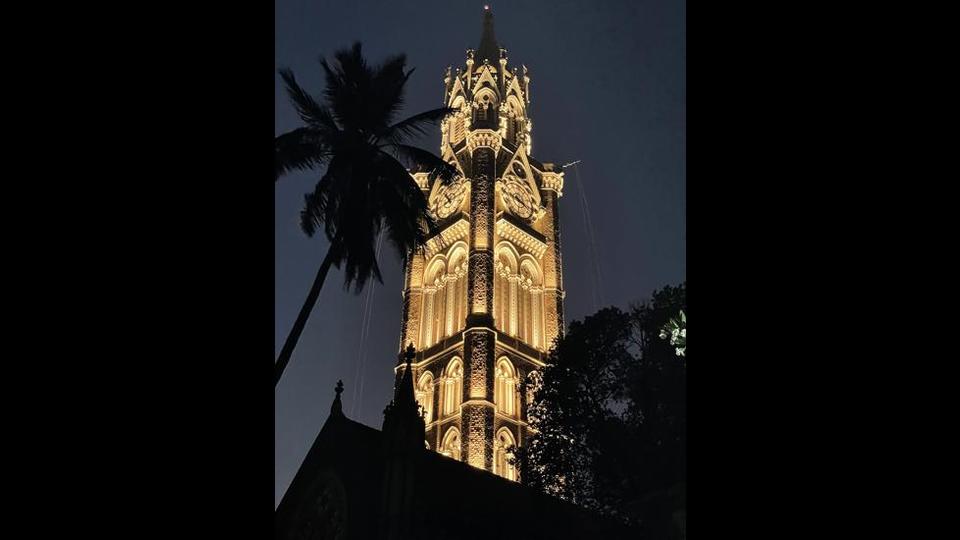
We decided to go for subtle revelation rather than dramatic effect, says lighting designer Kanchan Puri. The approach worked. The iconic tower now stands bathed in gentle gold, each detail seemingly illuminated.
Lighting allows a structure to communicate with people, says Kanchan Puri. Done right, it can transport a visitor through time, as with the sound and light shows at the pyramids of Giza or the sprawling royal forts of Rajasthan.
When Puri’s company, KSA, was approached to design the lighting for Mumbai’s 142-year-old Rajabai clock tower and University library building, she knew it would be one of the firm’s most high-profile and challenging projects yet.
Over two decades, KSA has designed the lighting for the 2,000-year-old Ajanta Caves in Aurangabad, a Unesco world heritage site; for Jawaharlal Nehru’s one-time home, Teen Murti Bhavan, in Delhi; and for the Asiatic Library in Mumbai, among other heritage and commercial structures.
But the Rajabai tower is different — it’s a heritage gem in the midst a bustling city, visible for miles away, its façade an intricate collection of niches, arches and curves.
“The idea was not to light it up and make it into some sort of a Disneyland with all the colours under the sun,” says Brinda Somaya, the conservation architect appointed for the entire restoration project. “It had to be an elegant show of architectural quality as it’s a beacon for the city and all beacons have to be lit to tell a story. The architectural quality of the tower and the library had to show up.”

So, in 2017, KSA was brought on. After an interruption to work caused by the pandemic, the lighting is nearly all done and the project will be complete by the end of the month.
With the clock tower, “we are going for a subtle revelation rather than a dramatic effect, with layers that range from the subtle to the celebratory,” Puri says. “The gallery at the top of the first level is carefully sculpted with light. In these instances, the outside faces are kept relatively dark, creating a lantern effect. Above the first gallery are niches in which are stone figures representing the different races and costumes of western India. These sculptures have been backlit with a soft light, exposing the figures in silhouette. The play of light and shadow is very pronounced at this level.”
The torso of the Tower is the dynamic piece of the jewel. The facade is replete with intricate detailing and the intricate nature of the lighting here attempts to celebrate that.
The slender columns are uplit. The arches are soaked in light. The galleries at various levels are illuminated in a dramatic style to set off the unique architecture, with its influences drawn from Victorian Gothic and Islamic styles.
Puri studied at the JJ school of architecture in Mumbai and then got a Masters in building sciences and lighting design from the University of Southern California in Los Angeles. For inspiration, she looks to the work of the iconic Swiss-French architect Le Corbusier, the man best known in India for designing the planned city of Chandigarh in the 1950s and ’60s.
“His Notre-Dame du Haut chapel in Ronchamp, France, is one of the most inspirational spaces, chasing how light seeps into the space,” Puri says.
The lighting of the Rajabai clock itself was an enormous challenge, Puri adds. “This is the obvious beacon one would look for.” Seven mock-ups were created to verify the angles, intensity, colour rendering and fixture spacings. And so it stands now, bathed in a soft gold that gleams for miles, every detail seemingly illuminated.
“One way of identifying with your city is through its architecture,” Somaya says. “The clock tower is a light of hope. There’s some talk of opening it up for the public. I hope once the government sees its beauty after restoration and lighting, that will be the next step.”


