
 E-Paper



I wanted to simply follow the facts: Sriram Raghavan on the making of his war film, Ikkis

 Prefer HTon Google


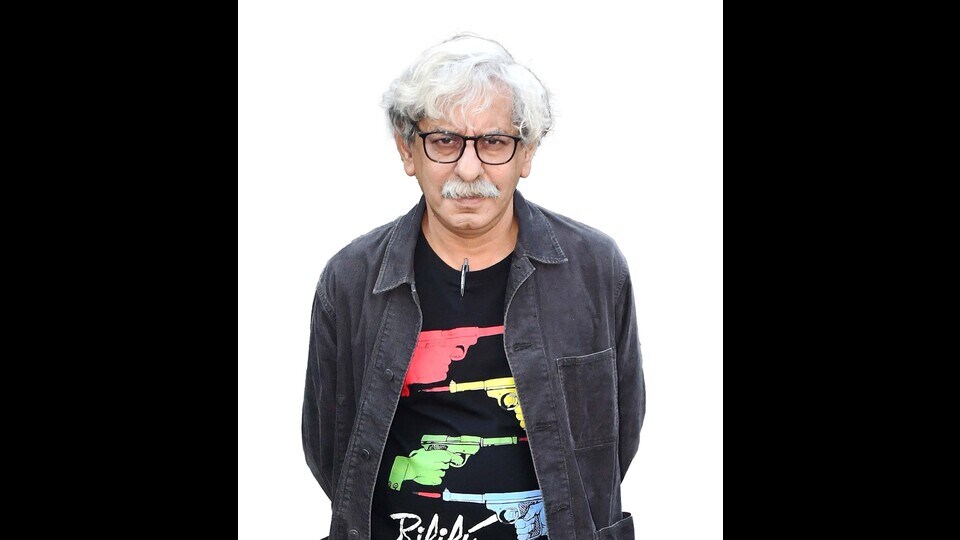
What do soldiers feel? What does it take to override the survival instinct? These are some of the questions Raghavan explores, in his tribute to India's heroes.
Over and over, during the making of the war film Ikkis, Sriram Raghavan found himself wondering: “What have I got myself into?”
He had never shot a battle scene before; the ones in his film had to be set during a real war that occurred over half a century ago. The tanks he needed, the ones used by India and Pakistan in the war of 1971, had long been decommissioned and lay unmoving in museums or war memorials. He and his team had to create scale models from scratch.
What played on his mind, more than any of this, was the fact that he was telling the true story of a man who gave his life for his country at the age of 21. This was a film the young man’s father, a retired brigadier, would most certainly watch; and one that Raghavan planned to screen first for members of the Indian Army.
In his two decades as a filmmaker, says the 62-year-old, he had never felt such pressure.
Raghavan is best-known for writing and directing stylish thrillers and whodunits that delve into the darkness of the human psyche. A prime example is Andhadhun (2018), about a murder, a conniving cast of possible suspects and a man who has quietly convinced everyone he cannot see.
Here, he wanted to tell a story about war, but offer hope; build a mainstream Bollywood narrative around a tragic true tale; champion an Indian hero, but humanise everyone dragged into the horrors of battle. More than anything, he wanted to follow the facts, to tell a story that represented what people from battlefields past and present were telling him they experienced and felt.
This sense of authenticity over machismo and fact over propaganda sets Ikkis apart. As Wknd columnist Deepanjana Pal put it last week, it chooses silence over noise and beauty over violence; it dares to be a war movie that dreams of peace.
It is a moving tribute to Second Lieutenant Arun Khetarpal, who refused to follow orders to retreat during the Battle of Basantar, amid the India-Pakistan war of 1971. His daring manoeuvres denied Pakistan a breakthrough it sought. It was a victory for India, but one that Khetarpal, then 21, and his tank’s radio operator, Sowar Nand Singh, would pay for with their lives.
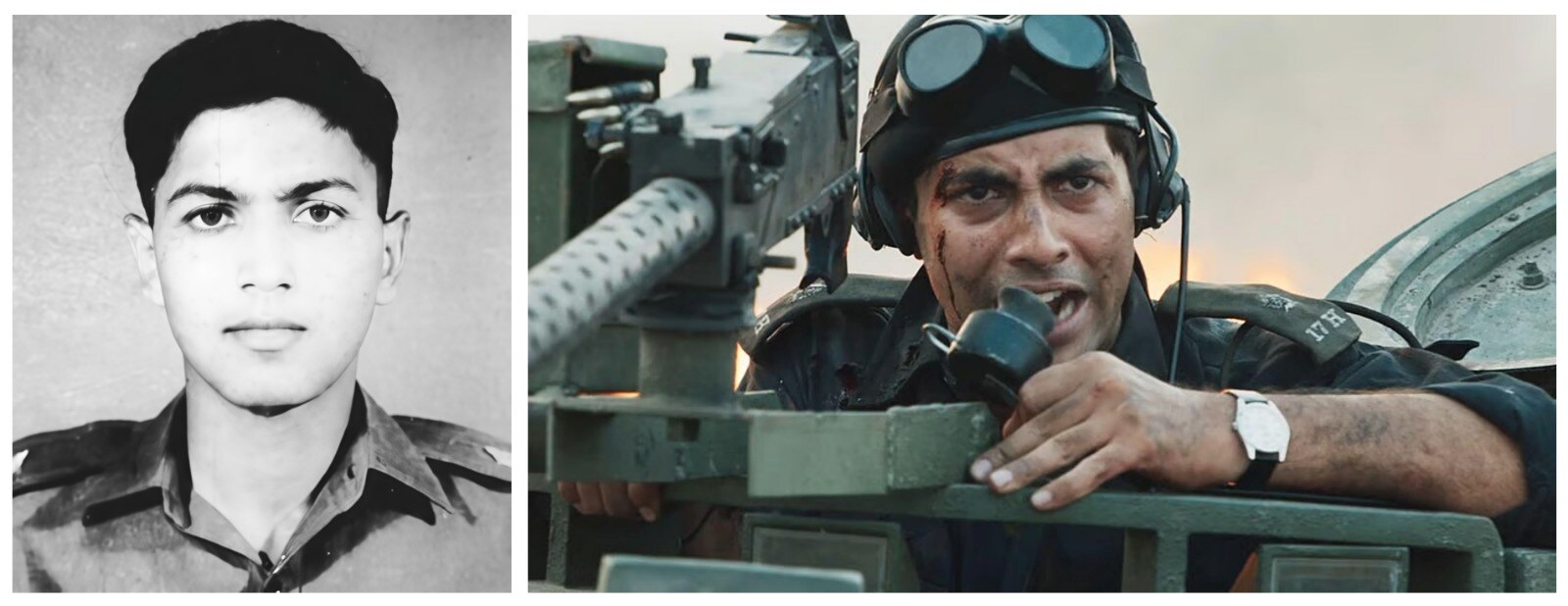
Raghavan says when he first heard the story of Khetarpal (played by Agastya Nanda in the movie), a year after the release of Andhadhun, he was struck by the incredible twists in the tale.
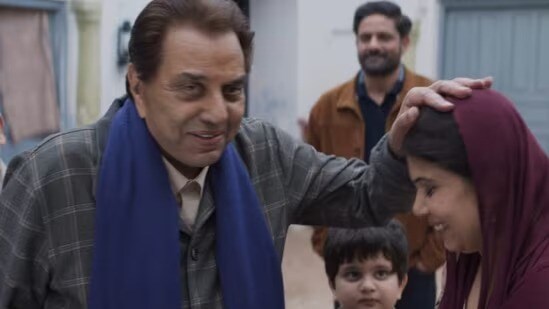
Decades after the young soldier’s death, for instance, in the years just after the Kargil War of 1999, his 81-year-old father, Brigadier (Retd) Madan Lal Khetarpal (played by Dharmendra in the film), would visit Lahore for a college reunion, and live in the home of Mohammed Naseer (played by Jaideep Ahlawat), a retired brigadier with the Pakistani army. Khetarpal Sr would hear tales from Naseer of how the Battle of Basantar unfolded.
The idea of these two men sharing this wrenching story felt so human, so full of the tragedies and inextinguishable empathies that define us, that it captivated him, Raghavan says.
“This young man is still celebrated in cantonments across the country. He didn’t even seem to think he was being heroic. He simply said: ‘My gun is still working’, and added that he did not wish to abandon his tank.”
***
The research it took to represent this story from the 1971 war on screen stretched out across seven years.
Raghavan and members of his team spent time with Khetarpal’s family, his surviving tankmates and men who had trained with the soldier at the National Defence Academy. He gathered so much material, Raghavan says, that “we had enough to make a series”.
The filmmaker also spent hours watching historic war movies from across cultures and languages, “learning the language of such films”. These ranged from David Lean’s Bridge on the River Kwai (1957; set in Japan-occupied Burma during World War 2) and Grigoriy Chukhray’s Ballad of a Soldier (1959, set in Russia during the same war) to the 2009 Israeli filmmaker Samuel Maoz’s autobiographical work Lebanon, set entirely inside a tank.
The movies left him feeling weighted down, Raghavan says, by the idea of so much resting on “young people who die on both sides, and those who are left behind”.
Interestingly, there are enemies but no villains, in Ikkis.
While they didn’t set out to frame this precise message, Raghavan says, it is where the facts led them.
At each stage, he says, “we went with what our research and our conversations with people in the field told us”. “Look up videos of Indians who visited Pakistan just after the Kargil War, and you see a combination of nostalgia and love. There is even one clip of Dev Anand visiting his Lahore college and he is moved to tears,” Raghavan says. “These videos leave you with all kinds of emotions, but hatred isn’t one of them.”
***
What takes the place of gratuitous gore and hate-filled violence, in Ikkis, are details of the lived experiences of India’s soldiers.
Raghavan captures minute details: a tank’s crew sharing a shaving mirror, poring over redacted letters from loved ones, and caring for their behemoth of a machine, which becomes their comrade too, offering shelter, protection and often simple shade from the sun.
“There might be a war going on, but on a micro level, these soldiers are regular men with regular lives and that’s what I wanted to capture,” Raghavan says.
A photograph of Arun Khetarpal travelled with the cast and crew to each location, as a reminder of the story they were telling, and why.
That honesty meant we were able to avoid the cliches of the genre, the director says.
“Usually in films like this, each death in the battlefield is given a certain treatment aimed at making the viewer tearful. We realised that in an actual battle, soldiers have no time to pause. Everything takes on a different tone: regret, memory, mourning.”
The film’s first audience included present-day members of Khetarpal’s regiment, the 17 Poona Horse, among others from the Army. “They said it looked real and that was a big win in our books,” Raghavan says.
Now that the movie is in theatres, the filmmaker is looking forward to a two-month break “to catch-up on all the films I missed last year and start work on my next”.
“There are a couple of ideas floating around that I want to get cracking on with my writers,” he adds. “The next one will be a thriller, unless another terrific tale like Ikkis chooses me.”
BEHIND THE SCENES: The backstory
* A third-generation Tamilian in Maharashtra, Sriram Raghavan, 62, grew up in Pune, watching and loving Hollywood films such as Ben Hur and Guns of Navarone. Then he discovered Alfred Hitchcock. After briefly flirting with film journalism, he enrolled at Pune’s Film and Television Institute of India (FTII), but it took him 16 years after graduation to make his debut feature: Ek Hasina Thi (2004; a twisted tale of false accusations and revenge). Ikkis is his seventh film.
* Shooting for Ikkis began with the segments featuring Dharmendra and Jaideep Ahlawat (who play the war hero Arun Khetarpal’s father, and a retired Pakistani brigadier, respectively). Meanwhile, Agastya Nanda (who plays Arun Khetarpal) and those playing his course-mates at the National Defence Academy trained at a rigorous bootcamp. “They had to look convincing, and that meant inculcating some measure of that discipline,” Raghavan says.
* Dharmendra connected very deeply with his character, the director adds. “He would often ask me to narrate Madan Lal Khetarpal’s story to him, especially the part where he returns to Pakistan, and he would listen intently every time.” Dharmendra, aged 89, died in November, weeks before the film’s release. “I wish he had got to watch the completed film,” Raghavan says.


