
 E-Paper



Kathak: Debunking myths and exploring lesser-known facts of this famous dance form

 Prefer HTon Google


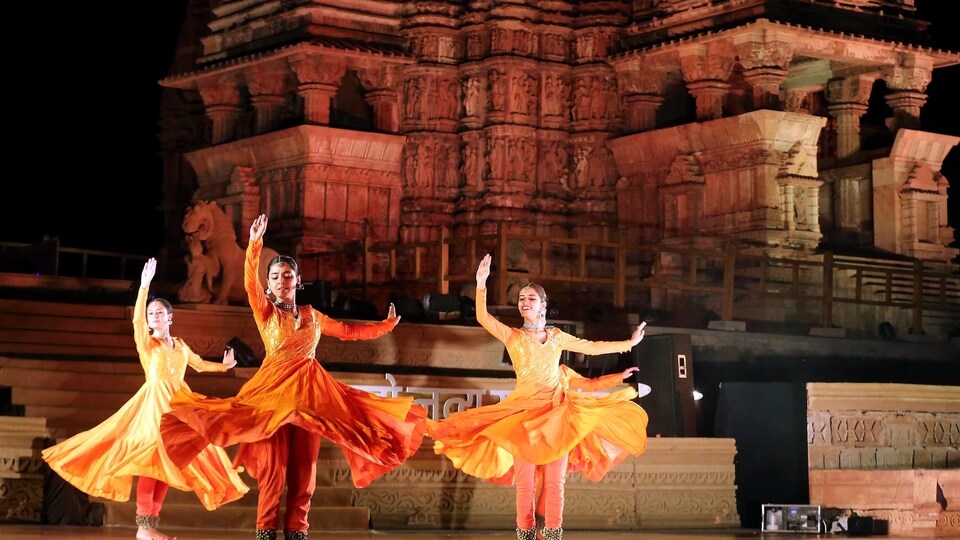
Whether you are a seasoned Kathak dancer or a curious enthusiast, this article is sure to expand your knowledge and appreciation of this timeless art form.
Kathaka is not only the name of a classical dance of North India but is also the name of a community of musicians and dancers, who practice music and dance, to earn their livelihood. Based on the available records, they were spread across the sub-continent of India. Several invasions and onslaughts, mainly in the northern part of the country, not only affected the geo-political and cultural, conditions but also gave rise to a mosaic culture, which in turn led to the perpetuation of myths and stories. From the origins of Kathak to the intricate footwork and hand gestures, there is much to uncover about this beautiful dance form. Let's discover some of the lesser-known aspects of Kathak and shed light on the myths that surround it. (Also read: Famous traditional dance forms of India you should know about )
Myths and facts about Kathak dance
Prof Ranjana Srivastava, Former Dean Faculty of Performing Arts (FPA), BHU Varanasi, India and Head of Dance Department, FPA, shared with HT Lifestyle, some unknown facts about this famous dance form.
1. Myth: ‘Katha Kahe so Kathaka Kahave’
Fact: The subcontinent of India boasts of enormously rich, varied, and enviable traditions, in stories and storytelling- the kathas and the katha vachaks. All the classical dances of India, and yes, Kathaka Dance, included too, have ‘kathas’ (stories), in their repertoire - and all the dance forms, tell stories. The exclusive status accorded to ‘kathas’ (stories) in Kathaka Dance form, as per the above-mentioned myth, aka saying, becomes explicit when one reads the Nirukta of Yaska Muni, which mentions ‘Kathakaya Acharya’.
2. Myth: Kathaka was born in the temples and nurtured in the court of Wajid Ali Shah
Fact: The evolution, of what we know as Kathak dance, today, has been traced to Dhrupada Nritya, which traces a very ancient history of lineage. The reference, to the courts, is largely understood as the court of Nawab Wajid Ali Shah, the Nawab of Oudh, but this is, partially true. The contribution of the courts of the Hindu Rajas, along with other regional and folk forms, cannot be ruled out.
3. Myth: Syllables ‘taa’ – ‘thei’ – ‘tatta’, were produced, when Lord Krishna, danced on the hood of the venomous snake, Kaalia
Fact: The myth is aligned, symbolically – giving a logical explanation to a popular belief that Lord Krishna, came out of the waters of the river Yamuna, dancing on the hood of the serpent ‘Kalia’ - subduing the snake and its ego, with one foot placed on its hood and the other foot, pointing towards the sky, producing the sounds - ‘taa’ – ‘thei’ – ‘tatta’ and suggesting that he is the Lord of the three worlds – ‘akasha’, ‘patala’ and the ‘prithivi’.
However, research and findings, direct to a more logical understanding - Lord Vishnu in his incarnation as ‘Vaman’ avataar, produced the three distinct sounds: ‘taa’ – ‘thei’ –'tatta’, when he conquered the three worlds as ‘Trivikrama’ -Vishnu’s feet, falling on three different elements: Earth. Water and Space, creating three distinct sounds which encapsulated the basic mnemonic syllables of the Kathaka dance.
4. Myth: The ‘amada’ compositions, are on mnemonic syllables – ‘taa’, ‘thei’ and ‘tatta’, and is performed by the dancer, as he/she enters the stage, because ‘amada’, a Persian word means – ‘entry’
Fact: The syllables – ‘taa’, ‘thei’ and ‘tatta’, are the first - basic syllables of ‘Kathaka’ dance, and therefore the term ‘amada’, used, to define compositions, having these basic syllables, of the Dance -Kathaka.
5. Myth: ‘Tattkara’ generally understood as footwork. The sounds produced by the dancers’ feet along with the ghoongroos.
Fact: Etymologically ‘tattakar’, is made up of ‘tatt’ + ‘akara. In Sanskrit, ‘tatta’ is also used for Brahma who is both luminous and formless and ‘akara’ means form or shape. Hence, the fact - dancing is the art of giving form and shape to Brahama …. ‘aakara’ to the ‘Nirakara’, through the sounds and movements.
It is the art, which makes possible, the joining of the two worlds of experience…. the exoteric and the esoteric, and the ‘tattakara’in Kathaka, is both the starting and the returning point.


