
 E-Paper



Lens cart: A look at the hottest new self-published photobooks

 Prefer HTon Google


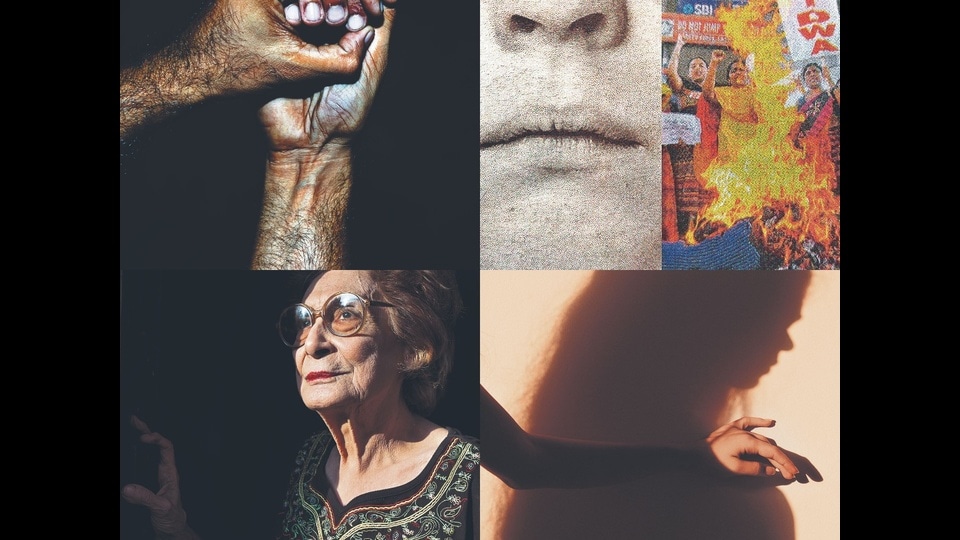
Conflicts and cultures, the public and the personal... as more photographers self-publish their work as precise, immersive volumes, a guide to the best ones to flip through, or read at leisure.
“The most liberating thing about self-publishing is having total creative control, but this can also be very daunting, especially for a first-time book-maker,” says Anurag Banerjee, photographer and author of I’m Not Here. The book, released last month, represents his relationship with his hometown of Shillong, through images shot over eight years.
I’m Not Here was the first self-published photobook to receive a grant from the Nazar Foundation. The Alkazi Foundation for the Arts issues such grants too. Even with such help, it’s not easy. Producing a photobook can cost between ₹2 lakh and ₹15 lakh for a print run of 300 to 500 copies. Dealing with the demands of design and distribution can be challenging.
Still, more photographers are taking this route, revelling in the freedom it offers. For the Indian reader, this means a new genre of independent works that serve as immersive documentary and docu-fiction, exploring conflicts and cultures, the public and the personal.
“There has been a definite change in the subject range over the years. A major reason is the actual change in the nature of photography books and the transition from the coffee-table book to the photobook, which is also considered an art object,” says Prashant Panjiar, trustee of Nazar Foundation. Here, then, are four photobooks (and a zine) to stay in with this summer.
.
Narrative is the new warfare
(The Coast, 2019; Price: ₹3,000)
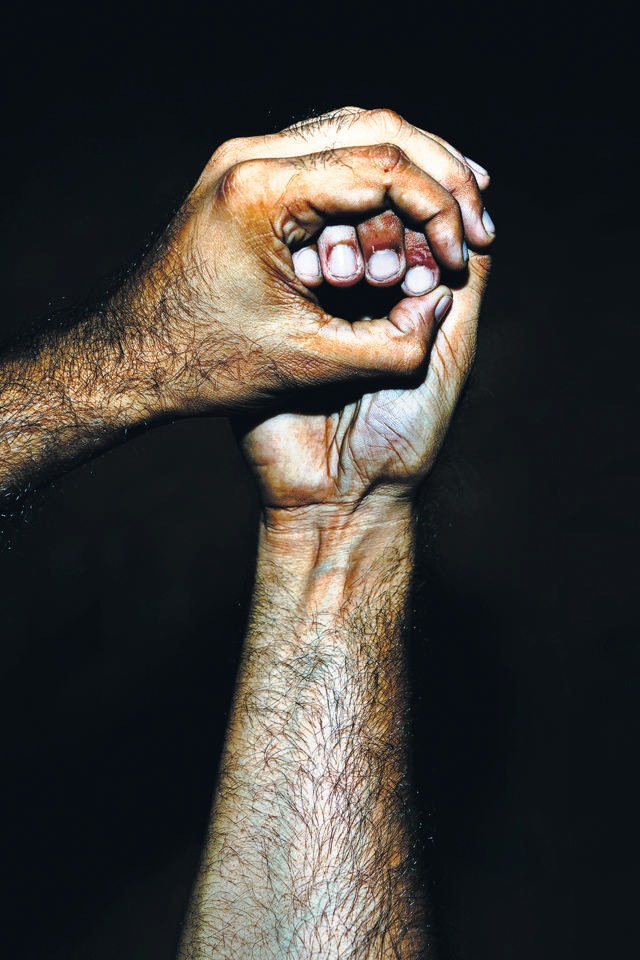
Set along the coasts of India, Magnum photographer Sohrab Hura’s book explores undercurrents of violence that are religious, caste-based and sexual. The Coast is an iteration of Hura’s short film The Lost Head & the Bird, released in different iterations between 2016 and 2019. Like the video, the book is a masterpiece of editing that uses found images and Hura’s own photographs to tell a story in 12 retellings.
“In its original format, the story has the obsessive lover, the fortune-teller and the idiot photographer, me, all partaking in the violence in the main character Madhu’s life. By the 12th iteration, all these characters have been absolved of their roles in any wrongdoing and the blame for Madhu’s circumstances has been subtly shifted back on to her,” says Hura, 40.
The images switch between brutal, funny, dark and silly. There’s an image of three children on a beach, and it takes a few seconds to notice that one child is about to strike another with a stone. Handling distribution is the hardest part of self-publishing, Hura says. The work was created over seven years. “It’s like Chinese whispers,” Hura says. “Each time we narrate the tale, something changes. It’s like narrative is the new warfare.”
.
A Rorschach test for #MeToo times
(In Today’s News: Alpha Males and Women Power, 2019; Price: ₹2,200)
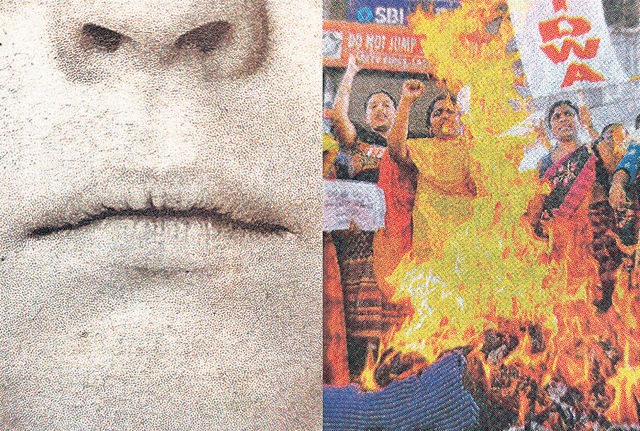
The first thing you notice about In Today’s News: Alpha Males and Women Power is how it feels. Hand-stitched and bearing an open spine, this limited edition appropriates images from the print media to offer striking commentary on predetermined gender roles and patriarchy.
Its author, Kaamna Patel, 34, is a visual artist and bookmaker who runs the Jojo photobook library in Mumbai. The visual language, in images collected from newspapers across four months in early 2019, reveals the limitations of a society struggling to keep patriarchy literally out of the picture. One spread zooms in on an ad shaming women’s tired under-eyes and juxtaposes it with an image of a woman doing weights. “In 2019, the MeToo movement was fresh in my mind and the book was a response, almost like a Rorschach test,” Patel says.
.
Memories in every fold
(Happy Goodnight, 2019; Price: ₹1,700)
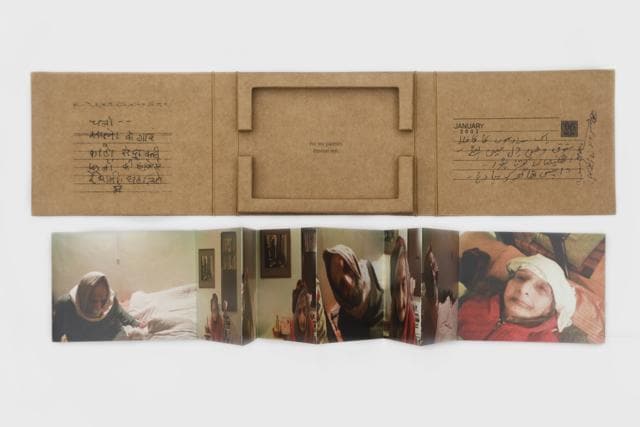
Sanjeev Saith, 64, a photographer and editor of books, took a long break from photography in 2002 to turn full-time caregiver to his parents. Between 2007 and 2008, he photographed his parents, using just a smartphone. “It was actually over two nights and two days in that period that the photographs in the book came to be,” he says.
He lost his father in 2010 and his mother in 2016. Happy Goodnight is his ode to them and to his relationship with them. The title was his mother’s greeting to his father at the end of each day.
The photographs are tender, moving between the interiors of their home, the textures of his parents’ skin and the way the light falls on them. The book is pocket-sized, opening out in an accordion fold that reveals both the monotony and the intimacy of a caregiver’s life.
“Coming to terms with the idea of self-publishing wasn’t easy,” Saith says. “Even editors need editors, you see.”
.
Nowhere to go but up?
(A Still Year, 2021; Price: ₹700)

Technically a limited-edition zine, Tito’s A Still Year is essentially portraits of people shot during the pandemic, in December 2020. Using his studio in Mumbai, he photographed friends as well as strangers who responded to a call he posted on Instagram. Alongside each image is a brief account from the subject. “I wanted the zine to be a memento of that year, and offer hope for 2021,” says Tito, 24. Some of his subjects perform for the camera, others seem at ease with their vulnerabilities. One, Tanmayee (last name withheld), describes the lockdown as a period of gloom; she lost her job, stayed in with her partner, escaped into books and cooking and dancing together because there was nowhere to go.
.
A still-hidden history
(Armenians of Calcutta, 2021; Price: ₹1,700)
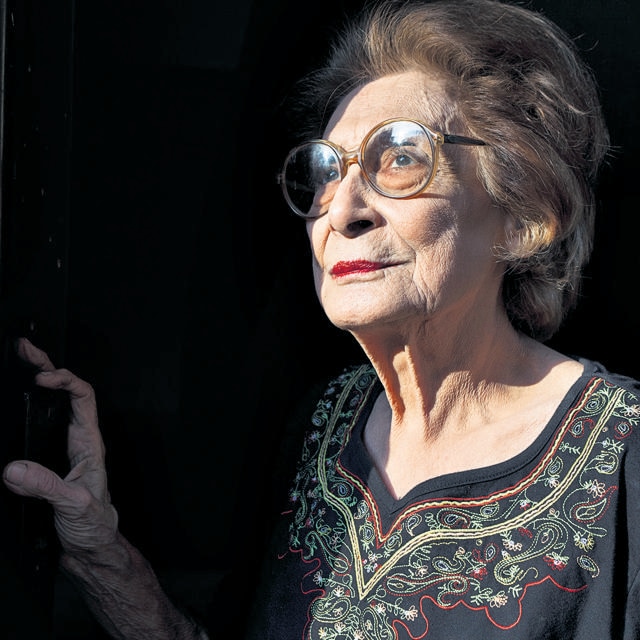
Alakananda Nag spent a decade photographing and researching the Armenians of Calcutta.
The aim with the book was to represent the community and stay as invisible as possible as an artist, says Nag, 44. As one moves through it, one encounters archival images from old yearbooks, family portraits, images of spaces Armenians inhabit in the city. Armenians of Calcutta was launched in Kolkata this month, at Goethe-Institut (Park Mansion), which was built by an Armenian. Nag is planning a Bengali version of the book too.
(For updates on more such works, go to The Offset Bookshop [offsetprojects.cargo.site]. Founded by curator and photographer Anshika Varma, it stocks and showcases photobooks and zines from India and South Asia)


