
 E-Paper



Madhubani painting to Pattachitra: 5 types of folk art styles and smart placement hacks to liven up your interiors

 Prefer HTon Google


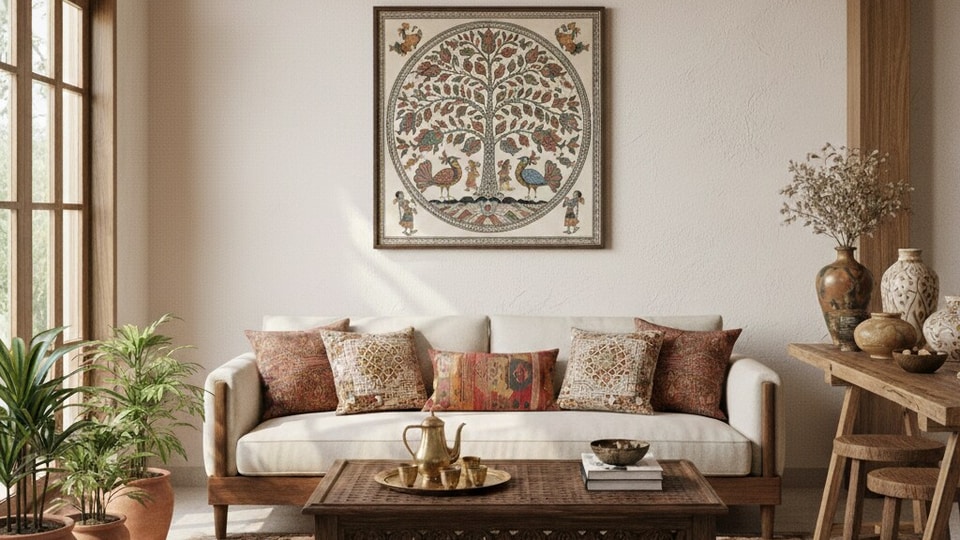
Spruce up your interiors with Indian artworks. Find out the best hacks for adding them to your space, irrespective of your decor style.
Art brings soul to anything it touches. Every style carries a purpose, a mood and a way of shaping the space around it. The experience of a home is actively moulded by the art it holds. Among the many styles finding a place in people's hearts, Indian folk artworks are steadily making their way into contemporary Indian homes.
ALSO READ: Love stylish homes? Steal these 3 European design ideas for your Indian interiors
You may have seen the classic Indian artwork in your grandparents' home, eliciting doubts if they might tilt interiors towards the overly maximalist or traditional orante. But the truth is, they can be included in almost every interior aesthetic tactfully. What makes them special is the unique brushwork, distinct strokes, and layouts, all rooted in stories and narratives that naturally spark conversations. Local artwork, from Madhubani to Warli, makes your place lived-in, rather than impersonal, catalogue-like styling.
These artworks impart an expressive and nostalgic touch to your interiors. Whether your home is more minimalist, Scandinavian with a desi edge, or full-on boho chic, folk art can find its place within contemporary styles too.
The key to making any local artwork is rooted in its thoughtful placement, which aids in amplifying cohesiveness through furniture, textures, and materials that complement the artwork.
In fact, folk artworks do come across as statement pieces, even when surrounded by furniture and upholstery drawn from different points across the decor continuum (consider brutalist or mid-century modern). When introduced with deliberate intent, folk art becomes more than a centrepiece on a blank wall. It acts as a visual anchor for the room.
Moreover, these works easily add traditional elements into contemporary spaces without appearing imposing or out of place. Instead, they integrate depth, warmth, and character, letting heritage and modern design coexist naturally within the same space.
To understand more about the placement of Indian artworks in your interiors, HT Lifestyle connected with Yosha Gupta, Founder and CEO, MeMeraki. She revealed that homeowners are opting for artpieces that embody memory and feel personal. Most of the Indians at some point may have come across local artwork at their ancestral homes. In order to capture that experience, many are choosing decor pieces which make them feel nostalgic and grounded.
Yosha made an important observation: “Indian folk-art traditions, with their strong visual languages and cultural depth, are finding renewed relevance in modern homes.”
Now, folk artworks are being re-evaluated, and their visual strength and incredible capacity for storytelling are noticed. The motifs and forms stand out even in contemporary settings. Yosha remarked, local artwork brings a human-touch to the space, reminding how homes are made to feel personal instead of being just Pinterest-like curated.
Yosha shared the 5 different Indian artworks gaining popularity in Indian homes, and the best places for them:
1. Madhubani painting

- Works particularly well in homes with strong wooden elements, neutral backdrops, and an appreciation for symmetry and storytelling.
- Suit residences that favour warm materials such as teak, walnut, or cane, and interiors that already lean towards earthy tones.
- Placement works best in transitional spaces such as foyers, hallways, or stair landings, where the detailed motifs invite closer viewing. Framed works can also anchor a quiet corner near a reading nook or console.
2. Gond art
- Brings rhythm and movement into a space through its flowing lines and organic patterns.
- Well-suited to contemporary apartments and modern homes that favour clean lines, minimal furniture, and open layouts.
- Living rooms, home offices, or above low seating arrangements work particularly well, where the scale and repetition can be appreciated from a distance.
3. Kalamkari panels
- Works well with interiors that mix traditional and contemporary elements, such as modern furniture alongside handcrafted accents.

- Especially effective in dining areas, long corridors, or behind headboards in bedrooms, where horizontal compositions can unfold visually and hold attention over time.
4. Warli art
- Offers simplicity, balance, and a strong connection to daily life.
- Complements minimalist homes, especially those using white, off-white, or lime-washed walls. The restrained palette allows the forms to stand out without disrupting calm interiors.

- Warli murals or framed pieces work well in family spaces such as living rooms, children’s areas, or informal gathering zones, where their themes of community and movement feel most natural.
5. Pattachitra

- Suits homes that embrace visual richness and layered detailing.
- Integrates beautifully into eclectic interiors, heritage homes, or contemporary spaces that already feature bold colours, textiles, or handcrafted objects.
- Best placed in quiet areas such as prayer rooms, study corners, or intimate seating spaces, where their intricacy can be absorbed slowly.


