
 E-Paper



Manipur village struggles to keep dying salt cake culture alive


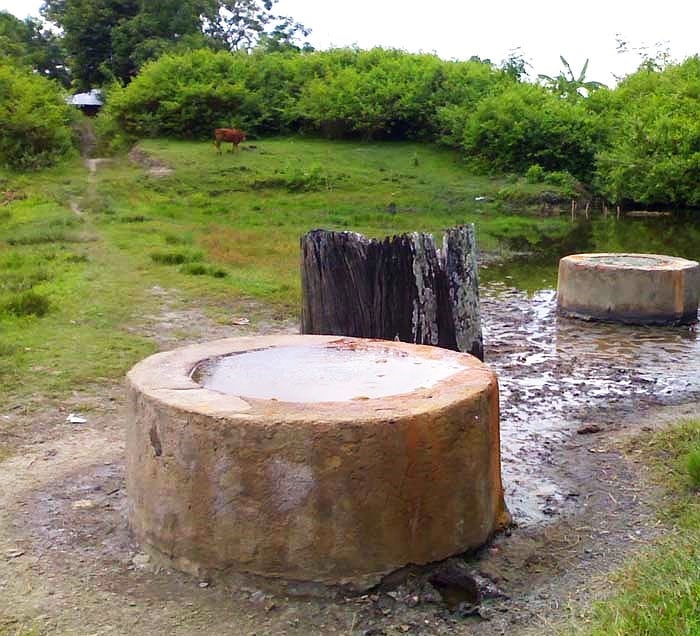
With the dwindling use of the salt cakes by the people, most of the families of Ningel village in Thoubal district are moving to other professions.
In the days of yore Manipur kings gifted salt cakes made in Ningel as a mark of their appreciation and now just 10 families of the village are tenuously holding on to the dying art for a meagre living. The salt cakes, which are circular discs of salt manufactured by boiling saline water from wells, have yielded their pride of place to the ubiquitous modern day packaged salt. The use of the traditional salt cakes is now confined to religious functions related to mainly births and weddings.
(Also read: Panel to screen books on Manipur’s culture, experts concerned over move)
With the dwindling use of the salt cakes by the people, most of the families of Ningel village in Thoubal district are moving to other professions. Ningel is the lone village where the salt cakes are made and the number of wells, from where the saline water is drawn, is now just three from six earlier. The condition of the famous salt wells - Chandrkhong, Seekhonng and Waikhong in the village during the rule of the kings have deteriorated due to lack of maintenance and excavation in the nearby hilly areas, said former village pradhan M Ingocha.
Officers of both private companies and the government had visited Ningel many times in the past and expressed their eagerness to preserve the dying art in view of its historic importance. "But no assistance was provided to the people despite petitions," he told PTI on Friday.
As making salt cakes is no longer profitable, many families which earlier made the salt cakes have shifted to agricultural work for their sustenance. "The salt cakes are sold for ₹10- ₹15 per slab, which does not fetch us enough to meet our expenses," said Binasakhi, a salt maker. "We generally make around 200 salt cakes per day. During the wedding season the production increases by more than three times. If this work becomes obsolete with time, we will become jobless and the state will loose this ancient traditional art forever," she added.
Lata, a salt maker in her 50s, said the major difficulty lay in procuring wood to boil the saline water as it is very costly. "Besides, our work sheds are in very poor condition". With the profit margin almost negligible, only a few families are currently involved in salt production mostly for the sake of keeping alive the traditional practice, she said. Lata urged the authorities to organise a traditional salt festival on the lines of those held for chillies and specific fruits of the state.
In Ningel the salt wells are almost 45 feet in depth with a diameter of 6 feet. Of the three that exist, two are cemented while the oldest one is made of wood. In the past, salt was called 'Thum' in local parlance and occupied a major place in the state's economy.
The kings of Manipur used to reward those who distinguished themselves in the battlefields with traditional salt cakes. Its significance is reflected in the modern day Manipuri word 'senja-thumja' for corruption. In the oral Manipuri folklore there are stories of ordinary people bribing palace guards with salt for appointment with the kings.


