
 E-Paper



May the course be with you: Rudraneil Sengupta’s tribute to marathoner Fauja Singh

 Prefer HTon Google


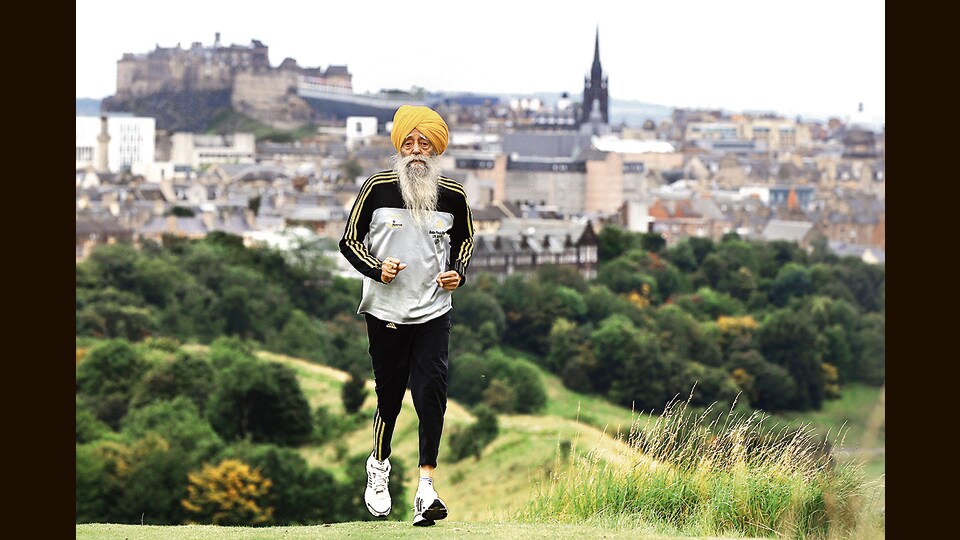
The 114-year-old turned grief into a unique legacy. ‘Running keeps me alive,’ he once told me. An ode to the marathoner, lost to a hit-and-run.
The death of Fauja Singh, killed by a speeding SUV while crossing a road near his village in Punjab, is incomprehensible in its tragedy. It is also emblematic of a deeply entrenched Indian problem.
Incomprehensible, because Fauja was 114 years old, a man who moved very slowly, with deliberation. How could the man driving the SUV not see him?
Emblematic, because Indian roads are among the most unsafe in the world. In 2023 (the last year for which government data is available), at least 172,000 people died in road accidents. That’s an average of 471 deaths a day. This included 10,000 children over the year, and 35,000 pedestrians.
“There are several reasons for accidents, but the biggest is human behaviour,” Nitin Gadkari, union minister for road transport and highways, has said. In Fauja’s case, the driver, who fled the scene in his car as the marathoner lay on the road, has been arrested.
I last met Fauja Singh a few days before his 103rd birthday, at his village of Beas Pind near Jalandhar. We went for a run together, past mustard fields full of yellow flowers, wheat fields shimmering under a light breeze, sentinels of poplars and groves of mangoes. Singh was in his trademark tracksuit, a slight man with a flowing silver beard, positively wizard-like.
He spoke of his most recent race, a 10K he had run in Hong Kong a few months earlier. Chuckling, he recounted how he had a fall just past the halfway mark. “People rushed to help me, because every time I fall nowadays people think I won’t get up again,” he said, slapping his knee. “But my time has not come. I got up on my own and just ran. When I crossed the finish line, I felt so light, so painless, I thought: God was running with me.”
Fauja began running after a terrible tragedy in his life, the death of his youngest son, in 1994. Kuldeep Singh was decapitated in front of his father, when the tin roof of an outhouse collapsed while the two men were working to fix it. Months after the incident, people in the village called his eldest son Sukhjinder Singh, who lived in London, to tell him that Fauja was losing his mind, aimlessly roaming the village at all hours of the day.
The son took Fauja to live with him in London, where he met others of his age who had taken up running as a hobby. One day, aged 86, Fauja joined them, making the start of a career that saw him run his first marathon at 89, and nine more after it, including the Toronto Marathon in his 100th year.
In-between, Fauja sat down for tea with Queen Elizabeth II. “Maharani England di tagri hegi ae (The queen of England is a fit woman),” he told me with a smile. He carried the Olympic torch through part of London, ahead of the London Games in 2012. He starred in an “Impossible is Nothing” Adidas ad campaign alongside David Beckham and Muhammad Ali.
“Running keeps me alive,” Fauja once told me. “One day I will be running and the earth will claim me back and it will be wonderful. How can you be scared of something like that?”
(To reach Rudraneil Sengupta with feedback, email rudraneil@gmail.com)


