
 E-Paper



T20 is turning fielders into athletes and it’s a joy to watch, says Rudraneil Sengupta


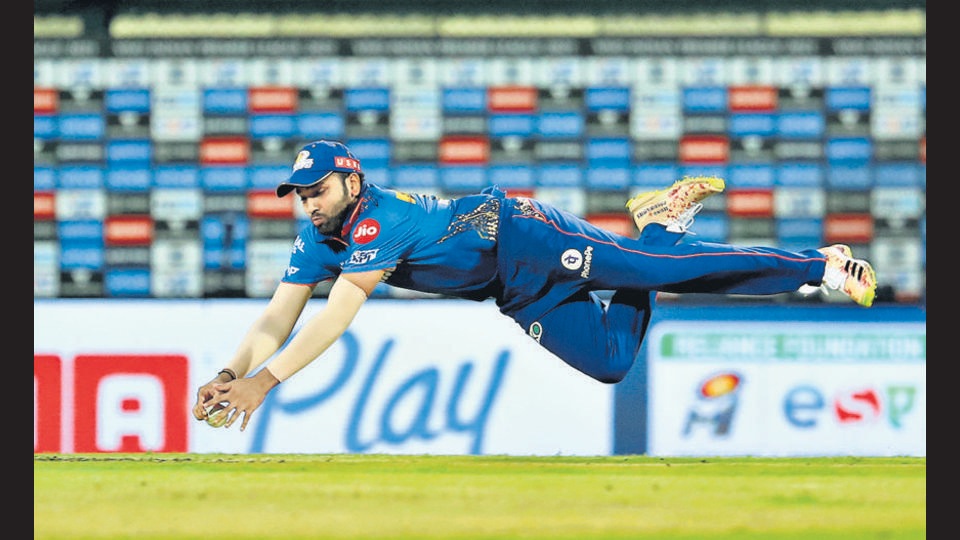
If the bowling and batting are frenetic, the man on the boundary matches that action with explosive running, leaping, tumbling and reaching for (and getting to) balls that seem insanely out of reach.
I watch the Indian Premier League (IPL) for the fielding. Partly because I love athleticism in sport. I watch football, wrestling, boxing, rugby, tennis and gymnastics with child-like fascination, a question always running through my head: “Wow! How do they do that?”
On the cricket field, that fascination is reserved for fielding. Neither batting nor bowling require great athleticism. It helps to have it — and Virat Kohli will insist you have it or go home — but it’s not what makes a batsman or a bowler great. Shane Warne was not a great athlete; he was simply one of the greatest bowlers in the history of the game. The same is true of Muttiah Muralitharan, and batting legends Sachin Tendulkar and Sourav Ganguly. Their lack of gymnastic ability had no bearing on their greatness in the game.
But cricket is rapidly changing. The demands of T20 and the great depth of fitness knowledge and resources now available are making athletes out of most cricketers. The expression of this newfound focus on physical conditioning is naturally seen most in fielding. In this opening week of the IPL, there’s already been a glut of gravity-bending efforts, a moveable feast of gymnastic leaps and lightning-quick reflexes. If the bowling and batting are frenetic, the man on the boundary matches that action with explosive running, leaping, tumbling and reaching for (and getting to) balls that seem insanely out of reach.
My colleague Rasesh Mandani wrote a detailed story in this paper last week exploring just what goes into this kind of athletic fielding, and how cricketers prepare for the sheer unexpectedness of the range of motion required from them. This is where fielding diverges from other cricketing skills. Batting and bowling depend on set movements. When you learn how to play a shot, what you are learning is muscle memory so you can get into the perfect position to repeat the exact same motion every time.
When fielding, said England’s Chris Jordan, one of the finest exponents of fielding currently in the game, “you are never in the perfect position”.
Last year I had a fanboy moment when I got to sit down (virtually, over Zoom) with my childhood cricketing hero Jonty Rhodes, now the fielding coach for Punjab Kings, and discuss how he approaches fielding drills. The first assessment, Rhodes told me, is always about the feet. If your legs can’t get you to the ball, your hands can’t catch it.
“I always start with analysing how a player moves,” said Rhodes. “Not just straight lines... because good fielders have to move laterally.”
There is another T20-related shift that’s occurred in fielding — its greatest exponents now don’t man backward point (which Rhodes made his own) or the slips, but are stationed at the boundary. Jordan will be in the slips when he’s playing Test matches for England, but he mans the ropes when he’s playing for Punjab Kings.
How is it that players now have such a keen understanding of just where the boundary rope is even as they are backpedalling or running at full tilt or flying and twisting through the air? A lot of it is proprioception (awareness of your own body in space) and match simulation drills, of course, but Rhodes made the simplest of points — there is no boundary rope in most international matches but a Toblerone-shaped ring of advertising made of foam.
“That’s what you are trying to sight,” Rhodes said. “That’s how you know where the line is.”


