
 E-Paper



Treble in the family: Sanjoy Narayan on Kamasi Washington, the voice of modern jazz

 Prefer HTon Google


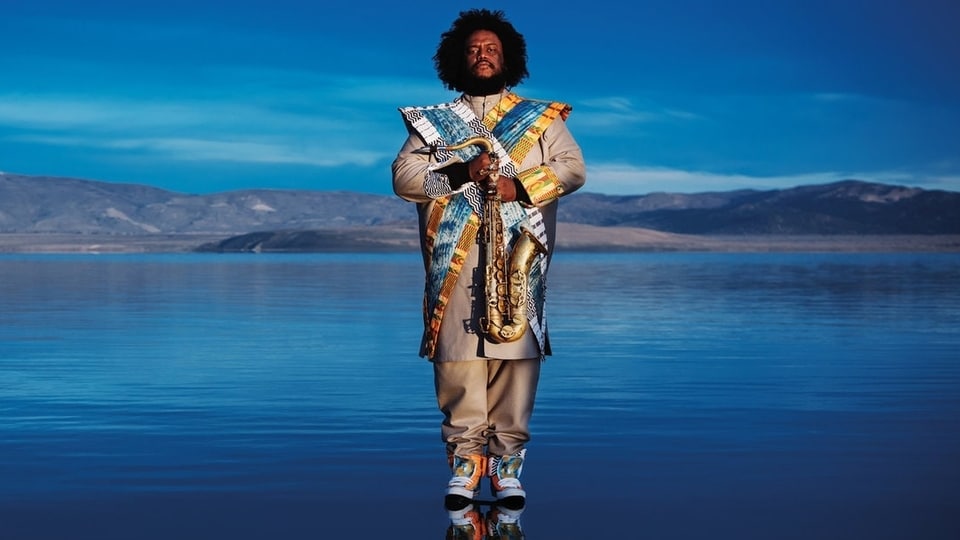
He creates spiritual compositions, connects directly with his audience, and ropes in his father and his little daughter, urging the genre into new territories.
When Kamasi Washington takes the stage, his towering 6’ 3” frame and flowing locks create an almost mythical presence, commanding attention before he even lifts his tenor saxophone to his lips.
The Los Angeles-born virtuoso has emerged as the defining voice of modern jazz’s renaissance, weaving together spiritual and expansive compositions that blur the lines between jazz, hip-hop, classical music, and R&B, with an intensity that feels both ancient and futuristic. As co-founder of the West Coast Get Down collective, alongside artists such as Thundercat and Cameron Graves, Washington, 44, represents a generation that has breathed new life into jazz, making it urgent and essential again.
One of the ways he does this is by connecting directly with his audience.
Late last month, when he strode onto the stage at Helsinki’s Kulttuuritalo (House of Culture) in his trademark dashiki, the crowd likely hadn’t expected the intimate talk that accompanied the music. After opening his set with Street Fighter Mas, a 2018 track that marries sophisticated jazz with groovy funk, and following it with Lesanu (2024), a spiritual jazz piece featuring African vocals, he sat down on a stool and addressed the audience.
Washington spoke about his four-year-old daughter, Asha, who since the age of two has played the piano every morning. When she recently came up with a set of bars all her own, she was excited. Washington got his phone out and recorded the notes. The next song, he told the audience, was based on that tune.
Titled Asha the First, the track is expansive and meditative.
The evening’s setlist continued with Askim from his 2005 album Live At 5th Street Dick’s, followed by Road to Self (KO) from Fearless Movement (2024), and the contemplative Vi Lua Vi Sol from Heaven and Earth (2018). Each piece showcased Washington’s gift for creating sprawling sonic landscapes that invite listeners into deep contemplation while keeping their feet firmly planted in rhythm.
What made the performance particularly compelling was how Washington provided space for his exceptional ensemble to shine. His line-up included his father Rickey Washington on flute and soprano saxophone, Ryan Porter on trombone, Brandon Coleman on keys, Tony Austin on drums, DJ Battlecat on turntables and percussion, Miles Mosley on bass, and Patrice Quinn on vocals.
Through the evening, Washington stepped back generously, allowing each musician extended solos that revealed the collective’s deep musical understanding. The most touching moment came when he completed a soaring saxophone solo and his father, clearly a formative force in his life, pointed toward him, announcing his name to the audience with unmistakable pride. The tenderness of that gesture — father celebrating son, mentor honouring protégé — added an emotional layer that transcended mere performance.
Between songs, Washington shared his philosophy about music’s vital role. He spoke of how this art form serves to connect strangers, creating an energy that he hoped could be carried into everyday life. This wasn’t mere stage banter; it felt like a genuine belief system that infuses his approach to jazz.
Washington’s innovative style has consistently pushed this genre of music into new territories. His collaborations span from rapper Kendrick Lamar’s To Pimp a Butterfly (2015) to works with classical orchestras. His fusion approach positions him alongside jazz’s greatest innovators, perhaps not yet at the level of Miles Davis or John Coltrane but certainly someone reshaping the genre for a new generation.
The Helsinki audience, ranging from senior jazz purists to curious 30-somethings, reflected this ability he has developed to make the genre feel both reverent and accessible. Where other musicians might choose between artistic integrity and popular appeal, he has found a third path, one that honours this genre’s spiritual traditions while embracing modern production techniques and cultural references.
His music doesn’t pander to the young or alienate traditionalists. Instead, it creates a space where both can coexist.
When the band returned for an encore in Helsinki, Washington chose Prologue, the closing track from Fearless Movement. As he raised his fist to the appreciative crowd and his flowing afro caught the stage lights, the choice felt deliberate: not an ending, but an invitation to continue the conversation his music had started.
As we filed out of the auditorium, both exuberant and soothed, an elderly couple stopped at the merchandise stand, the woman measuring a black T-shirt against her partner’s back and saying softly in Finnish: “Perhaps you need a bigger one, darling.” In that small moment, Washington’s vision of music creating connections between strangers felt realised: jazz as a universal language, spoken fluently by a towering figure who understands both its ancient wisdom and its limitless future.
(To write in with feedback, email sanjoy.narayan@gmail.com)


