
 E-Paper



Tricks of the treat: Swetha Sivakumar unwraps the science of candy

 Prefer HTon Google


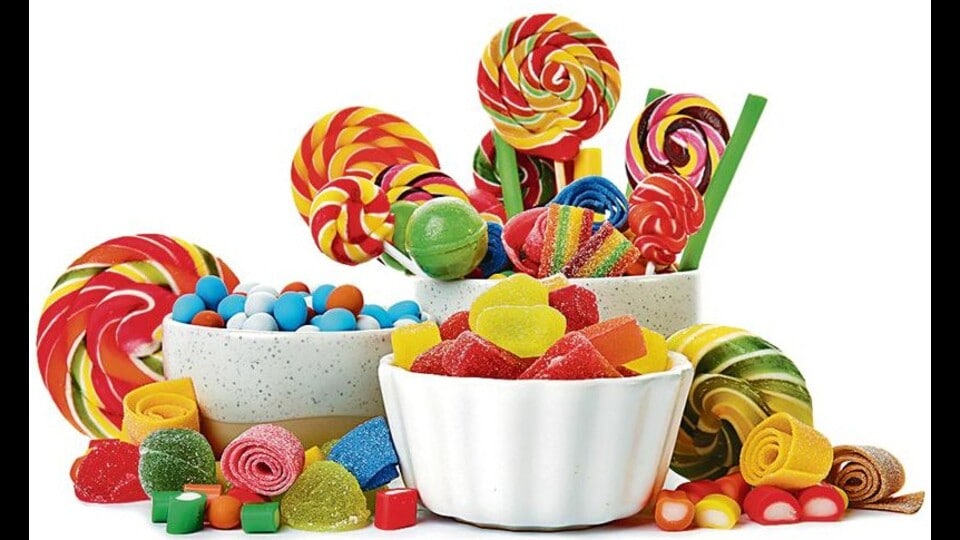
There’s no such thing as an easy-to-make packaged sweet. See how manufacturers keep it all from becoming a hot, sticky mess.
What’s the simplest candy to bring to market? The more I dig into this, the more I find that, incredibly, there is no such thing.
What about the lollipop, you might ask. It’s just sugar syrup, boiled until the water content drops (to about 1%), then cooled and wrapped? How hard can that be?
Quite hard, it turns out.
If the lollipop isn’t fully cooled and hardened before wrapping, residual heat can cause condensation within the wrapper, and one ends up with a sticky mess. To avoid this, commercial producers often wrap lollipops on cooled conveyor, belts in humidity-controlled environments, with laminar airflow to prevent condensation. (How’s that for complicated?)
The lollipop is still the simplest of sweets. It gets more complex with every layer of texture and flavour added.
Take gummy bears. These are made with gelatine, in addition to sugar, flavouring and colouring. Getting the texture right is simple enough. But, like so many packaged foods, gummies will change texture over time, unless the manufacturer finds some way to deal with that crucial variable: water content. The key factor here is not just how much water a product contains, but how free and unattached that water content is.
This crucial difference was first demonstrated in the 1950s, by microbiologist William James Scott. Water bonded tightly to other molecules, particularly sugars and salts, he showed, is less likely to migrate to other ingredients or support microbial growth. This is why some foods with a high moisture content (such as pickled vegetables and jams) keep for so long.
Water activity (aw) is measured on a scale of 0 to 1, with pure water having an aw of 1. A dessert such as rice pudding has an aw as high as 0.96, because the starch gels trap the water but do not react with it, leaving it free to participate in other chemical reactions and boost microbial growth.
Now, there’s not much one can do about the aw of rice pudding (except maybe use sterile sealed packaging to buy it more time on the shelf). But a range of desserts do benefit from the addition of ingredients such as guar gum. These bind with water molecules, preventing the latter from interacting elsewhere. This extends shelf life and helps a product retain its textures over time.
Such stabilisers are particularly crucial in confections with multiple components, each with a different aw. Think of a chocolate bar with caramel and nuts, or a packaged cake with filling and icing. Moisture can move between the components and wreak havoc.
Mix dried blueberries (aw 0.66) with almonds (aw 0.43) in a fruit-and-nut bar, for instance, and moisture will gradually migrate to the almonds, softening them while drying out the blueberries. To stop this, one must coat the ingredient with the higher aw (blueberries) with a moisture barrier such as chocolate or an edible film such as beeswax.
This is why Cornetto cones come lined with chocolate; it’s really more for the cone than for you. The chocolate coating keeps the ice-cream from turning the cone soggy, as the two sit packed together in the freezer.
The need to keep moisture at bay is also part of the reason packaged sweets from the same brand can taste different in different regions. Manufacturers often reformulate their products to suit the local climate. In warmer, more humid regions, ingredients such as nougat and caramel may be added, to extend shelf life and keep textures from breaking down.
In a bit of an aside, some confections contain ingredients that are actively trying to escape… like the liquor in a liqueur or vodka chocolate. The chocolate shell in these products is always so much thicker and harder because, if it were any more porous, the alcohol would make its way through, make contact with the air, and evaporate, leaving nothing but mild fumes at the centre. Even with the thickest shell, this can still happen, over time. One more reason to finish these off sooner rather than later!
(To reach Swetha Sivakumar with questions or feedback, email upgrademyfood@gmail.com)


