
 E-Paper



Who’s got the remote?: Flip through 100 years of television

 Prefer HTon Google


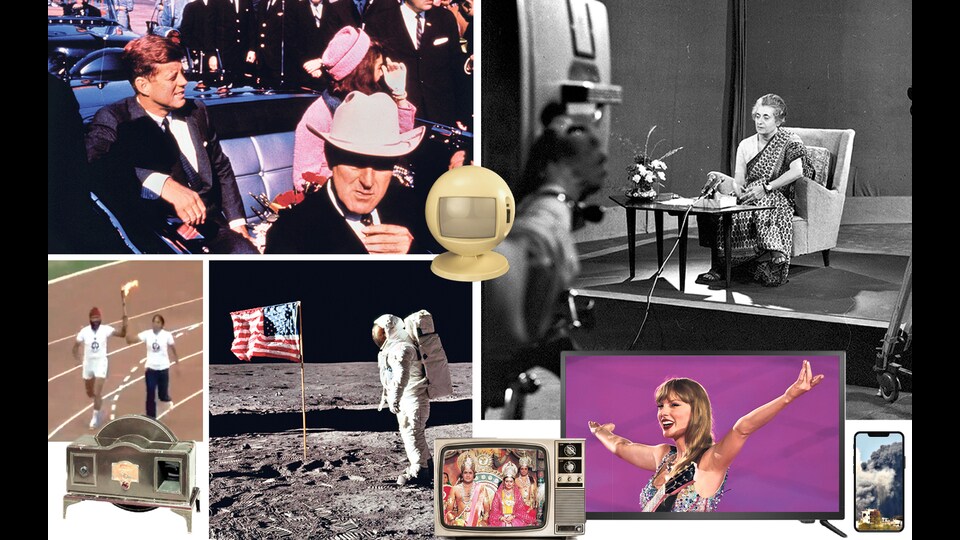
K Narayanan looks back on the early race; the golden era. And how we still point our furniture in its direction, though the broadcasters are, well, all of us.
In the TV show MacGyver, the titular protagonist has a talent for cobbling together solutions to unforeseen technical problems using whatever is at hand. The show and the character became so popular that “to MacGyver” entered the Merriam-Webster dictionary as a transitive verb.
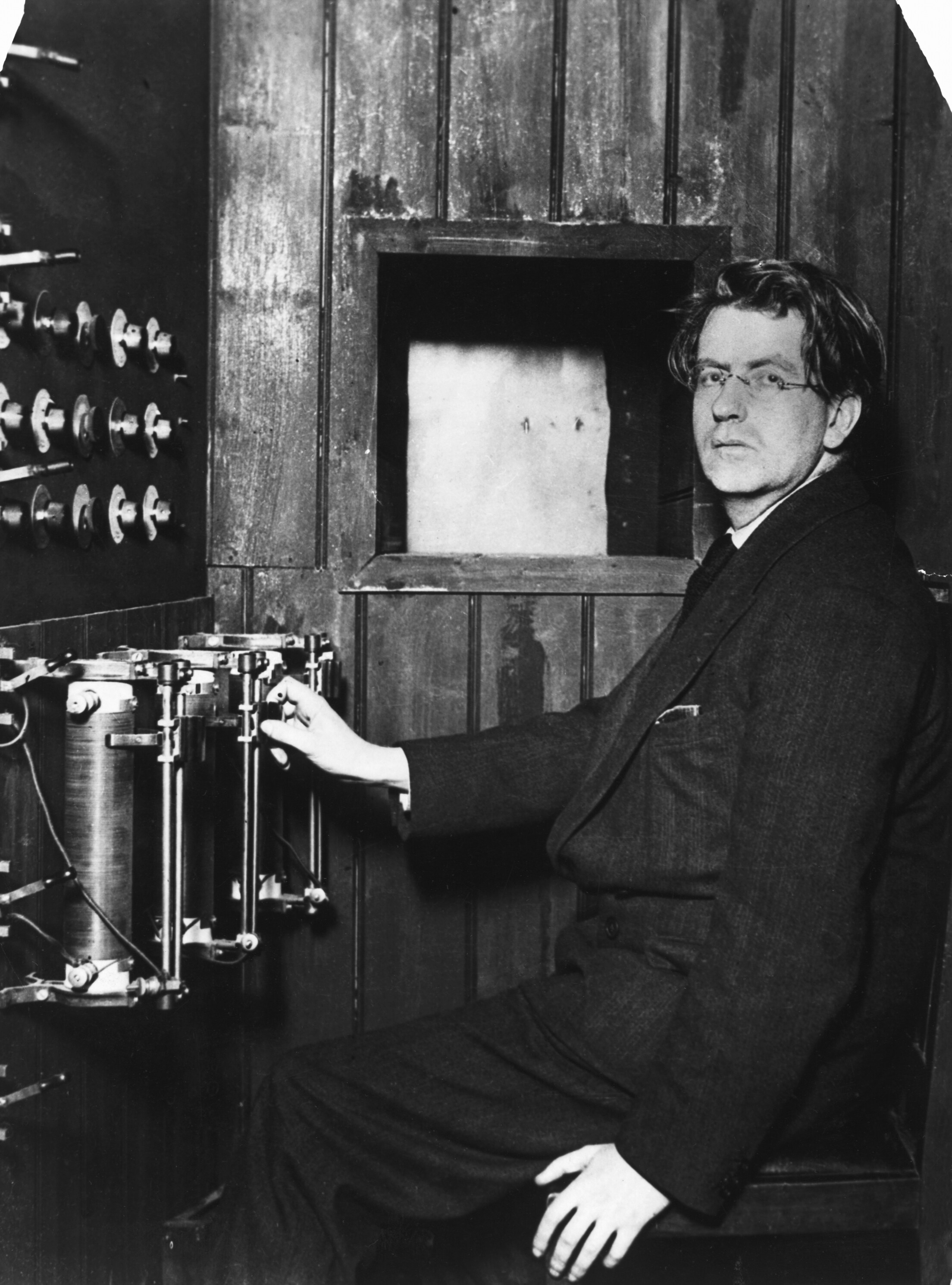
The Scottish inventor John Logie Baird could have given MacGyver a run for his money.
He built the first working television set in 1924, using, among other things, an old hatbox, some darning needles, bicycle light lenses and a pair of scissors.
A scene was illuminated, and the light reflected off the subject and passed through a lens, onto a Nipkow disk, a rotating object with holes arranged on it in a spiral pattern (named after its German inventor). Light from the image passed through the holes in the disk and were converted into electrical signals by a photodetector. These signals were transmitted to a receiver, where another synchronised Nipkow disk recreated the image by controlling the brightness of a light source as it passed through corresponding holes.
Baird, an electrical engineer then in his mid-30s, gave the first public demonstration of this device at a London department store, in 1925, using a clip involving a vividly coloured ventriloquist’s doll named Stooky Bill. But this device could only transmit very slow-moving images (at a rate of five frames per second), yielding a jerky sense of motion.
The following year, the 27-year-old Japanese scientist Kenjiro Takayanagi tinkered with Baird’s system, and instead of the Nipkow disk, used a cathode-ray tube for more accurate rendering. In 1927, the 20-year-old American scientist Philo T Farnsworth perfected the all-electronic TV system. The cathode-ray tube was a glass vacuum that fired dots from an electron gun onto the screen. For his first demonstration, Farnsworth transmitted a straight line.
To physicists, it was a marvellous feat. But Farnsworth’s financial backers were unhappy, being unable to see the commercial viability of their investment in such a device. So, for his next major demonstration, to the press, Farnsworth broadcast a dollar sign.
By 1930, there were a few dozen TVs operational around the world, all in research labs. Things were about to change.
Radio Corporation of America (RCA) began to explore the idea of public TV broadcasts in 1929, after Russian-American TV pioneer Vladimir Zworykin convinced the company that his prototype could be mass-manufactured. There were years spent in experimental transmissions.
By 1936, RCA was ready. The first major public broadcast was of that year’s Berlin Olympics, televised by Germany’s Telefunken using RCA equipment.
***
By the end of 1936, BBC had launched “the world’s first public, regular, high-definition television station”.
It was essentially England’s only broadcaster. The most popular telecasts of this period were the coronation of King George VI in 1937, and the first-ever televised Wimbledon, the same year. At this time, most TVs in the world were owned by research institutions, government offices, engineers and hobbyists. Still, the US lagged somewhat in adoption.
Then, in 1939, at the New York World’s Fair, Franklin D Roosevelt became the first US President to have a speech televised. RCA, almost a decade and several million dollars in, finally had a commercially viable TV set available too. The public was soon riveted.
In July 1941, the first TV advertisement aired, before a baseball game. It was a 10-second spot for Bulova watches, and showed, in shades of grey, a dial superimposed on a map of the country, with a voice intoning: “America runs on Bulova time.”
There would be a lull, as the war put on hold the rapid expansion of TV, but the ’50s saw the medium explode. It spread around the world. It changed the face of broadcasting, and the way people spent their leisure hours.
The ’50s would later be called the golden age of television, especially in the US. The main genres formed: comedy, daytime specials, detective noir.
George Burns and Gracie Allen, Abbott and Costello, Jackie Gleason, all launched vaudeville-style comedy shows. The first bona fide TV superstar was born, with Lucille Ball and I Love Lucy. The Lone Ranger and Marshall Matt Dillon brought order to the West. Soap operas such as Guiding Light kept a largely female audience glued to their TVs during the day. Raymond Burr became the ultimate Perry Mason, and the team of Peter Bogdanovich and Henry Mancini brought their first detective to the small screen, with Peter Gunn.
***
By the ’60s, TV had become an integral part of life in the West. The 1960 US election proved that TV had changed politics too. A newcomer named John F Kennedy, 43, defeated a newcomer named Richard Nixon, 48, and polls suggested that a key factor had been the former’s telegenic personality.
Kennedy would not get to finish his first term; the assassination in Texas would be the first of many events that would unfold globally, in real time, as news bulletins, prompting people to ask: Where were you when you first heard (that Kennedy had been assassinated (1963); that Indira had been shot (1984); that the twin towers had fallen (2001).
The other common question: Did you see: this band of kids called the Jackson 5 sing I Want You Back on The Ed Sullivan Show? (1969); Nixon say “I am not a crook” (1973, during his truncated second term as President); Kanhaiya Kumar chant Azaadi (2016).
In what seemed like no time, the box had altered politics, protest, activism, mobilisation, in echoes of what the internet would do a few decades later.
It changed how funds were raised (1.9 billion people watched Paul McCartney’s mic fail at Live Aid in 1985, in a concert that raised millions for famine relief across Africa). How products were sold (the teleshopping market is currently worth an estimated $47 billion).
It gave women a platform through which to reach other women around the world. Oprah Winfrey first beamed across America in 1986. Journalists such as Christiane Amanpour and Barkha Dutt were pushing new boundaries by 1983 and 1991 respectively. By the 1990s, Martha Stewart and Nigella Lawson were redefining what it meant to be a homemaker.
***
In India, Doordarshan began daily broadcasts in 1965.
This was content that united a widely disparate India. We all knew the Ek Chidiya song (1974), and understood what it meant. The obsession with cricket intensified, with the 1983 World Cup being the first such tournament televised live nationally. Mile Sur (1988) rang out on Sunday mornings, reminding us that we were many voices, and we were one. The Mahabharat (1988) became a national obsession; as did The Jungle Book (1989).
This was not the cathartic, larger-than-life India of cinema; it was the small everyday victories and sorrows of Wagle ki Duniya (1988), and of our world too.
This was the peak of broadcast television. In a few years, cable TV would arrive, be swallowed whole by direct-to-home satellite offerings. Today, it is becoming something of a matter of pride to say one doesn’t own a TV set. The ideal screen is smaller, mobile, loaded with memory of what you engaged with and enjoyed.
There’s no clicking the channel dial in mock exasperation, on a lazy afternoon, as the rest of the house dozes (even a static-only screen was exciting, when one had it entirely to oneself).
The market for TV sets is still growing, but some of the most-watched networks of today don’t broadcast, they stream. 3 Body Problem and Fallout, Heeramandi and Laapataa Ladies are not on TV.
TV is dead. TV will never die.
.
BOX: HOW THE CHANNELS HAVE CHANGED
The word “television” comes from the Greek “tele” (“far”) and the Latin “visio” (“sight”). It was coined by the Russian scientist Constantin Perskyi in his paper presented at the World’s Fair in Paris in 1900.
Before that, the device — then, still hypothetical, stemming from the desire to see moving images of people or events transmitted from one place to another — was called a telephote. “With a telephone in one hand and a telephote in the other an absent lover will be able to whisper sweet nothings in the ear of his betrothed, and watch the bewitching expression on her face,” read a hypothetical description in an editorial in The Electrician magazine, in 1881. The video call would come much later, but the television, being the first screen in our homes, would be arguably more bewitching. Here’s how that evolution played out.
1936: The BBC launched the world’s first high-definition television service. The opening night was watched by about 400 “lookers-in” (as viewers were then called). It consisted of a variety show with American dancers, a plate-spinning act. The English actress Adele Dixon singing Magic Rays of Light, a song about TVs:
As by your fireside you sit,
The news will flit,
As on the silver screen.
And just for entertaining you
With something new
The stars will then be seen…
1939: TV broadcasting companies opened up around the world, from the US’s privately owned National Broadcasting Company (NBC; 1939), to the Government of India’s Doordarshan, which began daily broadcasts in 1965.
1950s: Colour transmission took much longer, mainly because it cost so much more. The first colour broadcasts were in the 1950s. But the earliest transmission of colour via TV was by Baird in 1928, in blurry clips that showed red and blue scarves, a UK policeman’s helmet, a man poking his tongue out, and a bunch of roses.
1969: Around the world, about 650 million people gathered in front of their nearest TV set to watch a blurry Neil Armstrong step onto the dusty white surface of the Moon.
July 1981: The “fairytale” wedding of Prince Charles and Princess Diana was watched by 750 million across 74 countries. In 1997, the funeral of Princess Diana would be watched by about 2.5 billion. It held the record for most-watched broadcast for several years.
1983: India won the cricket World Cup, in a tournament broadcast live across the country. Colour TV sales zoomed. (The win also marked India’s shift from a primarily hockey-focused to a cricket-crazy nation.)
1984: A televised exchange between astronaut Rakesh Sharma and prime minister Indira Gandhi stirred hearts:
“Kaisa dikhta hai apna Bharat (How does it look, our India?),” the PM asked.
“Saare jahaan se achcha. (Better than anything in the world),” Sharma responded. Which was also a play, of course, on the patriotic song of that name, written by Muhammad Iqbal in 1904, as an anthem of Indian resistance to British rule.
1990: The Gulf War became the first war broadcast to the world. As tanks rolled through streets, bombs exploded and oil wells caught fire, with much of this broadcast via satellite providers, cable TV subscriptions rose in India.
2022-24: The Russian invasion of Ukraine has been live-streamed by individuals, as have the bombardments of Gaza. Whether it is concerts or protests, political rallies or cricket matches, live television — the generation and consumption of it — is handheld. TV-set manufacturers have stepped up by accommodating apps, games, streaming services and more. But the new TV set is, of course, the smartphone.


