
 E-Paper



Dream big: How to make a vision board that works

 Prefer HTon Google


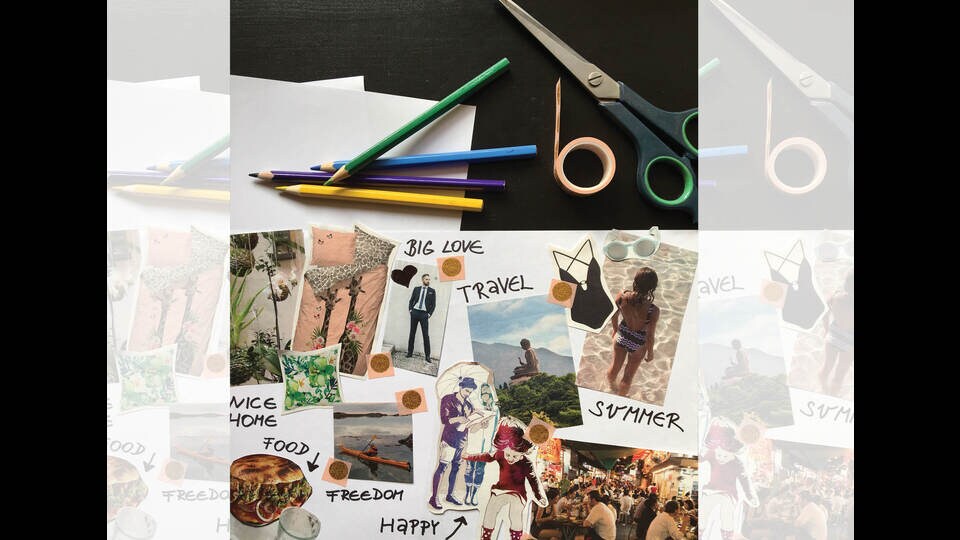
Vision boards are great tools for those dreaming of a new job or a killer body. Don’t just tack pics on to a wall. Here’s how to do it right
Bodybuilders in the 1980s needed only a full-colour poster of a muscled Arnold Schwarzenegger to motivate them to lift weights. By the 1990s, ads featuring Kate Moss, eyes vacant, cheeks hollow, were all it took for young women to starve themselves into heroin-chic. Even as late as the 2000s, Bend it Like Beckham was enough to get schoolkids show up for football.
Motivation is harder now. Every life coach worth their morning Reels recommends building a vision board to set and achieve goals. YouTuber Lilly Singh’s vision board has included such goals as hitting 1 million subscribers and getting a verified X account. Katy Perry made one at age nine—her dream was to win the Grammy.
Vision boards are a step up from to-do lists and inspirational posters — but only when done right. “They’re the opposite of new-year resolutions, which come from a place of dissatisfaction,” says Pritha Saha Dutta, life coach and therapist, who conducts vision board workshops in Mumbai. “Vision boards are based on hope and strategy.” Here’s how to get them to work for you.
Visualise a specific achievement. No vague dreams about becoming a billionaire. No random hopes for success and love. “If you’re hoping to win Oscar, don’t just imagine yourself standing there,” Dutta says. Play out the thank-you speech; think of what you’re wearing and how you’ve accessorised. Go so far as to visualise the cold AC on your face and people cheering around you.” The idea is that the details of the vision, even for a dream as small as an international vacation, will push a person into making it come true.

Be realistic. If you’re not an actor, why dream of an Oscar? Vision boards should reflect your own aims. Unnati Shah, co-founder of personal development platform Humanhood, says it’s important to know what you want, rather than what you should want. “Vision boards are not something that can be made in an hour. Sit down with yourself for a day or week and think about the goals you want to achieve.”
Prepare a defence. Dutta conducts a one-hour goal-setting sessions with her clients before moving on to the process of making a vision board. This takes a few hours more. “I make people justify what they’ve written as goals,” she says. “If they can justify it to others, they can believe in it themselves.”Jaipur-based life-coach Rachna Choudhary suggests breaking up the vision board to reflect different aspects of one’s life — personal, professional, and financial — and setting different targets for each area. “If you want a bigger house, think of the colour scheme, the type of furniture in each room. If you want a good partner, list what the qualities of a good partner should be, and how being with them feels.”

Keep it positive. “If you’re making a vision board just after a fight, or from a place of dissatisfaction with your life, you’re going to be reminded of those negative associations every time you look at it,” Dutta cautions. It’s also a good idea, says Shah, to make a board when marking a milestone such as a birthday or an annual festive celebration, when there’s a sense of fresh beginnings.
Break it down. Of course, all visions need a plan. Break down what it will take to make your dream come true within the time frame you’ve set. “Think of all the things you need to do on a weekly, monthly, and yearly basis,” says Choudhary. Set targets that add up to the larger goal.
Keep it visible. Let it be a constant reminder of big dreams, ambition and the possibility of change. Add words of encouragement, share it with people who’ll offer support (and not judgement) and keep checking back and making updates. No one wants to be trapped in a dream they’ve outgrown.


