
 E-Paper



Rude Food by Vir Sanghvi: Dhamaka’s burst of fame

 Prefer HTon Google


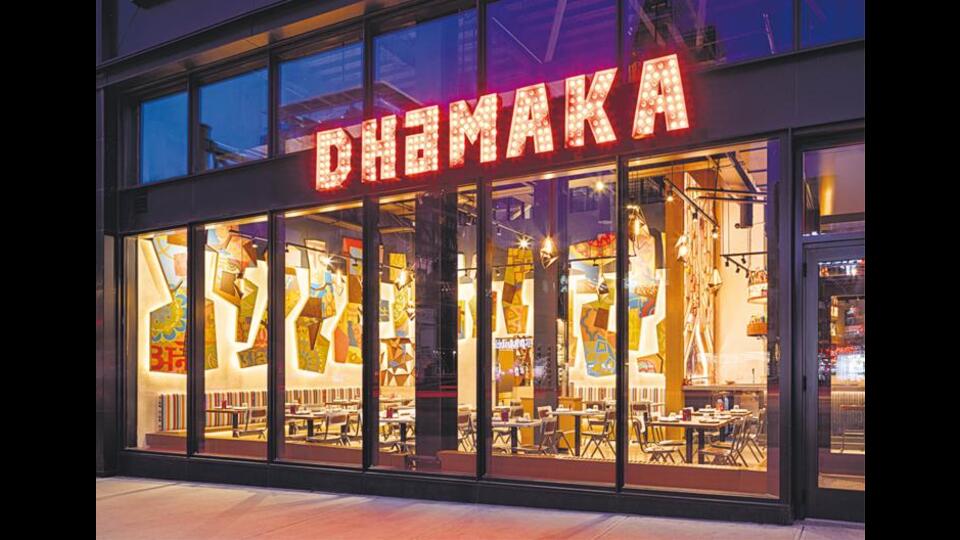
In NYC, reservations at Dhamaka sell out in minutes. Its India pop-up won locals over too. What’s Chintan Pandya’s secret?
If you are interested in food, then you have probably heard of New York’s Dhamaka. In the year it opened (2021), the New York Times put it at number one in its list of the city’s top ten new restaurants. (All restaurants: Not just Indian restaurants.) It is, by any objective standard, the most successful Indian restaurant in the Western world.
How successful? Well, let me give you an example. Suppose you wanted to have dinner at Dhamaka. You would go on the restaurant’s site to book a table and would discover that it was full for the next few weeks. But, you would be assured, all was not lost. Dhamaka only accepted reservations for a 30-day-period. While this 30-day-period was full, you could try your luck when bookings opened for the next 30 period.
So, on the day that bookings opened again, you would say to yourself, “I am going to book today for a date three weeks ahead, so I can be sure of getting a table.” You would call Dhamaka and would be told that all tables for the 30-day period were sold out within a few hours of the opening of bookings.
What could you do now? Well, because tables at Dhamaka are like gold, you could try the secondary market. In New York, there are websites that sell you bookings at such top restaurants as Dhamaka for a price. And, of course, the price is high.
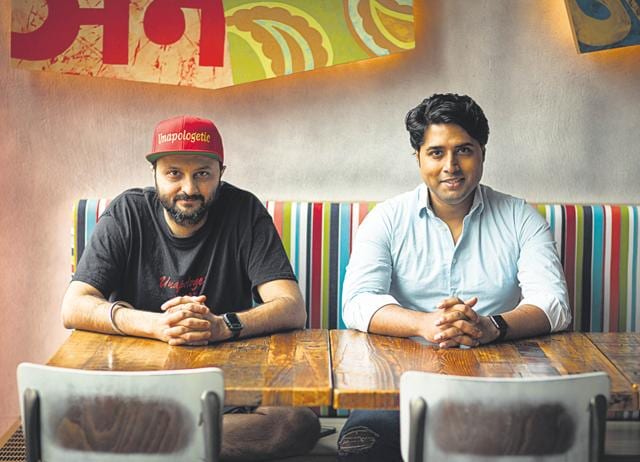
I asked Roni Mazumdar and Chintan Pandya, Dhamaka’s owners, how they felt about this. They were upset, they said. It was, to use an Indian parallel, like buying tickets in black for a hit movie. But while the black marketing of tickets is illegal in India, selling bookings in a grey market is legal in America. And so, there is nothing that Mazumdar and Pandya can do.
How did it get to this stage? Who thought a day would come when dinner reservations to an Indian restaurant would be so scarce that you would have to try the black-market? That an Indian restaurant would be rated as the top new restaurant in the most competitive dining market in the world?
That’s not all. Unapologetic Foods, the group run by Mazumdar and Pandya, also has four other restaurants in New York, all of them extremely successful. One of them, Semma, which serves South Indian food cooked by chef Vijay Kumar, got a Michelin star a few months ago and rave reviews from New York Times. (New York has its own rules: Chefs value Michelin stars but business is largely driven by reviews in local outlets, especially the New York Times.)
I haven’t been to New York since either Dhamaka or Semma opened. So I have had no opportunity to try the food. But earlier this month, Mazumdar and Pandya embarked on an India tour, cooking in Delhi and Mumbai. A non-profit I am involved with (full disclosure) helped organise the tour, and I did two live interviews with Dhamaka’s founders in both cities, and ate at the Mumbai dinner. I also spent a lot of time talking to Chintan Pandya about his food.
What struck me first was how Chintan found his own solution to the central dilemma faced by all Indian chefs who want to make a mark in the West: How to make the menu different?
Indian restaurants all over the world (including India) rely on a menu of North Indian specialities such as tandoori chicken, butter chicken, some version of biryani, black daal, paneer matar and naan. There is nothing wrong with this menu: It is Indian comfort food. But no chef is ever going to find much satisfaction (let alone, become famous) cooking only these dishes again and again.
So chefs find other ways of drawing attention to their food. They Frenchify the plating. They make street food the star. Or they steal from Manish Mehrotra and Gaggan Anand and try and serve a modern Indian menu. Sometimes it works. But all too often, it does not.
What I found fascinating about Chintan’s food was that he has tried none of these approaches. Instead, he has relied on his own skills as a chef, and has dived headlong into the universe of Indian food, picking dishes from all over the country and cooking the best versions possible of all of them. It works only because Chintan’s food is so full of flavour that it is impossible not to like.
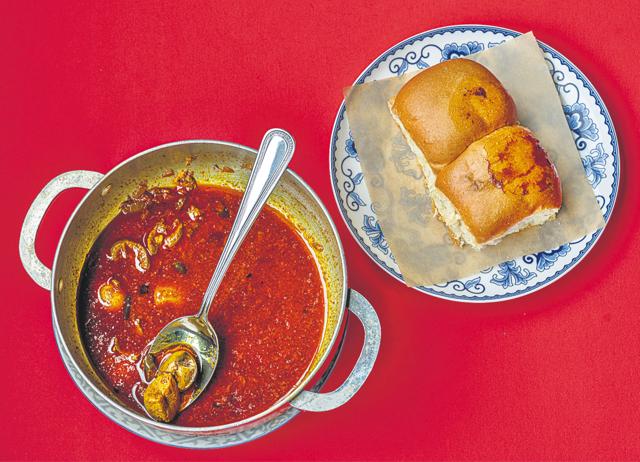
Some of this has to do with his attention to ingredients. His mutton is from older sheep from an Arizona ranch. He hates commercial paneer so he makes his own. (Which he also did in Mumbai and Delhi.) He chooses the rice to go with each dish. At the Mumbai dinner, Gobindobhog was followed by Basmati. Then there are the little chef tricks: He uses red onions over white etc.
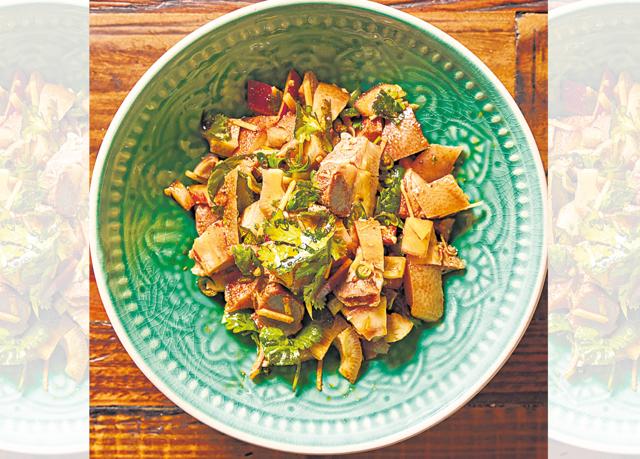
But that’s not why he is the most successful Indian chef in the West. There are essentially two elements to Chintan’s success. The first is that he sees Indian food as a vast wonderland that he wants to explore. So the food comes from all over: From Meghalaya, from Bihar and from his own Gujarat. And there are no limits to the things he will cook: Bheja fry is only the beginning; Chintan will not stop at intestines or any other part of the animal. A meal cooked by him can be nose-to-tail eating with no limits.
But, on the other hand, he can also deliver the most delicate vegetarian flavours. At the Mumbai dinner, one of the best dishes was a Gujarati-style baingan bharta. The gravy for a Madras egg roast burst with flavour. And speaking as a man who does not like paneer, I asked for and polished off a portion of his paneer dish. It was the veg option and I should have eaten the non-veg. But his veg food was so good, I greedily ate up both, the veg and non-veg options!
There is a second component to his success. And that is that he is astonishingly gifted. He could easily extract flavour from a stone if you asked him. His food is incredibly tasty, no matter what he cooks. By now, he has perfected his own techniques for each dish, so he manages to make it look easy. But I know how much time he put into the prep for the India dinners. (He would be in the kitchen late into the night and early in the morning, while the rest of the Dhamaka team was either partying or snoring).
And though he is one of the humblest chefs I know, he is deadly serious about his food. There are no shortcuts, no compromises, and he can turn stubborn if you tell him to tweak a dish to make it more acceptable to the market.
From my perspective, it is a huge relief to find a chef who is so confident of his cooking that he lets the flavours speak for themselves. When you eat Chintan’s food, you enjoy the complex mixture of spices, flavours and ingredients that make Indian food great.
Mazumdar and Pandya call their company Unapologetic Foods, after their attitude. It’s a good name. But given this level of success, it is hard to see what they could possibly have to apologise for.


