
 E-Paper



Squad ghouls: Why haunted tours are so popular right now

 Prefer HTon Google



Cursed forts, haunted graveyards, local djinns. Indian tourism has unlocked a new level. Don't scream or be scared – there’s a message behind every spooky story
Who doesn’t love a good ghost story? The woman in a white sari spooking drivers on the highway. The abandoned haveli, from where laughs and screams still echo. The phantom shadows in the window. Headless horsemen, bewitched babies, the spirit who arrives at 3.33am…
Turns out, even in the age of driverless cars and motion-activated lighting, we’re still excited about strange magic. Paranormal tours have been popping up across India. Groups – we’re too chicken to go it alone – sign up to hear about grisly murders, cold cases, ancient injustices, and their spooky repercussions in the present. It’s sightseeing of a different kind. And, for the first time, Indians are paying to get a closer look at the dark side.
At Rajasthan’s Bhangarh, a 17th century fort that locals believe to be cursed, the curious arrive in droves – some 2.7 lakh tourists visited in 2023-24 (a 44% jump from the previous year, according to the Ministry of Tourism). Self-styled paranormal detectives monitor electrical activity along the deserted ramparts, convinced of a presence there. On YouTube, more than 100 videos from this year alone feature people who visited and felt like they were being watched, or heard faint screams, whispers and footsteps. The Archaeological Survey of India has a sign at the gates, prohibiting entry after sunset (as it does with all the monuments under its authority). Of course, everyone has taken this as proof of it being haunted.

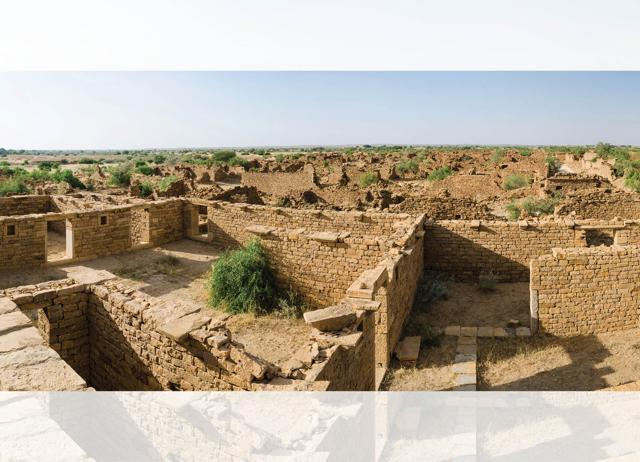
Another surprise hotspot: Kuldhara, a town near Jaisalmer that was abandoned in 1825 after locals fled the oppressive ruler. The empty homes stood forgotten for decades until Kuldhara’s story was repackaged as a spooky mystery in videos. Now, there are package tours to the town – visitors want to see the empty homes up close and lean in to legends of it being cursed and haunted.
The travel industry, of course, is delighted. It lets them serve up history, culture and adventure with a side of spook. “Heritage is not only about buildings,” says Bharat Gothoskar, founder of Mumbai-based Khaki Tours. “It’s the language we speak, the food we eat, the clothes we wear, the stories we tell – and that includes scary stories.” Khaki Tours’ weekly Grisly Girgaon neighbourhood walk runs full in Mumbai. Even big-city folks are excited about a ghost in their midst. See what’s behind the curtain as we collectively say boo.
Djinneology 101
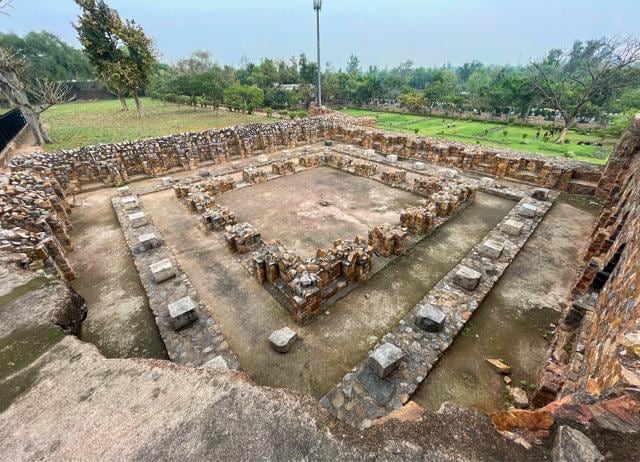
Feroz Shah Kotla, built in 1354, has been on Delhi’s tourist circuit for decades. But lately, visitors have been equally interested in what’s rumoured to reside in the fort’s darkened passages, and labyrinth corridors: A ministry of djinns. Some visitors fear them. They swear they felt a sudden, unexplainable gust of wind on a humid day, or heard sounds where there should have been silence. Others pray to the djinns, offering flowers, candles and letters.
The fort is one of the pitstops on Enroute Indian History’s haunted walks. But founder Anoushka Jain is clear about one thing: The supernatural stuff is simply a storytelling tool. “Everyone who comes for these walks is excited about spooky stories,” she says. “We make it a point to ask, ‘Where do you think these stories come from?’” Her answer presents the world of the living as far more interesting. “Djinn worship only started after the Emergency, around 1977,” Jain points out. Poor Muslims were displaced from the Old Delhi to colonies across the Yamuna. The people, disheartened that their government had failed them, looked to the supernatural for justice. “People would come here with biryani, sweets, incense and letters of complaint, and return on Friday nights,” Jain says. “They believed that the djinns hold court at midnight for the petitions.”
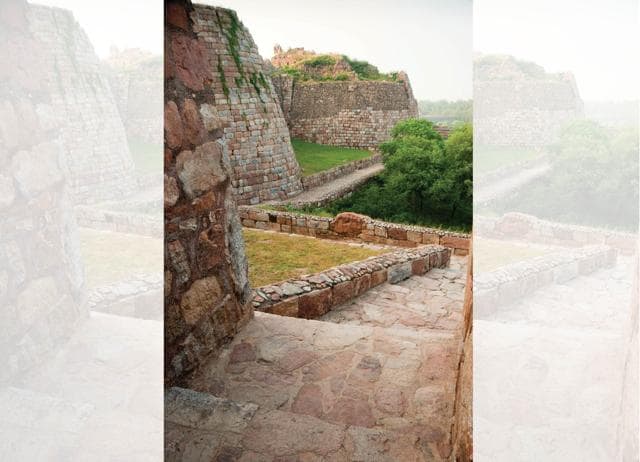
Other lore is being mined for tourism too. The Lothian cemetery at Kashmere Gate has long been believed to be haunted by a headless horseman. So, on walks, guides mention that the rider might have been Brigadier-General John Nicholson, who was killed in the 1857 uprising. Rumours of a chudail who sits under a banyan tree are woven into tours of Dwarka. Those visiting Red Fort are told that the ghost army of Bahadur Shah Zafar holds a parade on Thursday nights.
Tall tales are good for business. “Humans are thrill seekers by nature, and the unknown makes us curious,” says Ramit Mitra, co-founder of DelhiByFoot Adventures, which conducts heritage walks in Delhi. “No matter where we go, people’s favourite question is, ‘Do you think this place is haunted?’”
Urban legends
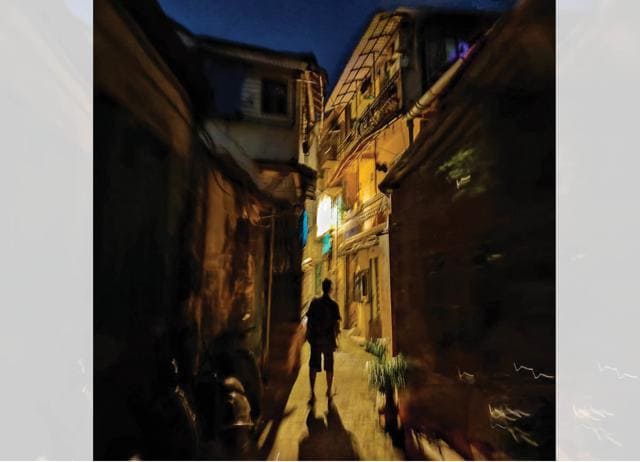
Most ghosts are imagined to inhabit rambling mansions and forbidden forests. In Mumbai, they fight for space, just like the living. Khaki Tours’ Grisly Girgaon Walk starts at 11pm, moves through a 2km stretch of the old neighbourhood, and offers a scary story every few steps. They’re horrifying but also hilarious. There’s Mankapya, a headless hunter, who beheads his victims. One waiter, supposedly murdered in one of the restaurants, now haunts the area, cursing local businesses. At the grave of Sufi saint, Maska Wale Baba, the offerings include (surprise, surprise) butter.
“We never set out to do a ghost walk,” Gothoskar admits. But so many stories came up in their research, they did a one-off tour. “I didn’t realise how popular it would become. We had to keep adding more walks over that weekend, because they were all sold out.” They’ve held 200 of those walks since. People sign up even when it’s raining.
“Several Mumbai localities – Mukesh Mills, the SNDT campus, Aarey – are said to be haunted. Girgaon is different,” Gothoskar says. About 150 years ago, it would have been at the edge of Bombay city, where graveyards and crematoriums were set up. The area urbanised, the legends remained, and the walk includes stories of the city’s cosmopolitan past. “It’s about the interaction between the living and the dead.”
Deja boo
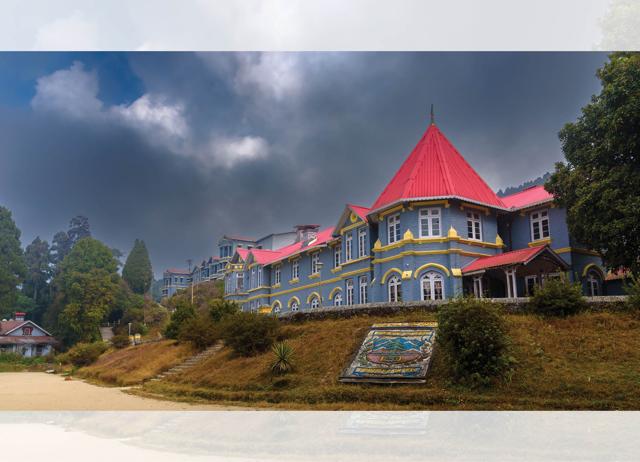
“Something terrible that happened in the past is what makes for a ghost story today,” says Mitra. It’s probably why Mehrauli, a site of medieval massacres and modern crime, is rife with stories. “The tomb of Adham Khan, a relative of Emperor Akbar, dates to 1566, and has narrow staircases and corridors that criss-cross, forming a labyrinth.” People would get trapped or lost inside. Over time, the structure came to be seen as a supernatural entity that swallows people whole.
Mitra says that DelhiByFoot Adventures’ heritage walks aren’t about ghosthunting. “We share stories about historical events. And because these walks happen at night, it’s a great time to tell a ghost story.” At one walk, after they’d visited a dargah and a temple, they realised that four people had fallen behind. “When they caught up, we realised there were not four, but five people. There was a deathly silence for a moment. We wondered if a ghost had joined us. Then it occurred to us that we had just counted wrong!”
Belief principles
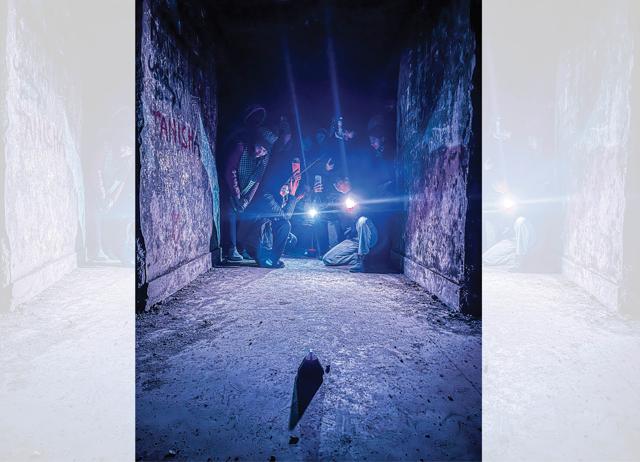
For some, these aren’t just stories. Sarbajeet Mohanty and Pooja Vijay’s Ghost Encounters Tours (GET) are for “true horror enthusiasts”. No creepy women on the highway, no tell-tale shadows or sounds. “That’s pareidolia, the tendency to see patterns in inanimate objects,” says Mohanty. Instead, participants are taught to use their psychic abilities to detect supernatural forces. They use devices that measure electromagnetic fields and static, to infer that a spirit is in the vicinity.
Mohanty, who also heads the Parapsychology and Investigations Research Society (PAIRS), with Vijay, says they seek out spaces that are “not too haunted”. They want to be in an environment they can control, so super malevolent forces are out of the question. No touristy spots – it’s too crowded for good ghost-whispering. They’ve done trips to Mahabaleshwar, Matheran, Jaisalmer, Mussoorie and Jaipur, covering forests, forts and abandoned structures. On their Goa tour, they visited the Three Kings Chapel in Cansaulim, (said to be home to three phantoms) and an abandoned mall.
Things get intense. “We split the group of 15 into threes. Each goes in a different direction with a different purpose. Some focus on what they’re sensing, others on sounds. They come back in half an hour with what they sense. One participant might sense a man in a blue checked shirt behind a tree. We use our gadgets to confirm if there’s a presence there .”
Then, they try to communicate. “We start by telling the entity, ‘We intend no harm. We are not here to disturb you. My friend saw you standing here. Can you come closer to the gadget?’ Sometimes, the gadget picks up on something, other times it doesn’t.” The investigation is then wrapped up with a prayer for the entities.
Of course, the place can’t be too remote. The group needs a hotel nearby, preferably with a pool, so participants can relax after intense sessions. “Often, people see something they don’t understand – like a pair of footsteps approaching them, but no body – it can be overwhelming.”
Skeleton crew
Hill stations have their own lore. There are tales of Raj-era residents who never quite left, misty mountaintops that are perfect for apparitions, and howling winds that sound suspiciously like human screams. “For locals, supernatural tales are part of life,” says Lokesh Ohri, whose company Been There Doon That offers tours of Dehradun in Uttarakhand. “Mussoorie, additionally, has crime stories too.”
They introduced a haunted tour after endless queries from travellers. “People would ask us about the paranormal stories they’d seen on YouTube. Or if there was an actual ghost at a certain graveyard.” The tour covers the George Everest House (where the ghost of one Surveyor General is believed to roam, woollen sweater and all), and the Lambi Dehar mines (where locals have disappeared), and takes the objective approach. “We openly discuss the non-existence of spirits and ghosts. We’ve been here so many times and we have not experienced anything special,” says Ohri.
But sometimes they do mess around. “During the monsoons, it can get really spooky. So, people will slip at some places. We tell them that the ghost is tripping them. In the mountains, the mind plays tricks on you. And if you dramatise a story effectively, it spooks people.”
From HT Brunch, April 12, 2025
Follow us on www.instagram.com/htbrunch


