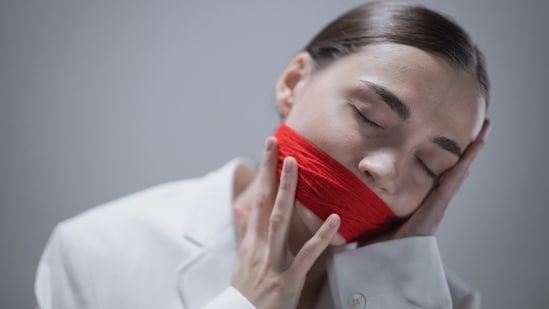
Mouth taping, the practice of placing a small strip of tape over the lips before bed to encourage nasal breathing, has become a popular sleep trend online. Proponents claim it improves sleep quality, reduces snoring, and even enhances facial structure. Doctors, however, urge a more cautious and evidence-based look at the practice before it becomes a bedtime habit. In this edition of HT Lifestyle’s ‘Is It Worth It,’ we spoke to Dr Anish Gupta, director at ENT, CK Birla Hospital, Gurgaon, to understand the science behind this trend.
The reason behind it
According to Dr Gupta, nasal breathing during sleep does offer genuine benefits. It humidifies and filters air more effectively than mouth breathing, supports better oxygen exchange, and is generally associated with more restful sleep. “In people who habitually breathe through their mouth due to nasal congestion or habit, encouraging nasal breathing can, in theory, improve sleep quality. This is the logic mouth taping relies upon,” highlighted Dr Gupta.
Where the evidence falls short
“The difficulty is that scientific evidence supporting mouth taping specifically remains limited. Most existing research focuses on nasal breathing in general, not on taping the mouth shut as a method of achieving it,” explained Dr Gupta. For people with underlying conditions such as nasal obstruction, allergies or, most importantly, obstructive sleep apnoea, mouth taping can be genuinely risky rather than helpful, as it may restrict the body's natural ability to breathe through the mouth if the nasal passage becomes blocked during sleep.
Clearing the myth
{{/usCountry}}“The difficulty is that scientific evidence supporting mouth taping specifically remains limited. Most existing research focuses on nasal breathing in general, not on taping the mouth shut as a method of achieving it,” explained Dr Gupta. For people with underlying conditions such as nasal obstruction, allergies or, most importantly, obstructive sleep apnoea, mouth taping can be genuinely risky rather than helpful, as it may restrict the body's natural ability to breathe through the mouth if the nasal passage becomes blocked during sleep.
Clearing the myth
{{/usCountry}}According to Dr Gupta, a common belief is that mouth taping is a safe, natural alternative to medical treatment for snoring or sleep apnoea. This is a myth worth correcting firmly. Snoring can be a symptom of a serious underlying condition, and masking it by restricting mouth breathing, without addressing the root cause, could delay proper diagnosis and treatment. Another myth suggests mouth taping reshapes the jaw or improves facial aesthetics; there is no credible clinical evidence to support this claim.
Who should avoid it?
According to Dr Gupta, individuals with diagnosed or suspected sleep apnoea, chronic nasal congestion, allergies, or any condition affecting airflow through the nose should avoid mouth taping without medical supervision. Doing so could increase the risk of disrupted breathing during sleep, precisely the outcome one hopes to avoid.
Note to readers: This article is for informational purposes only and not a substitute for professional medical advice. Always seek the advice of your doctor with any questions about a medical condition.
Catch your daily dose of Fashion, Taylor Swift, Health, Festivals, Travel, Relationship, Recipe and all the other Latest Lifestyle News on Hindustan Times Website and APPs.
Catch your daily dose of Fashion, Taylor Swift, Health, Festivals, Travel, Relationship, Recipe and all the other Latest Lifestyle News on Hindustan Times Website and APPs.