Do you eat cucumber, tomato, lettuce, salads, watermelon or apple in a day and think that your fibre component is complete? Well, you may be in for a surprise. In an Instagram post shared on September 5, Dr Karan Rajan, an NHS surgeon and health educator, shared important information about the fibre content of some popular foods that people think are rich in fibre, but are really not.
Also Read | Johns Hopkins expert addresses sunscreen myths: Does it ever expire? Who should worry about skin cancer?
‘Not all fibre is equal…’
Dr Rajan shared a list of 22 fruits, vegetables, and seeds, comparing their fibre content, bursting myths about some popular foods that people think are high in fibre. He wrote, “Not all fibre is equal!”
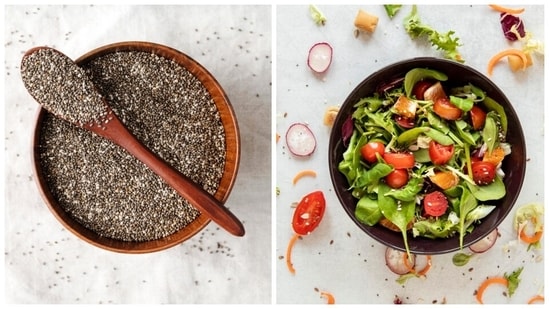
Stating a few examples of how fibre-rich foods are not all the same, Dr Rajan explained how if you eat 100g of cucumber, you might think that's enough fibre. But having just 1 spoon of chia seeds gives you ten times more fibre.
Giving another example of lettuce, Dr Rajan pointed out how just half an avocado (6g) will give you five times more fibre compared to 100g of lettuce.
{{/usCountry}}Giving another example of lettuce, Dr Rajan pointed out how just half an avocado (6g) will give you five times more fibre compared to 100g of lettuce.
{{/usCountry}}Similarly, eating a full plate of salad with lettuce, cucumber, and tomatoes will only give you 2.9g of fibre, but 100g of raspberries can give you about 6 g of fibre, which is over twice the amount of fibre as the salad.
Fibre content 101
Here are some helpful stats about the fibre content of different foods, as stated by Dr Rajan:
- Low fibre plants (per 100g)
Cucumber (with peel): 0.5g
Tomato: 1.2g
Spinach (cooked): 2.2g
Lettuce (iceberg): 1.2g
Bell pepper: 1.7g
Cauliflower: 2.0g
Carrots (boiled): 2.8g
Broccoli (boiled): 2.6g
- Fruits
Grapes: 0.9g
Watermelon: 0.4g
Pineapple: 1.4g
Orange: 2.4g
Banana: 2.6g
Peach: 1.5g
Apple (peeled): 1.6g
- Good fibre hits (per 100g)
Raspberries: 6.5g
Blackberries: 5.3g
Avocado: 6.7g
Lentils (cooked): 7.9g
Black beans (cooked): 8.7g
Chia seeds: 34g (so ~5g per tbsp / 15g)
Flaxseeds: 27g (so ~3g per tbsp / 15g)
While some foods have more fibre content than others, Dr Rajan stressed that we still need to eat them. “All fruits and vegetables are good for you because even the low-fibre ones provide micronutrients and plant compounds that are beneficial,” he said.
However, when it comes to fibre content, some pack several times more fibre per serving than others, sometimes up to five times as much. “You don't have to eat only high-fibre foods. But since over 95 percent of us don't hit the daily recommended fibre intake, it's worth being intentional about high-fibre food choices,” he added.
What can you do to fibre max your diet?
There are simple ways to elevate the fibre content of everyday meals. For example, Dr Rajan suggested adding a small portion of nuts to your salad suddenly adds an extra six grams of fibre, almost tripling your fibre content for the meal.
Note to readers: This article is for informational purposes only and not a substitute for professional medical advice. Always seek the advice of your doctor with any questions about a medical condition.
Catch your daily dose of Fashion, Taylor Swift, Health, Festivals, Travel, Relationship, Recipe and all the other Latest Lifestyle News on Hindustan Times Website and APPs.
Catch your daily dose of Fashion, Taylor Swift, Health, Festivals, Travel, Relationship, Recipe and all the other Latest Lifestyle News on Hindustan Times Website and APPs.