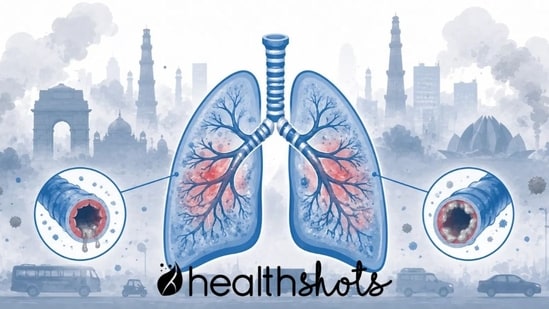
Every year, as Diwali approaches, much of India finds itself wrapped in a grey blanket of smoke and smog. The festival of lights, which should bring joy with family and friends, is now marked by hazy mornings, stinging eyes, and a lingering cough that many have come to accept as ‘normal’ for the season. Firecrackers, vehicle fumes, construction dust, and crop burning also push air quality indices in many cities like Delhi NCR and Patna to alarmingly unsafe levels.
In clinics, we see sick people walk in every November with the same symptoms as the previous year's children wheezing, grandparents struggling to breathe, and adults who have smoked for years ignoring a cough that deserves attention. "As a pulmonologist, I want to explain in simple terms how smoke, smog and tobacco affect our lungs and what each of us, from the youngest child to the oldest grandparent, can do to protect them", Dr Prahalad Elamarthi, Consultant, Medical Oncology, Narayana Health City, Bengaluru, tells Health Shots.
Why are the lungs so vulnerable?
With every breath, our lungs come into contact with the outside world as we inhale the air around us. Millions of tiny air sacs pass oxygen into the blood. At the same time, microscopic hairs lining the airways sweep out dust and germs. This natural defence works remarkably well, but years of exposure to smoke or polluted air can wear it down. Once the airways are inflamed and the cleaning system weakens, the lungs become more prone to infection, chronic respiratory disease, and in some people, even cancer.
Tobacco: The leading preventable cause
Tobacco smoke contains many carcinogens, which are chemicals that can even damage DNA (deoxyribonucleic acid) in our cells. Recent research shows that cigarette smoke reduces the ability of the cells to repair this damage, leaving them unstable and likely to turn cancerous. Another study found that smoking leaves a distinct signature in our DNA and disrupts proteins that normally stop tumours from growing.
The risk is substantial, and reports indicate that the risk of lung cancer in smokers rises 24 to 36 times more than in non-smokers. Smoking also harms those around the smoker, because children and elderly family members who breathe second-hand smoke at home carry a very real risk even though they never made that choice to inhale smoke.
Smoking continues to affect a patient’s outcome even after lung cancer has been diagnosed. A large international analysis of nearly 49,000 patients across 25 countries found that a patient’s smoking status can influence survival as strongly as the traditional factors doctors use. In fact, among patients with early-stage disease, smoking history had a greater impact on prognosis than whether the cancer had spread to nearby lymph nodes. A parallel study found that quitting smoking within six months of diagnosis improved median survival by about four years across cancer types. In other words, stopping smoking remains one of the most powerful steps a patient can take at any stage of the disease.
Air pollution: A growing concern
{{/usCountry}}Smoking continues to affect a patient’s outcome even after lung cancer has been diagnosed. A large international analysis of nearly 49,000 patients across 25 countries found that a patient’s smoking status can influence survival as strongly as the traditional factors doctors use. In fact, among patients with early-stage disease, smoking history had a greater impact on prognosis than whether the cancer had spread to nearby lymph nodes. A parallel study found that quitting smoking within six months of diagnosis improved median survival by about four years across cancer types. In other words, stopping smoking remains one of the most powerful steps a patient can take at any stage of the disease.
Air pollution: A growing concern
{{/usCountry}}The threat to our lungs does not come from smoking alone. Many cities see air quality worsen sharply in the weeks around Diwali and early winter, as construction dust, vehicle emissions, crop burning, and firecrackers add fine particles to the air. These particles are small enough to travel deep into the lungs and enter the bloodstream. Polluted air worsens asthma, bronchitis and COPD, and long-term exposure is also linked to lung cancer, including in people who have never smoked. Some city administrations have started responding to this grave health issue with work-from-home advisories and curbs on construction activity during certain hours. But more needs to be done.
Children and older adults need extra care
"Children and older adults are the two groups I worry about most. Children breathe faster relative to their body size as their lungs are still developing. So they absorb more pollutants than adults do in the same environment," says the doctor. Older adults often have reduced lung reserve if they have other conditions such as diabetes, heart disease, or old tuberculosis scarring. This means even one bad air day can affect them more severely.
Symptoms that need attention
Lung cancer often causes no symptoms in its early stages, which makes awareness all the more important. Please consult a doctor if you or a family member has a cough lasting more than three weeks, blood in the sputum, persistent chest pain or breathlessness, wheezing or hoarseness that does not settle, or unexplained weight loss and fatigue. Many of these have simple and treatable causes, but only an examination can tell. An early visit can save a life.
Practical steps and advice
"For families with children, I recommend keeping them indoors on severely polluted days, allowing outdoor play only when the air is clear", says the expert. Avoid smoking around them or in closed rooms. A cracker-free Diwali is one of the kindest gifts we can give young lungs; instead, celebrate with diyas and rangoli, which are just as beautiful.
For older adults, it can help to check air quality before a morning walk, exercise indoors on bad days, and wear a well-fitted N95 mask in heavy smog. They should also carry inhalers and medicines as prescribed by their doctor. Ask about flu and pneumonia vaccination and take them if advised. The most important rule is to avoid tobacco in all forms, including beedis, hookah, and chewing tobacco; practice daily slow breathing exercises with gentle physical activity; and keep indoor air free of dust and smoke.
Quitting is worthwhile
Many long-term smokers feel it may be too late to quit. On the contrary, quitting the habit reduces the risk of lung cancer, even after many years of smoking. Nicotine replacement, medication and counselling all improve the chance of success when a decision to quit is made, and the support of family members makes a great difference to the outcome. For people at high risk, such as long-term heavy smokers over the age of 50, annual screening with a low-dose CT scan may be advised, as it can detect cancer at a stage when treatment is most effective. Discuss with a pulmonologist whether this is the right approach for you.
We may not be able to control the air outside, but we can control what we inhale and how we respond to bad air on high-pollution days. Small, consistent habits protect the lungs for a lifetime. If you have persistent symptoms or concerns regarding your respiratory health, do not wait beyond a couple of weeks; an early consultation can make all the difference between cancer diagnosis and good health.
(Disclaimer: This article is for informational purposes only and is not a substitute for professional medical advice. Always seek the advice of your doctor with any questions about a medical condition.)
Catch your daily dose of Fashion, Taylor Swift, Health, Festivals, Travel, Relationship, Recipe and all the other Latest Lifestyle News on Hindustan Times Website and APPs.
Catch your daily dose of Fashion, Taylor Swift, Health, Festivals, Travel, Relationship, Recipe and all the other Latest Lifestyle News on Hindustan Times Website and APPs.