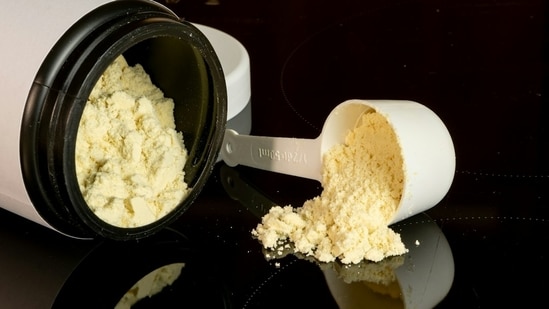
In a podcast with Bharti Singh and Harsh Limbachiya, Mona Singh and Ram Kapoor spoke about making protein powder at home, sparking a trend that has since taken over social media. Homemade protein powders are now gaining popularity, with more people experimenting with DIY mixes as an alternative to store-bought options. When nuts, seeds, roasted chana, makhana, and other kitchen items are ground into a powder, it can seem like an alternative to store-bought protein supplements.
However, before we call any homemade mix a protein powder, we must ask: How much protein does it really contain? In an interview with HT Lifestyle, Dr Rohini Somnath Patil, an MBBS doctor, clinical nutritionist, author, and entrepreneur with over nine years of experience in metabolic and lifestyle health, explained the difference between homemade vs store-bought protein powder.
Difference between homemade protein powder vs store-bought
According to Dr Rohini, a homemade mix can be very healthy. Items such as chana, pulses, milk powder, nuts and seeds give protein as well as fibre, healthy fats, and minerals. The downside is that not all healthy foods are high in protein.
{{/usCountry}}According to Dr Rohini, a homemade mix can be very healthy. Items such as chana, pulses, milk powder, nuts and seeds give protein as well as fibre, healthy fats, and minerals. The downside is that not all healthy foods are high in protein.
{{/usCountry}}For example, almonds, walnuts and seeds have protein. They also have a lot of fat. If your mix is mostly nuts and seeds, you may eat calories but not as much protein as you think. This is where protein mathematics matters.
“A powder made at home may look protein‑rich simply because it contains ingredients that are linked to health and fitness,” highlighted Dr Rohini. Unless you calculate the nutritional value of the entire recipe and the exact serving size, it is difficult to know how much protein you are actually getting. One recent homemade recipe, for example, was estimated to provide around 10 to 12grams of protein in a three‑tablespoon serving.
There is also a difference between adding protein to your diet and replacing a protein source. A spoonful of a nut‑and‑seed powder mixed into milk can be an addition, but it should not automatically be considered equal to a dedicated protein supplement or a protein‑rich meal.
“For vegetarians, I would rather focus on the diet first. Dal, beans, chickpeas, paneer, curd, milk and other protein‑rich foods can contribute significantly to protein intake,” said Rohini. Traditional combinations such as cereals with pulses can also improve the quality of plant‑based protein.
Is protein powder worth trying?
“Yes, provided we call it what it is—a homemade mix, not automatically a high‑protein supplement,” said Dr Rohini.
If you want to make one at home, figure out how much protein is in each serving. Pay attention to the portion size. Pick ingredients that match your personal nutrition needs. Protein should be spread out throughout the day. Don't rely on one trendy powder to get it all.
Note to readers: This article is for informational purposes only and not a substitute for professional medical advice. Always seek the advice of your doctor with any questions about a medical condition.
Catch your daily dose of Fashion, Taylor Swift, Health, Festivals, Travel, Relationship, Recipe and all the other Latest Lifestyle News on Hindustan Times Website and APPs.
Catch your daily dose of Fashion, Taylor Swift, Health, Festivals, Travel, Relationship, Recipe and all the other Latest Lifestyle News on Hindustan Times Website and APPs.