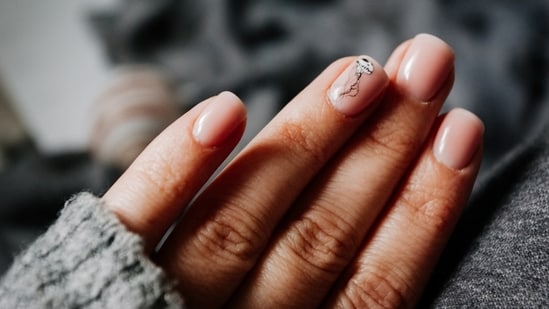
Nails can sometimes give us useful clues about what is happening inside the body. But that doesn’t mean getting anxious with a small change in your nail. Nails are influenced by trauma, ageing, nutrition, infections, medications and systemic illness, so the context is extremely important. In this edition of ‘Your Body Is Trying To Tell You’, HT Lifestyle spoke to Dr Aparna Santhanam, consultant dermatologist, PD Hinduja Hospital and Medical Research Centre, Mahim, to understand which nail changes may need attention and when they could signal an underlying health concern.
Also read | Your DIY nail care guide: Basic steps to salon-like strong and beautiful manicured nails
Change in nail shape
According to Dr Aparna, one of the more useful changes to notice is a change in the shape of the nail. Spoon-shaped or very concave nails, called koilonychia, can sometimes be associated with iron deficiency, although there can be other causes as well. If this is a new or persistent change, it is worth discussing with a doctor rather than simply taking iron supplements on your own.
Grooves and depressions
“Horizontal grooves or depressions across the nails, known as Beau’s lines, can occur when nail growth is temporarily interrupted,” said Dr Aparna. This can happen following a significant illness, high fever, severe stress, trauma or certain medications. If several nails develop these lines around the same time, it may be worth thinking back to an illness or major physiological stress a few months earlier.
Clubbing
{{/usCountry}}“Horizontal grooves or depressions across the nails, known as Beau’s lines, can occur when nail growth is temporarily interrupted,” said Dr Aparna. This can happen following a significant illness, high fever, severe stress, trauma or certain medications. If several nails develop these lines around the same time, it may be worth thinking back to an illness or major physiological stress a few months earlier.
Clubbing
{{/usCountry}}“Another important sign is clubbing, where the fingertips become bulbous, and the nail becomes more curved. This is something I would definitely recommend getting evaluated, particularly when it is new, because clubbing can be associated with underlying lung and other systemic conditions,” highlighted Dr Aparna.
Nail pitting, which looks like tiny pinprick depressions on the surface, can be seen in psoriasis and some inflammatory or autoimmune conditions, although pitting by itself does not establish a diagnosis.
Change in nail colour
Changes in nail colour can also have many explanations. Yellow or discoloured nails, for example, are very commonly due to local causes such as fungal infection or repeated exposure to nail products, rather than an internal disease.
White spots
White spots on nails are often related to minor trauma and are not automatically a sign of calcium deficiency.
“My biggest message would be: look at your nails but don’t diagnose yourselves from them. A persistent change, especially if it involves several nails, is worth showing to a dermatologist. We look at the pattern, the number of nails involved, the skin and other symptoms, and then decide whether any blood tests or further evaluation are actually needed. Nails can provide an important clue, but they are one piece of the clinical picture, not a diagnosis by themselves,” said Dr Aparna.
Note to readers: This article is for informational purposes only and not a substitute for professional medical advice. Always seek the advice of your doctor with any questions about a medical condition.
Catch your daily dose of Fashion, Taylor Swift, Health, Festivals, Travel, Relationship, Recipe and all the other Latest Lifestyle News on Hindustan Times Website and APPs.
Catch your daily dose of Fashion, Taylor Swift, Health, Festivals, Travel, Relationship, Recipe and all the other Latest Lifestyle News on Hindustan Times Website and APPs.