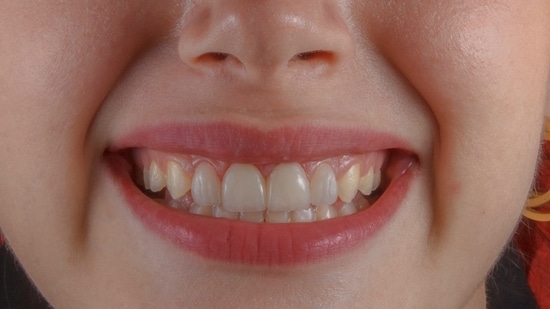
Ever run your tongue over your teeth and suddenly notice a tiny rough or jagged edge that you don’t remember being there before? Teeth naturally change with time, and small rough edges can sometimes develop as a result of everyday wear and tear. In an interview with HT Lifestyle, Dr Sharmishtha Lad, dentist and healthcare entrepreneur, explained the role of teeth grinding, acidic foods, and other daily habits.
Also read | Mumbai orthodontist shares 5 everyday habits that can silently damage your teeth
Why do rough edges develop?
According to Dr Lad, one reason is clenching or grinding your teeth, particularly when it happens repeatedly. The extra pressure placed on the teeth can gradually alter their edges and shape. Over time, this may make certain areas of the teeth appear uneven or worn.
Everyday habits can also play a role. “Biting on hard objects such as ice, pens, nails, or bottle caps can put sudden pressure on the teeth and cause small chips or rough spots,” highlighted Dr Sharmishtha. These habits may seem harmless, but repeated stress can affect the edges of the teeth.
The foods and drinks we consume can also contribute. Acidic foods and beverages can temporarily soften the enamel, making the tooth surface more vulnerable to wear. If this happens frequently, other factors such as biting habits or grinding can contribute further to changes in the tooth surface.
{{/usCountry}}The foods and drinks we consume can also contribute. Acidic foods and beverages can temporarily soften the enamel, making the tooth surface more vulnerable to wear. If this happens frequently, other factors such as biting habits or grinding can contribute further to changes in the tooth surface.
{{/usCountry}}Another common misconception is that brushing harder will keep the teeth cleaner. “Aggressive brushing does not file down the teeth overnight, but repeatedly brushing with excessive pressure can contribute to enamel wear, particularly when combined with other factors,” Dr Lad said.
The way the teeth come together also matters. Your bite or the way your upper and lower teeth meet can cause certain areas to experience more pressure and wear than others. This can gradually change the shape of the tooth edges.
When should you see a dentist?
According to Dr Lad, not every rough or jagged edge is necessarily a cause for concern. However, if you notice that the change is new, becoming more pronounced, feels sharp, causes sensitivity, or appears to involve actual chipping, it is worth having it examined by a dentist. An examination can help determine whether the change is simply part of normal wear or whether there is an underlying issue that needs attention.
The important thing is not to try to smooth or correct a rough edge yourself. Teeth can withstand considerable everyday use, but repeated stress and habits can gradually change their structure. Understanding what may be causing the change is the first step towards protecting the teeth from further wear.
Note to readers: This article is for informational purposes only and not a substitute for professional medical advice. Always seek the advice of your doctor with any questions about a medical condition.
Catch your daily dose of Fashion, Taylor Swift, Health, Festivals, Travel, Relationship, Recipe and all the other Latest Lifestyle News on Hindustan Times Website and APPs.
Catch your daily dose of Fashion, Taylor Swift, Health, Festivals, Travel, Relationship, Recipe and all the other Latest Lifestyle News on Hindustan Times Website and APPs.