
 E-Paper



Lok Sabha elections 2019: Battle between ‘outsider’ and ‘insider’ in Jharkhand
The highly emotive issue has become an essential ingredient in every election in the tribal-dominated state formed after a sustained struggle launched soon after India attained independence in 1947. And 2019 is no exception.

 Prefer HTon Google


The outsider versus insider issue that played a key role in carving out Jharkhand from Bihar in 2000 continues to dominate the election discourse two decades later.
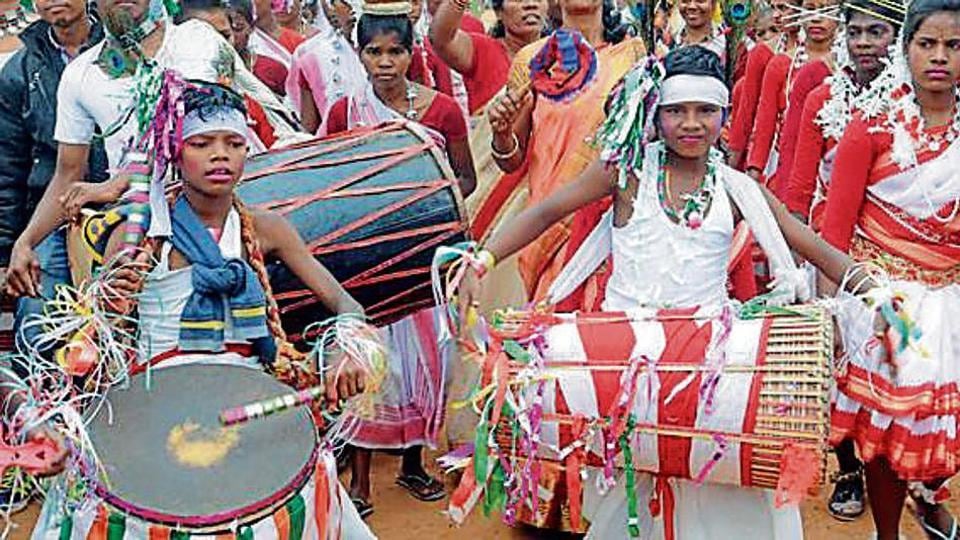
The highly emotive issue has become an essential ingredient in every election in the tribal-dominated state formed after a sustained struggle launched soon after India attained independence in 1947. And 2019 is no exception.
The ‘adivasis’ or tribals and ‘moolnivasis (non-tribal natives)’ combined called ‘bitris (insiders)’ are anguished over the perceived loss of jobs and the alleged exploitation of resources by ‘baharis (outsiders)’. The outsiders largely comprise of settlers from Bengal, Bihar, Rajasthan, Chhattisgarh, Uttar Pradesh, Odisha and other states, who have been living in Jharkhand for years now. “They have taken everything from us — jobs, forest produce, resources, everything,” said 38-year-old Ajay Verma, a resident of Kandra in Singhbhum Lok Sabha constituency.
“Shouldn’t we have the first right over natural resources?” asked Sushil Hembram, a tribal trader, in a conversation at a roadside tea stall on the Ranchi-Jamshedpur highway. Verma, working in a private company, and Hembram were among a group of people discussing the possible outcome of Lok Sabha elections over tea. The demand for a separate Jharkhand had started in protest against the alleged exploitation of natural resources by ‘dikus’, an uncharitable name for outsiders. As per the 2011 census, the combined population of tribal and non-tribal natives is still around 70% of Jharkhand’s 31.9 million residents. Tribals constitute around 26% of the state’s population. Political observers say that the agitation was not merely about the lack of development, but also the feeling among the natives that their jobs and political power were being snatched by the people from Bihar. Last year, the issue took an ugly turn when tribals launched a campaign against the outsiders and also to protest the state government’s alleged anti-tribal policies. The Pathalgadi agitation saw the natives installing stone plaques and signboards with a stern warning to outsiders to desist from entering their villages. These huge stone slabs inscribed with the constitutional provisions and laws that protect the rights of the tribals under the Fifth Schedule of the Constitution had been put up in over 200 villages across five districts -- Khunti, Gumla, Saraikela-Kharsawan, Simdega and West Singhbhum -- in Jharkhand.
By inscribing the provisions of the Panchayats (Extension to Scheduled Areas) Act (PESA), 1996, which ensures primacy of gram sabhas, the tribals not only sought to encourage local self-government but also remind the officials of the power of such village committees that control public resources.
Political analysts are of the view that the political class rakes up the emotive issue in every election for their own gains. “The outsiders versus insiders debate is mainly about the downtrodden and backward classes. It is for their own electoral gains that the politicians rake up this issue in every election. When political leaders of any party become ministers they don’t appoint tribals as their aides but will get outsiders. Simply because the tribals won’t serve their interests,” said LK Kundan, associate professor of political science department in Ranchi University.
While the Congress has been talking about protecting their water, forest and land, the ruling BJP is facing the ire of tribals for its attempt to amend the Chotanagpur Tenancy Act enacted by the British in 1908 in response to the Birsa movement and the Santhal Parganas Tenancy Act. The two acts prohibit the transfer of tribal land to non-tribals and also protect the community ownership.
The other factor that is going against the BJP is the April 2016 order by the state government, headed by chief minister Raghubar Das, declaring all people living in Jharkhand before 1985 as domiciles. Jharkhand BJP spokesperson Pratul Shah Deo claimed that the issue is raked up for political benefit.
“This is one country and the people can stay wherever they want to. That apart, we have done maximum amount of welfare for the locals – tribals and non-tribals. Since 2014, we have given 130,000 government jobs of which 85% have all gone to the natives who have lived here for 100 years,” he said. Jharkhand Congress spokesperson Rajeev Ranjan Prasad said the new domicile policy was formulated by a chief minister (Raghubar Das) who is himself an outsider and moved to Jharkhand from Chhattisgarh in 1970s.


