
 E-Paper



Unsure of whom to vote but ‘Mandir-Masjid’ a non-issue for young voters
The young girls, born much after the demolition of the disputed structure in Ayodhya, unanimously said that temple or mosque was not an issue for them.


Young voters of Lucknow are still indecisive as to whom they will vote to power but one thing is clear that ‘Mandir, Masjid’ (politics of religion) does not figure in their scheme of things.
For them, the caste of candidates does not matter too.
Their indecisiveness is largely because many of them still do not have voter identity cards or their names do not figure in the voter list.
Unemployment is a common cause for concern for girl students of Lucknow who want to be self- dependant.
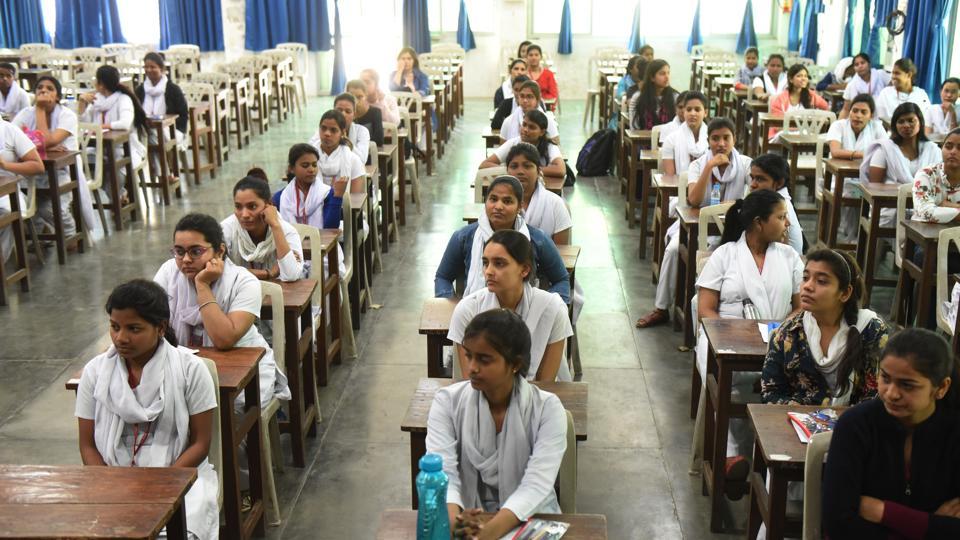
Team HT visited the Awadh Girls’ Post-Graduate College in Lucknow on Tuesday to interact with undergraduate students who have just finished writing their annual examinations.
Though tired, they were happy to share their thoughts on poll issues.
MANDIR, MASJID NOT OUR CONCERN
The young girls, born much after the demolition of the disputed structure in Ayodhya, unanimously said that temple or mosque was not an issue for them.
They said even political parties had realised that the temple issue would no longer fetch votes.
Pragya Dwivedi, a second year undergraduate student, said: “People voted for the Bharatiya Janata Party (BJP) in 2014 as it had promised construction of Ram temple in Ayodhya. This time around, educated people are not going to fall in this trap. We will not vote on the same issue this time. We want our leaders to promise us development and jobs. We do not want to get stuck on the issue of religion.”
CREATE JOBS, GENERATE EMPLOYMENT
Young voters want the new government to create more jobs. Shreya Prajapati, a student of BA first year, said: “After completing higher studies, we want jobs. Educated women of India want to be self-dependent and contribute to the country’s progress. There is no point in pursuing higher studies and then sit at home.”
The students said availability of job opportunities is a crucial issue for them in the upcoming election.
“Many families spend their entire savings in educating their children but it all goes waste if the child is jobless after completing education. We want to bring in a government that can assure us more jobs,” said Nandini, an undergraduate student who plans to become a chartered accountant.
WOMEN’S SAFETY A BIG ISSUE
The students said women’s safety and growing incidents of crime against women was their major concern. Harassment of girls continues in the society despite schemes like ‘Beti Bachao, Beti Padhao’, they said, adding that the candidates who can guarantee women’s safety should be elected. The state should ensure self-defence training to girls and the subject should be included in the curriculum, they added.
SOCIAL DIVIDE HAS INCREASED
Students also spoke on growing social divide in the country and termed it an important issue.
Speaking on her personal experience, Anjali Yadav, an undergraduate student, said: “Social divide is increasing in our society. We may not talk about it but we feel it around us. One of my friends who belongs from a certain community faced criticism because of it. We must take steps to prevent the situation from getting worse.”
Sara Usmani, another undergraduate student, said the social divide was being caused intentionally by a group of people who want to create tension among people of different communities.
“This divide is also being caused by the kind of programmes that are being shown on television,” she said.
ROLE OF SOCIAL MEDIA
The students said social media had intruded into the mainstream and was playing an important role in forming opinions on important issues. Political parties have started using this aspect of social media to woo voters.
The girls said they were active on social media and it was their primary source of information. However, they asserted that they would not get influenced by social media to vote for a certain political party.
Sara Usmani, a first year undergraduate student, said: “Social media plays a huge role in politics because it is being used as a tool to influence people. Political parties only push goods things about them on social media and not the real issues on which they should work on. I will vote on the basis of performance of a political party and not get swayed by what information is posted about them on social media.”


