
Sign in

‘Ram temple site in Ayodhya a Buddhist Sthal’

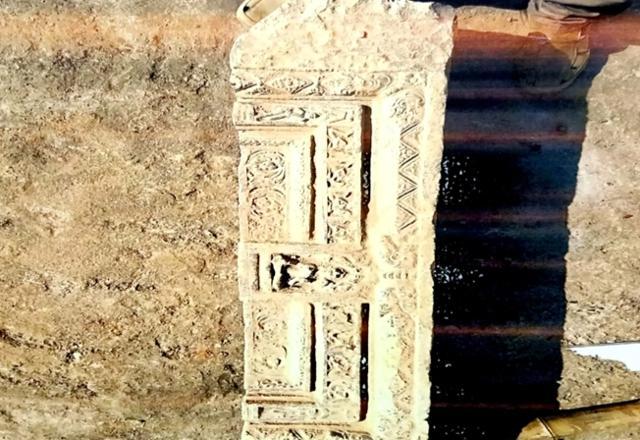
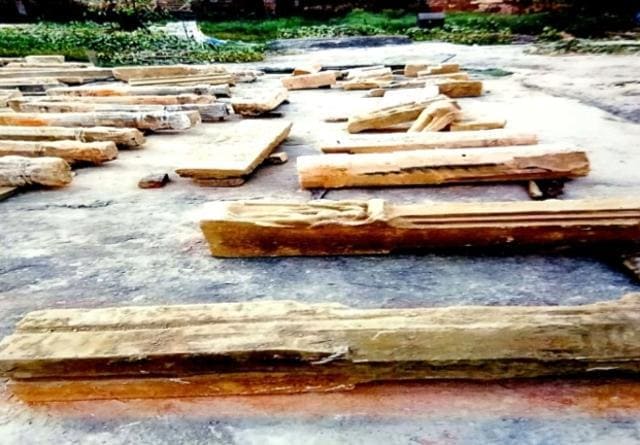
Claiming that the ancient artefacts found during the land levelling work at Ram Janmabhoomi in Ayodhya on Thursday proved that it was a Buddha Sthal (Buddhist pilgrimage site), Congress leader Udit Raj demanded analysis of the recovered items by Archaeological Survey of India (ASI).

Published on: May 22, 2020, 23:13:15 IST
Hindustan Times, Prayagraj | By , PRAYAGRAJ
Share
Share via
  • facebook
  • twitter
  • linkedin
  • whatsapp
Copy link
  • copy link

Claiming that the ancient artefacts found during the land levelling work at Ram Janmabhoomi in Ayodhya on Thursday proved that it was a Buddha Sthal (Buddhist pilgrimage site), Congress leader Udit Raj demanded analysis of the recovered items by Archaeological Survey of India (ASI).
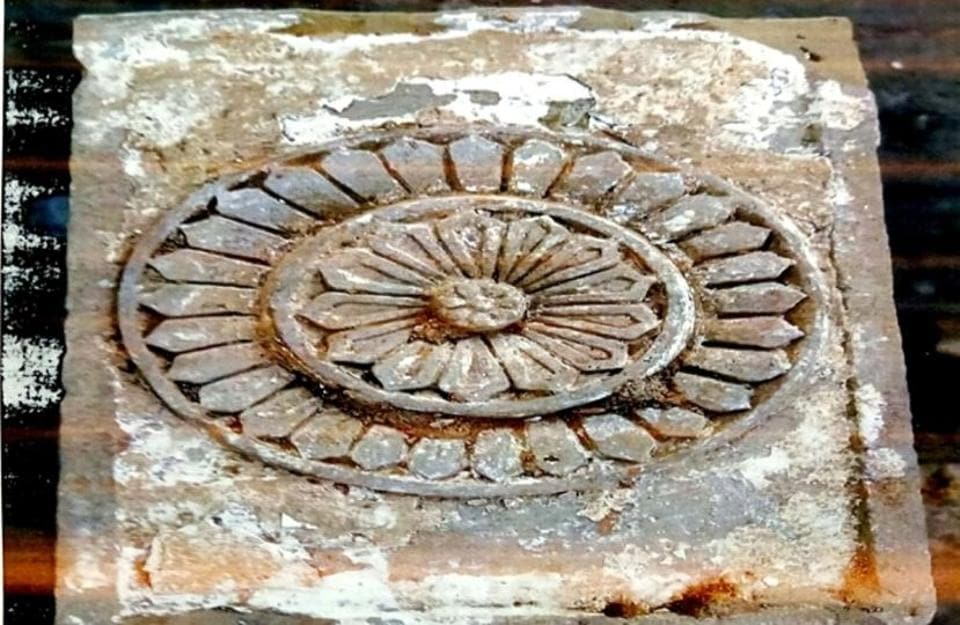
Historical artifacts recovered from proposed site of ram temple in Ayodhya recently.

In a tweet on Friday, the former MP stated that the ‘Dhamma Chakra’ and ‘Stupas’ recovered from the site bore testimony to his claim.
Article image

“I am not commenting on the Supreme court verdict as the Apex Court had said it was a matter of faith. But all I am demanding is to get the area studied properly by a team of ASI so that historical facts were not distorted as evidence prove that the place is a centre of Buddhism. The ‘Dhamma Chakra’ and ‘Stupas’ found at the site of proposed temple is a clear evidence of what I am saying,” he said.
Article image

“It is a historical fact that Faxian, the Chinese Buddhist monk who had travelled to India, had written about the presence of 100 Ashoka Stupas in Ayodhya. All I want is to save historical facts and not let it get distorted,” he added.

The ground levelling work at the proposed site of Ram temple construction started from May 11.

Caption Ancient artefacts recovered from proposed site of ram temple in Ayodhya recently.
  • Kenneth John
    ABOUT THE AUTHOR
    Kenneth John

    Kenneth John is a seasoned journalist with over three decades of reporting experience with different national dailies. As a correspondent with Hindustan Times, he is known for his impactful grassroots journalism, focusing on stories that amplify the voices of marginalised communities and bring issues of public concern into the spotlight. Over the years, he has reported extensively on education, women and child welfare, health, crime, infrastructure, environment, human rights, rural development, poverty, and public policy. His work has consistently highlighted the challenges faced by vulnerable sections of society, particularly in rural and underserved regions. Recognised for his investigative and human-interest reporting, his notable stories include exposing severe child malnutrition in eastern Uttar Pradesh, where he documented instances of children eating mud to cope with extreme hunger. These reports drew attention to serious gaps in welfare delivery and prompted discussions on policy intervention and accountability. A keen observer of social and cultural transformations, he has covered three Mahakumbhs and two Kumbh Melas at Prayagraj’s Sangam, reporting on their religious, social, cultural, and administrative dimensions. Among his most widely discussed exclusives was the story on Uttar Pradesh’s first all-women gang, “D39,” in Kaushambi, revealing how poverty, child marriage, and domestic abuse pushed several women toward crime. His journalism continues to combine investigative rigour with deep human sensitivity.Read More